-
Chinese (Simplified)
-
English
-
German
-
Korean
-
Spanish
Chinese (Simplified)
English
German
Korean
Spanish
Sign up for an account to enjoy easy online shopping and instant order tracking.
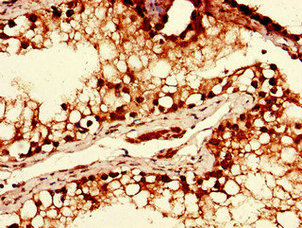
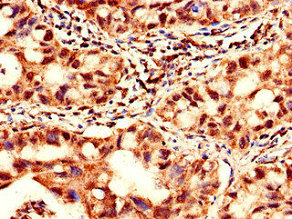
The antibody against YTHDF2 was raised in rabbit using the Recombinant Human YTH domain-containing family protein 2 protein (201-500AA) as the immunogen. This antibody exists as a non-conjugated isotype IgG, purified by protein G with a purity greater than 95%. This antibody has been validated on ELISA, WB, IHC, IF.
$299.00
| Cat.No | ADC-17662A | Clonality | Polyclonal |
|---|---|---|---|
| Host Species | Rabbit | Target Name | YTHDF2 |
| Form | Liquid | Species Reactivity | Human |
| Isotype | IgG | Storage Buffer | 0.01M PBS, 0.03% Proclin 300; Constituents: 50% Glycerol, PH 7.4 |
| Purification Method | >95%, Protein G purified | Conjugate | Non-conjugated |
| Application | ELISA, IF, IHC, WB | Storage | Upon receipt |
| Immunogen Description | Recombinant Human YTH domain-containing family protein 2 protein (201-500AA) | Target Species | Human |
|---|---|---|---|
| Immunogen Sequence | Complete sequences for the immunogen, target protein, and peptides are available upon request. | Uniprot ID | Q9Y5A9 |
Uniprot Id
Q9Y5A9
Target Species
Human
Target Name
YTHDF2
Target Full Name
YTH domain-containing family protein 2
Target Function
Specifically recognizes and binds N6-methyladenosine (m6A)-containing RNAs, and regulates their stability. M6A is a modification present at internal sites of mRNAs and some non-coding RNAs and plays a role in mRNA stability and processing. Acts as a regulator of mRNA stability by promoting degradation of m6A-containing mRNAs via interaction with the CCR4-NOT and ribonuclease P/MRP complexes, depending on the context. The YTHDF paralogs (YTHDF1, YTHDF2 and YTHDF3) share m6A-containing mRNAs targets and act redundantly to mediate mRNA degradation and cellular differentiation. M6A-containing mRNAs containing a binding site for RIDA/HRSP12 (5'-GGUUC-3') are preferentially degraded by endoribonucleolytic cleavage: cooperative binding of RIDA/HRSP12 and YTHDF2 to transcripts leads to recruitment of the ribonuclease P/MRP complex. Other m6A-containing mRNAs undergo deadenylation via direct interaction between YTHDF2 and CNOT1, leading to recruitment of the CCR4-NOT and subsequent deadenylation of m6A-containing mRNAs. Required maternally to regulate oocyte maturation: probably acts by binding to m6A-containing mRNAs, thereby regulating maternal transcript dosage during oocyte maturation, which is essential for the competence of oocytes to sustain early zygotic development. Also required during spermatogenesis: regulates spermagonial adhesion by promoting degradation of m6A-containing transcripts coding for matrix metallopeptidases. Also involved in hematopoietic stem cells specification by binding to m6A-containing mRNAs, leading to promote their degradation. Also acts as a regulator of neural development by promoting m6A-dependent degradation of neural development-related mRNA targets. Inhibits neural specification of induced pluripotent stem cells by binding to methylated neural-specific mRNAs and promoting their degradation, thereby restraining neural differentiation. Regulates circadian regulation of hepatic lipid metabolism: acts by promoting m6A-dependent degradation of PPARA transcripts. Regulates the innate immune response to infection by inhibiting the type I interferon response: acts by binding to m6A-containing IFNB transcripts and promoting their degradation. May also act as a promoter of cap-independent mRNA translation following heat shock stress: upon stress, relocalizes to the nucleus and specifically binds mRNAs with some m6A methylation mark at their 5'-UTR, protecting demethylation of mRNAs by FTO, thereby promoting cap-independent mRNA translation. Regulates mitotic entry by promoting the phase-specific m6A-dependent degradation of WEE1 transcripts. Promotes formation of phase-separated membraneless compartments, such as P-bodies or stress granules, by undergoing liquid-liquid phase separation upon binding to mRNAs containing multiple m6A-modified residues: polymethylated mRNAs act as a multivalent scaffold for the binding of YTHDF proteins, juxtaposing their disordered regions and thereby leading to phase separation. The resulting mRNA-YTHDF complexes then partition into different endogenous phase-separated membraneless compartments, such as P-bodies, stress granules or neuronal RNA granules. May also recognize and bind RNAs modified by C5-methylcytosine (m5C) and act as a regulator of rRNA processing.; (Microbial infection) Promotes viral gene expression and replication of polyomavirus SV40: acts by binding to N6-methyladenosine (m6A)-containing viral RNAs.; (Microbial infection) Promotes viral gene expression and virion production of kaposis sarcoma-associated herpesvirus (KSHV) at some stage of the KSHV life cycle (in iSLK.219 and iSLK.BAC16 cells). Acts by binding to N6-methyladenosine (m6A)-containing viral RNAs.
Target Subcellular Location
Cytoplasm, cytosol. Cytoplasm, P-body. Cytoplasm, Stress granule. Nucleus.
Target Protein Families
YTHDF2 family
Target Tissue Specificity
Highly expressed in induced pluripotent stem cells (iPSCs) and down-regulated during neural differentiation.
Target Research Area
Cell Biology
Target Synonyms
9430020E02Rik; CAHL; CLL associated antigen KW 14; CLL-associated antigen KW-14; HGRG8; High glucose regulated protein 8; High-glucose-regulated protein 8; NY REN 2; Renal carcinoma antigen NY REN 2; Renal carcinoma antigen NY-REN-2; YTH domain family 2; YTH domain family member 2; YTH domain family protein 2; YTH N6 methyladenosine RNA binding protein 2; YTHD2_HUMAN; YTHDF 2; YTHDF2
Target Background
This gene encodes a member of the YTH (YT521-B homology) superfamily containing YTH domain. The YTH domain is typical for the eukaryotes and is particularly abundant in plants. The YTH domain is usually located in the middle of the protein sequence and may function in binding to RNA. In addition to a YTH domain, this protein has a proline rich region which may be involved in signal transduction. An Alu-rich domain has been identified in one of the introns of this gene, which is thought to be associated with human longevity. In addition, reciprocal translocations between this gene and the Runx1 (AML1) gene on chromosome 21 has been observed in patients with acute myeloid leukemia. This gene was initially mapped to chromosome 14, which was later turned out to be a pseudogene. Alternatively spliced transcript variants encoding different isoforms have been identified in this gene.
Notification