-
Chinese (Simplified)
-
English
-
German
-
Korean
-
Spanish

Chinese (Simplified)
English
German
Korean
Spanish
Sign up for an account to enjoy easy online shopping and instant order tracking.
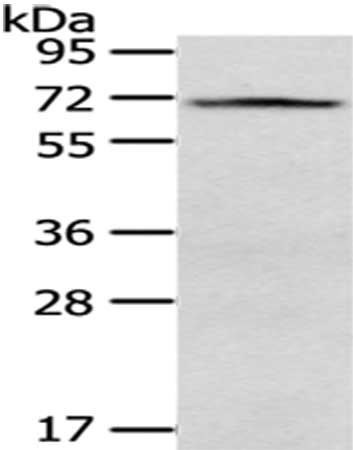
The antibody against VGF was raised in rabbit using the Synthetic peptide of Human VGF as the immunogen. This antibody exists as a non-conjugated isotype IgG, Antigen affinity purified. This antibody has been validated on ELISA, WB, IHC.
$299.00
| Cat.No | ADC-25530A | Clonality | Polyclonal |
|---|---|---|---|
| Host Species | Rabbit | Target Name | VGF |
| Form | Liquid | Species Reactivity | Human, Mouse, Rat |
| Isotype | IgG | Storage Buffer | 0.05% NaN3, 40% Glycerol., pH7.4 PBS |
| Purification Method | Antigen affinity purified | Conjugate | Non-conjugated |
| Application | ELISA, IHC, WB | Storage | Upon receipt |
| Immunogen Description | Synthetic peptide of Human VGF | Target Species | Human |
|---|---|---|---|
| Immunogen Sequence | Complete sequences for the immunogen, target protein, and peptides are available upon request. | Uniprot ID | O15240 |
Uniprot Id
O15240
Target Species
Human
Target Name
VGF
Target Full Name
Neurosecretory protein VGF
Target Function
Secreted polyprotein that is packaged and proteolytically processed by prohormone convertases PCSK1 and PCSK2 in a cell-type-specific manner. VGF and peptides derived from its processing play many roles in neurogenesis and neuroplasticity associated with learning, memory, depression and chronic pain.; Plays a role in the control of body fluid homeostasis by regulating vasopressin release. Suppresses presynaptic glutamatergic neurons connected to vasopressin neurons.; Plays a role in the control of body fluid homeostasis by regulating vasopressin release. Activates GABAergic interneurons which are inhibitory neurons of the nervous system and thereby suppresses presynaptic glutamatergic neurons. Stimulates also feeding behavior in an orexin-dependent manner in the hypothalamus. Functions as a positive regulator for the activation of orexin neurons resulting in elevated gastric acid secretion and gastric emptying.; Secreted multifunctional neuropeptide that binds to different cell receptors and thereby plays multiple physiological roles including modulation of energy expenditure, pain, response to stress, gastric regulation, glucose homeostasis as well as lipolysis. Activates the G-protein-coupled receptor C3AR1 via a folding-upon-binding mechanism leading to enhanced lipolysis in adipocytes. Interacts with C1QBP receptor in macrophages and microglia causing increased levels of intracellular calcium and hypersensitivity.; Plays a role in the regulation of memory formation and depression-related behaviors potentially by influencing synaptic plasticity and neurogenesis. Induces acute and transient activation of the NTRK2/TRKB receptor and subsequent CREB phosphorylation. Induces also insulin secretion in insulinoma cells by increasing intracellular calcium mobilization.; Has bactericidal activity against M. luteus, and antifungal activity against P. Pastoris.
Target Subcellular Location
[Neurosecretory protein VGF]: Secreted. Cytoplasmic vesicle, secretory vesicle. Note=Stored in secretory vesicles and then secreted, NERP peptides colocalize with vasopressin in the storage granules of hypothalamus.
Target Tissue Specificity
Central and peripheral nervous systems, synthesized exclusively in neuronal and neuroendocrine cells.
Target Research Area
Neuroscience
Target Synonyms
NERP-1; NERP-2; Nerve growth factor inducible; Neuroendocrine regulatory peptide-2; Neurosecretory protein VGF; VGF; VGF_HUMAN
Target Background
This gene is specifically expressed in a subpopulation of neuroendocrine cells, and is upregulated by nerve growth factor. The structural organization of this gene is similar to that of the rat gene, and both the translated and the untranslated regions show a high degree of sequence similarity to the rat gene. The encoded secretory protein also shares similarities with the secretogranin/chromogranin family, however, its exact function is not known.
Notification