• Contact info@abtriva.com for inquiries and orders.
  • Chinese (Simplified)

  • English

  • German

  • Korean

  • Spanish

United States (English / $ USD)

Rabbit anti-Human DCLRE1B Polyclonal Antibody

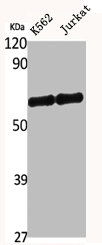
The antibody against DCLRE1B was raised in rabbit using the Synthesized peptide derived from the C-terminal region of Human SNM1B. as the immunogen. This antibody exists as a non-conjugated isotype IgG. The antibody was affinity-purified from rabbit antiserum by affinity-chromatography using epitope-specific immunogen. This antibody has been validated on WB, ELISA.

ADC-32750A

The antibody against DCLRE1B was raised in rabbit using the Synthesized peptide derived from the C-terminal region of Human SNM1B. as the immunogen. This antibody exists as a non-conjugated isotype IgG. The antibody was affinity-purified from rabbit antiserum by affinity-chromatography using epitope-specific immunogen. This antibody has been validated on WB, ELISA.

$167.00

Number
Order Exclusive Products Now

Request a Quote
High Purity LevelsPrecision and ReliabilityCustomization Options

Specifications


Cat.No ADC-32750A ClonalityPolyclonal
Host SpeciesRabbitTarget NameDCLRE1B
Target SynonymsDCLRE1B antibody; SNM1B5' exonuclease Apollo antibody; EC 3.1.-.- antibody; DNA cross-link repair 1B protein antibody; SNM1 homolog B antibody; SNMIB antibody; hSNM1B antibodyFormLiquid
Species ReactivityHumanIsotypeIgG
Storage Buffer0.5% BSA and 0.02% sodium azide., Liquid in PBS containing 50% glycerolPurification MethodThe antibody was affinity-purified from rabbit antiserum by affinity-chromatography using epitope-specific immunogen.
ConjugateNon-conjugatedApplicationELISA, WB
StorageUpon receipt

Immunogen Information


Immunogen DescriptionSynthesized peptide derived from the C-terminal region of Human SNM1B.Target SpeciesHuman
Immunogen SequenceComplete sequences for the immunogen, target protein, and peptides are available upon request.Uniprot IDQ9H816
Background Information
  • Uniprot Id

    Q9H816

  • Target Species

    Human

  • Target Name

    DCLRE1B

  • Target Full Name

    5' exonuclease Apollo

  • Target Function

    5'-3' exonuclease that plays a central role in telomere maintenance and protection during S-phase. Participates in the protection of telomeres against non-homologous end-joining (NHEJ)-mediated repair, thereby ensuring that telomeres do not fuse. Plays a key role in telomeric loop (T loop) formation by being recruited by TERF2 at the leading end telomeres and by processing leading-end telomeres immediately after their replication via its exonuclease activity: generates 3' single-stranded overhang at the leading end telomeres avoiding blunt leading-end telomeres that are vulnerable to end-joining reactions and expose the telomere end in a manner that activates the DNA repair pathways. Together with TERF2, required to protect telomeres from replicative damage during replication by controlling the amount of DNA topoisomerase (TOP1, TOP2A and TOP2B) needed for telomere replication during fork passage and prevent aberrant telomere topology. Also involved in response to DNA damage: plays a role in response to DNA interstrand cross-links (ICLs) by facilitating double-strand break formation. In case of spindle stress, involved in prophase checkpoint. Possesses beta-lactamase activity, catalyzing the hydrolysis of penicillin G and nitrocefin. Exhibits no activity towards other beta-lactam antibiotic classes including cephalosporins (cefotaxime) and carbapenems (imipenem).

  • Target Involvement

    Hoyeraal-Hreidarsson syndrome (HHS)

  • Target Subcellular Location

    Chromosome, telomere. Nucleus. Cytoplasm, cytoskeleton, microtubule organizing center, centrosome. Note=Mainly localizes to telomeres, recruited via its interaction with TERF2. During mitosis, localizes to the centrosome.

  • Target Protein Families

    DNA repair metallo-beta-lactamase (DRMBL) family

  • Target Synonyms

    DCLRE1B; SNM1B5' exonuclease Apollo; EC 3.1.-.-; DNA cross-link repair 1B protein; SNM1 homolog B; SNMIB; hSNM1B

  • Target Background

    DNA interstrand cross-links prevent strand separation, thereby physically blocking transcription, replication, and segregation of DNA. DCLRE1B is one of several evolutionarily conserved genes involved in repair of interstrand cross-links (Dronkert et al., 2000 [PubMed 10848582]).

Inquire Rabbit anti-Human DCLRE1B Polyclonal Antibody Now


AbTriva respects your privacy and protects your personal data in accordance with AbTriva. For more information, please see our data protection statement. *

Notification