• Contact info@abtriva.com for inquiries and orders.
  • Chinese (Simplified)

  • English

  • German

  • Korean

  • Spanish

United States (English / $ USD)

Rabbit anti-Human COX10 Polyclonal Antibody

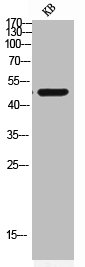
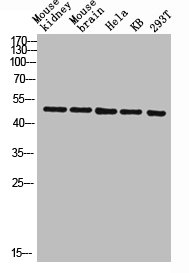
The antibody against COX10 was raised in rabbit using the Synthesized peptide derived from the Internal region of Human COX10. as the immunogen. This antibody exists as a non-conjugated isotype IgG. The antibody was affinity-purified from rabbit antiserum by affinity-chromatography using epitope-specific immunogen. This antibody has been validated on WB, ELISA.

ADC-36342A

The antibody against COX10 was raised in rabbit using the Synthesized peptide derived from the Internal region of Human COX10. as the immunogen. This antibody exists as a non-conjugated isotype IgG. The antibody was affinity-purified from rabbit antiserum by affinity-chromatography using epitope-specific immunogen. This antibody has been validated on WB, ELISA.

$167.00

Number
Order Exclusive Products Now

Request a Quote
High Purity LevelsPrecision and ReliabilityCustomization Options

Specifications


Cat.No ADC-36342A ClonalityPolyclonal
Host SpeciesRabbitTarget NameCOX10
FormLiquidSpecies ReactivityHuman
IsotypeIgGStorage Buffer0.5% BSA and 0.02% sodium azide., Liquid in PBS containing 50% glycerol
Purification MethodThe antibody was affinity-purified from rabbit antiserum by affinity-chromatography using epitope-specific immunogen.ConjugateNon-conjugated
ApplicationELISA, WBStorageUpon receipt

Immunogen Information


Immunogen DescriptionSynthesized peptide derived from the Internal region of Human COX10.Target SpeciesHuman
Immunogen SequenceComplete sequences for the immunogen, target protein, and peptides are available upon request.Uniprot IDQ12887
Background Information
  • Uniprot Id

    Q12887

  • Target Species

    Human

  • Target Name

    COX10

  • Target Full Name

    Protoheme IX farnesyltransferase, mitochondrial

  • Target Function

    Converts protoheme IX and farnesyl diphosphate to heme O.

  • Target Involvement

    Mitochondrial complex IV deficiency (MT-C4D); Leigh syndrome (LS)

  • Target Subcellular Location

    Mitochondrion membrane; Multi-pass membrane protein.

  • Target Protein Families

    UbiA prenyltransferase family

  • Target Synonyms

    2410004F01Rik; AU042636; COX10; COX10_HUMAN; Cytochrome c oxidase assembly protein; Cytochrome c oxidase subunit X; Heme A farnesyltransferase; Heme O synthase; OTTMUSP00000006085; Protoheme IX farnesyltransferase; mitochondrial; Protoheme IX farnesyltransferase; mitochondrial precursor; RP23-78H18.1

  • Target Background

    Cytochrome c oxidase (COX), the terminal component of the mitochondrial respiratory chain, catalyzes the electron transfer from reduced cytochrome c to oxygen. This component is a heteromeric complex consisting of 3 catalytic subunits encoded by mitochondrial genes and multiple structural subunits encoded by nuclear genes. The mitochondrially-encoded subunits function in electron transfer, and the nuclear-encoded subunits may function in the regulation and assembly of the complex. This nuclear gene encodes heme A:farnesyltransferase, which is not a structural subunit but required for the expression of functional COX and functions in the maturation of the heme A prosthetic group of COX. This protein is predicted to contain 7-9 transmembrane domains localized in the mitochondrial inner membrane. A gene mutation, which results in the substitution of a lysine for an asparagine (N204K), is identified to be responsible for cytochrome c oxidase deficiency. In addition, this gene is disrupted in patients with CMT1A (Charcot-Marie-Tooth type 1A) duplication and with HNPP (hereditary neuropathy with liability to pressure palsies) deletion.

Inquire Rabbit anti-Human COX10 Polyclonal Antibody Now


AbTriva respects your privacy and protects your personal data in accordance with AbTriva. For more information, please see our data protection statement. *

Notification