-
Chinese (Simplified)
-
English
-
German
-
Korean
-
Spanish
Chinese (Simplified)
English
German
Korean
Spanish
Sign up for an account to enjoy easy online shopping and instant order tracking.
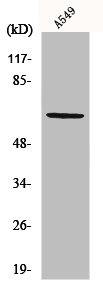
The antibody against NECTIN3 was raised in rabbit using the Synthesized peptide derived from the Internal region of Human Nectin 3. as the immunogen. This antibody exists as a non-conjugated isotype IgG. The antibody was affinity-purified from rabbit antiserum by affinity-chromatography using epitope-specific immunogen. This antibody has been validated on WB, ELISA.
$167.00
| Cat.No | ADC-38124A | Clonality | Polyclonal |
|---|---|---|---|
| Host Species | Rabbit | Target Name | NECTIN3 |
| Form | Liquid | Species Reactivity | Human, Mouse |
| Isotype | IgG | Storage Buffer | 0.5% BSA and 0.02% sodium azide., Liquid in PBS containing 50% glycerol |
| Purification Method | The antibody was affinity-purified from rabbit antiserum by affinity-chromatography using epitope-specific immunogen. | Conjugate | Non-conjugated |
| Application | ELISA, WB | Storage | Upon receipt |
| Immunogen Description | Synthesized peptide derived from the Internal region of Human Nectin 3. | Target Species | Human |
|---|---|---|---|
| Immunogen Sequence | Complete sequences for the immunogen, target protein, and peptides are available upon request. | Uniprot ID | Q9NQS3 |
Uniprot Id
Q9NQS3
Target Species
Human
Target Name
NECTIN3
Target Full Name
Nectin-3
Target Function
Plays a role in cell-cell adhesion through heterophilic trans-interactions with nectin-like proteins or nectins, such as trans-interaction with NECTIN2 at Sertoli-spermatid junctions. Trans-interaction with PVR induces activation of CDC42 and RAC small G proteins through common signaling molecules such as SRC and RAP1. Also involved in the formation of cell-cell junctions, including adherens junctions and synapses. Induces endocytosis-mediated down-regulation of PVR from the cell surface, resulting in reduction of cell movement and proliferation. Plays a role in the morphology of the ciliary body.
Target Subcellular Location
Cell membrane; Single-pass membrane protein. Cell junction, synapse, postsynaptic cell membrane.
Target Protein Families
Nectin family
Target Tissue Specificity
Predominantly expressed in testis and placenta as well as in many cell lines, including epithelial cell lines.
Target Synonyms
CD113; CDw113; DKFZP566B0846; FLJ90624; Nectin-3; Nectin3; Poliovirus receptor related 3; Poliovirus receptor related protein 3; Poliovirus receptor-like 3; Poliovirus receptor-related protein 3; PPR3; PRR3; Pvrl3; PVRL3_HUMAN; PVRR3
Target Background
This gene encodes a member of the nectin family of proteins, which function as adhesion molecules at adherens junctions. This family member interacts with other nectin-like proteins and with afadin, a filamentous actin-binding protein involved in the regulation of directional motility, cell proliferation and survival. This gene plays a role in ocular development involving the ciliary body. Mutations in this gene are believed to result in congenital ocular defects. Alternative splicing results in multiple transcript variants.
Notification