• Contact info@abtriva.com for inquiries and orders.
  • Chinese (Simplified)

  • English

  • German

  • Korean

  • Spanish

United States (English / $ USD)

Rabbit anti-Human FFAR4 Polyclonal Antibody

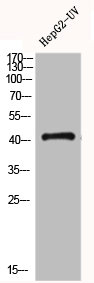
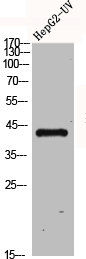
The antibody against FFAR4 was raised in rabbit using the Synthesized peptide derived from the Internal region of Human GPR120. as the immunogen. This antibody exists as a non-conjugated isotype IgG. The antibody was affinity-purified from rabbit antiserum by affinity-chromatography using epitope-specific immunogen. This antibody has been validated on WB, IF, ELISA.

ADC-38569A

The antibody against FFAR4 was raised in rabbit using the Synthesized peptide derived from the Internal region of Human GPR120. as the immunogen. This antibody exists as a non-conjugated isotype IgG. The antibody was affinity-purified from rabbit antiserum by affinity-chromatography using epitope-specific immunogen. This antibody has been validated on WB, IF, ELISA.

$167.00

Number
Order Exclusive Products Now

Request a Quote
High Purity LevelsPrecision and ReliabilityCustomization Options

Specifications


Cat.No ADC-38569A ClonalityPolyclonal
Host SpeciesRabbitTarget NameFFAR4
FormLiquidSpecies ReactivityHuman, Mouse, Rat
IsotypeIgGStorage Buffer0.5% BSA and 0.02% sodium azide., Liquid in PBS containing 50% glycerol
Purification MethodThe antibody was affinity-purified from rabbit antiserum by affinity-chromatography using epitope-specific immunogen.ConjugateNon-conjugated
ApplicationELISA, IF, WBStorageUpon receipt

Immunogen Information


Immunogen DescriptionSynthesized peptide derived from the Internal region of Human GPR120.Target SpeciesHuman
Immunogen SequenceComplete sequences for the immunogen, target protein, and peptides are available upon request.Uniprot IDQ5NUL3
Background Information
  • Uniprot Id

    Q5NUL3

  • Target Species

    Human

  • Target Name

    FFAR4

  • Target Full Name

    Free fatty acid receptor 4

  • Target Function

    G-protein-coupled receptor for long-chain fatty acids (LCFAs) with a major role in adipogenesis, energy metabolism and inflammation. Signals via G-protein and beta-arrestin pathways. LCFAs sensing initiates activation of phosphoinositidase C-linked G proteins GNAQ and GNA11 (G(q)/G(11)), inducing a variety of cellular responses via second messenger pathways such as intracellular calcium mobilization, modulation of cyclic adenosine monophosphate (cAMP) production, and mitogen-activated protein kinases (MAPKs). After LCFAs binding, associates with beta-arrestin ARRB2 that acts as an adapter protein coupling the receptor to specific downstream signaling pathways, as well as mediating receptor endocytosis. In response to dietary fats, plays an important role in the regulation of adipocyte proliferation and differentiation. Acts as a receptor for omega-3 polyunsaturated fatty acids (PUFAs) at primary cilium of perivascular preadipocytes, initiating an adipogenic program via cAMP and CTCF-dependent chromatin remodeling that ultimately results in transcriptional activation of adipogenic genes and cell cycle entry. Induces differentiation of brown adipocytes probably via autocrine and endocrine functions of FGF21 hormone. Activates brown adipocytes by initiating intracellular calcium signaling that leads to mitochondrial depolarization and fission, and overall increased mitochondrial respiration. Consequently stimulates fatty acid uptake and oxidation in mitochondria together with UCP1-mediated thermogenic respiration, eventually reducing fat mass. Regulates bi-potential differentiation of bone marrow mesenchymal stem cells toward osteoblasts or adipocytes likely by up-regulating distinct integrins. In response to dietary fats regulates hormone secretion and appetite. Stimulates GIP and GLP1 secretion from enteroendocrine cells as well as GCG secretion in pancreatic alpha cells, thereby playing a role in the regulation of blood glucose levels. Negatively regulates glucose-induced SST secretion in pancreatic delta cells. Mediates LCFAs inhibition of GHRL secretion, an appetite-controlling hormone. In taste buds, contributes to sensing of dietary fatty acids by the gustatory system. During the inflammatory response, promotes anti-inflammatory M2 macrophage differentiation in adipose tissue. Mediates the anti-inflammatory effects of omega-3 PUFAs via inhibition of NLRP3 inflammasome activation. In this pathway, interacts with adapter protein ARRB2 and inhibits the priming step triggered by Toll-like receptors (TLRs) at the level of TAK1 and TAB1. Further inhibits the activation step when ARRB2 directly associates with NLRP3, leading to inhibition of proinflammatory cytokine release. Mediates LCFAs anti-apoptotic effects.; Receptor for LCFAs decoupled from G-protein signaling. May signal through beta-arrestin pathway. After LCFAs binding, associates with beta-arrestin ARRB2 that may act as an adapter protein coupling the receptor to specific downstream signaling pathways, as well as mediating receptor endocytosis.

  • Target Subcellular Location

    [Isoform 1]: Cell membrane; Multi-pass membrane protein. Endosome membrane; Multi-pass membrane protein. Lysosome membrane; Multi-pass membrane protein.; [Isoform 2]: Cell membrane; Multi-pass membrane protein. Endosome membrane; Multi-pass membrane protein. Lysosome membrane; Multi-pass membrane protein. Cell projection, cilium membrane; Multi-pass membrane protein.

  • Target Protein Families

    G-protein coupled receptor 1 family

  • Target Tissue Specificity

    [Isoform 2]: The predominant isoform in human tissues. Expressed in adipose tissue, pancreatic islets, lung and brain. Expressed in alpha cells of pancreatic islets. Expressed in primary cilia of perivascular preadipocytes of white adipose tissue (at prot

  • Target Synonyms

    FFAR4; GPR120; GPR129; O3FAR1; PGR4; Free fatty acid receptor 4; G-protein coupled receptor 120; G-protein coupled receptor 129; G-protein coupled receptor GT01; G-protein coupled receptor PGR4; Omega-3 fatty acid receptor 1

  • Target Background

    This gene encodes a G protein-coupled receptor (GPR) which belongs to the rhodopsin family of GPRs. The encoded protein functions as a receptor for free fatty acids, including omega-3, and participates in suppressing anti-inflammatory responses and insulin sensitizing. Multiple transcript variants encoding different isoforms have been found for this gene.

Inquire Rabbit anti-Human FFAR4 Polyclonal Antibody Now


AbTriva respects your privacy and protects your personal data in accordance with AbTriva. For more information, please see our data protection statement. *

Notification