• Contact info@abtriva.com for inquiries and orders.
  • Chinese (Simplified)

  • English

  • German

  • Korean

  • Spanish

United States (English / $ USD)

Rabbit anti-Human SUN2 Polyclonal Antibody

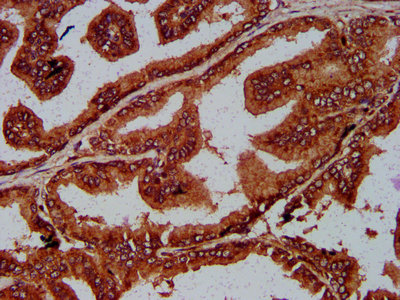
The antibody against SUN2 was raised in rabbit using the Recombinant Human SUN domain-containing protein 2 protein (45-155AA) as the immunogen. This antibody exists as a non-conjugated isotype IgG, purified by protein G with a purity greater than 95%. This antibody has been validated on ELISA, WB, IHC.

ADC-04577A

The antibody against SUN2 was raised in rabbit using the Recombinant Human SUN domain-containing protein 2 protein (45-155AA) as the immunogen. This antibody exists as a non-conjugated isotype IgG, purified by protein G with a purity greater than 95%. This antibody has been validated on ELISA, WB, IHC.

$299.00

Number
Order Exclusive Products Now

Request a Quote
High Purity LevelsPrecision and ReliabilityCustomization Options

Specifications


Cat.No ADC-04577A ClonalityPolyclonal
Host SpeciesRabbitTarget NameSUN2
Target SynonymsSUN2; FRIGG; KIAA0668; RAB5IP; UNC84B; SUN domain-containing protein 2; Protein unc-84 homolog B; Rab5-interacting protein; Rab5IP; Sad1/unc-84 protein-like 2FormLiquid
Species ReactivityHuman, Mouse, RatIsotypeIgG
Storage Buffer0.01M PBS, 0.03% Proclin 300; Constituents: 50% Glycerol, PH 7.4Purification Method>95%, Protein G purified
ConjugateNon-conjugatedApplicationELISA, IHC, WB
StorageUpon receipt

Immunogen Information


Immunogen DescriptionRecombinant Human SUN domain-containing protein 2 protein (45-155AA)Target SpeciesHuman
Immunogen SequenceComplete sequences for the immunogen, target protein, and peptides are available upon request.Uniprot IDQ9UH99
Background Information
  • Uniprot Id

    Q9UH99

  • Target Species

    Human

  • Target Name

    SUN2

  • Target Full Name

    SUN domain-containing protein 2

  • Target Function

    As a component of the LINC (LInker of Nucleoskeleton and Cytoskeleton) complex, involved in the connection between the nuclear lamina and the cytoskeleton. The nucleocytoplasmic interactions established by the LINC complex play an important role in the transmission of mechanical forces across the nuclear envelope and in nuclear movement and positioning. Specifically, SYNE2 and SUN2 assemble in arrays of transmembrane actin-associated nuclear (TAN) lines which are bound to F-actin cables and couple the nucleus to retrograde actin flow during actin-dependent nuclear movement. Required for interkinetic nuclear migration (INM) and essential for nucleokinesis and centrosome-nucleus coupling during radial neuronal migration in the cerebral cortex and during glial migration. Required for nuclear migration in retinal photoreceptor progenitors implicating association with cytoplasmic dynein-dynactin and kinesin motor complexes, and probably B-type lamins; SUN1 and SUN2 seem to act redundantly. The SUN1/2:KASH5 LINC complex couples telomeres to microtubules during meiosis; SUN1 and SUN2 seem to act at least partial redundantly. Anchors chromosome movement in the prophase of meiosis and is involved in selective gene expression of coding and non-coding RNAs needed for gametogenesis. Required for telomere attachment to nuclear envelope and gametogenesis. May also function on endocytic vesicles as a receptor for RAB5-GDP and participate in the activation of RAB5.

  • Target Subcellular Location

    Nucleus inner membrane; Single-pass type II membrane protein. Nucleus envelope. Endosome membrane; Single-pass type II membrane protein.

  • Target Tissue Specificity

    Widely expressed. Highly expressed in heart, lung and muscle. Weakly expressed in fetal heart. Slightly overexpressed in some heart tissues form patients with congenital heart defects.

  • Target Synonyms

    SUN2; FRIGG; KIAA0668; RAB5IP; UNC84B; SUN domain-containing protein 2; Protein unc-84 homolog B; Rab5-interacting protein; Rab5IP; Sad1/unc-84 protein-like 2

  • Target Background

    SUN1 (MIM 607723) and SUN2 are inner nuclear membrane (INM) proteins that play a major role in nuclear-cytoplasmic connection by formation of a 'bridge' across the nuclear envelope, known as the LINC complex, via interaction with the conserved luminal KASH domain of nesprins (e.g., SYNE1; MIM 608441) located in the outer nuclear membrane (ONM). The LINC complex provides a direct connection between the nuclear lamina and the cytoskeleton, which contributes to nuclear positioning and cellular rigidity (summary by Haque et al., 2010 [PubMed 19933576]).

Inquire Rabbit anti-Human SUN2 Polyclonal Antibody Now


AbTriva respects your privacy and protects your personal data in accordance with AbTriva. For more information, please see our data protection statement. *

Notification