• Contact info@abtriva.com for inquiries and orders.
  • Chinese (Simplified)

  • English

  • German

  • Korean

  • Spanish

United States (English / $ USD)

Rabbit anti-Human TGFBR2 Polyclonal Antibody

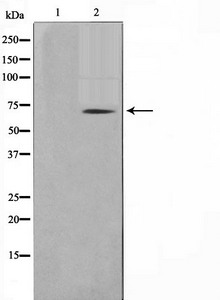
The antibody against TGFBR2 was raised in rabbit using a synthesized peptide derived from Human TGFR2 as the immunogen. This antibody exists as a polyclonal antibody to the immunogen, Affinity-chromatography purified. This antibody has been validated on ELISA, WB.

ADC-43024A

The antibody against TGFBR2 was raised in rabbit using a synthesized peptide derived from Human TGFR2 as the immunogen. This antibody exists as a polyclonal antibody to the immunogen, Affinity-chromatography purified. This antibody has been validated on ELISA, WB.

$295.00

Number
Order Exclusive Products Now

Request a Quote
High Purity LevelsPrecision and ReliabilityCustomization Options

Specifications


Cat.No ADC-43024A ClonalityPolyclonal
Host SpeciesRabbitTarget NameTGFBR2
Target SynonymsTGFBR2; TGF-beta receptor type-2; TGFR-2; TGF-beta type II receptor; Transforming growth factor-beta receptor type II; TGF-beta receptor type II; TbetaR-IIFormLiquid
Species ReactivityHuman, Mouse, RatStorage BufferPH 7.4, 0.02% sodium azide and 50% glycerol., 150mM NaCl, Rabbit IgG in phosphate buffered saline
Purification MethodAffinity-chromatography purifiedApplicationELISA, WB
StorageUpon receipt

Immunogen Information


Immunogen DescriptionA synthesized peptide derived from Human TGFR2Target SpeciesHuman
Immunogen SequenceComplete sequences for the immunogen, target protein, and peptides are available upon request.Uniprot IDP37173
Background Information
  • Uniprot Id

    P37173

  • Target Species

    Human

  • Target Name

    TGFBR2

  • Target Full Name

    TGF-beta receptor type-2

  • Target Function

    Transmembrane serine/threonine kinase forming with the TGF-beta type I serine/threonine kinase receptor, TGFBR1, the non-promiscuous receptor for the TGF-beta cytokines TGFB1, TGFB2 and TGFB3. Transduces the TGFB1, TGFB2 and TGFB3 signal from the cell surface to the cytoplasm and is thus regulating a plethora of physiological and pathological processes including cell cycle arrest in epithelial and hematopoietic cells, control of mesenchymal cell proliferation and differentiation, wound healing, extracellular matrix production, immunosuppression and carcinogenesis. The formation of the receptor complex composed of 2 TGFBR1 and 2 TGFBR2 molecules symmetrically bound to the cytokine dimer results in the phosphorylation and the activation of TGFRB1 by the constitutively active TGFBR2. Activated TGFBR1 phosphorylates SMAD2 which dissociates from the receptor and interacts with SMAD4. The SMAD2-SMAD4 complex is subsequently translocated to the nucleus where it modulates the transcription of the TGF-beta-regulated genes. This constitutes the canonical SMAD-dependent TGF-beta signaling cascade. Also involved in non-canonical, SMAD-independent TGF-beta signaling pathways.

  • Target Involvement

    Hereditary non-polyposis colorectal cancer 6 (HNPCC6); Esophageal cancer (ESCR); Loeys-Dietz syndrome 2 (LDS2)

  • Target Subcellular Location

    Cell membrane; Single-pass type I membrane protein. Membrane raft.

  • Target Protein Families

    Protein kinase superfamily, TKL Ser/Thr protein kinase family, TGFB receptor subfamily

  • Target Research Area

    Signal Transduction

  • Target Synonyms

    TGFBR2; TGF-beta receptor type-2; TGFR-2; TGF-beta type II receptor; Transforming growth factor-beta receptor type II; TGF-beta receptor type II; TbetaR-II

  • Target Background

    The protein encoded by this gene is a transmembrane protein that has a protein kinase domain, forms a heterodimeric complex with TGF-beta receptor type-1, and binds TGF-beta. This receptor/ligand complex phosphorylates proteins, which then enter the nucleus and regulate the transcription of genes related to cell proliferation, cell cycle arrest, wound healing, immunosuppression, and tumorigenesis. Mutations in this gene have been associated with Marfan Syndrome, Loeys-Deitz Aortic Aneurysm Syndrome, and the development of various types of tumors. Alternatively spliced transcript variants encoding different isoforms have been characterized.

Inquire Rabbit anti-Human TGFBR2 Polyclonal Antibody Now


AbTriva respects your privacy and protects your personal data in accordance with AbTriva. For more information, please see our data protection statement. *

Notification