• Contact info@abtriva.com for inquiries and orders.
  • Chinese (Simplified)

  • English

  • German

  • Korean

  • Spanish

United States (English / $ USD)

Rabbit anti-Human HNF4A Polyclonal Antibody

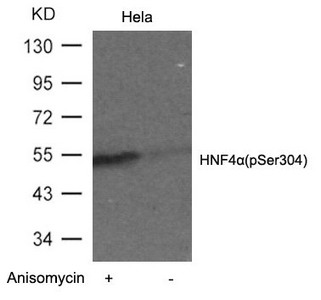
The antibody against HNF4A was raised in rabbit using the Peptide sequence around phosphorylation site of serine 304 (L-R-S(p)-Q-V)derived from Human HNF4a. as the immunogen. Antibodies were produced by immunizing rabbits with synthetic phosphopeptide and KLH conjugates. Antibodies were purified by affinity-chromatography using epitope-specific phosphopeptide. Non-phospho specific antibodies were removed by chromatogramphy usi This antibody has been validated on ELISA, WB.

ADC-43234A

The antibody against HNF4A was raised in rabbit using the Peptide sequence around phosphorylation site of serine 304 (L-R-S(p)-Q-V)derived from Human HNF4a. as the immunogen. Antibodies were produced by immunizing rabbits with synthetic phosphopeptide and KLH conjugates. Antibodies were purified by affinity-chromatography using epitope-specific phosphopeptide. Non-phospho specific antibodies were removed by chromatogramphy usi This antibody has been validated on ELISA, WB.

$360.00

Number
Order Exclusive Products Now

Request a Quote
High Purity LevelsPrecision and ReliabilityCustomization Options

Specifications


Cat.No ADC-43234A ClonalityPolyclonal
Host SpeciesRabbitTarget NameHNF4A
Target Synonymshepatic nuclear factor antibody; Transcription factor 14 antibody; Transcription factor HNF 4 antibody; Transcription factor HNF-4 antibody; Transcription factor HNF4 antibodyFormLiquid
Species ReactivityHuman, Mouse, RatStorage BufferPH 7.4, 0.02% sodium azide and 50% glycerol., 150mM NaCl, Supplied at 1.0mg/mL in phosphate buffered saline (without Mg2+ and Ca2+)
ApplicationELISA, WBStorageUpon receipt

Immunogen Information


Immunogen DescriptionPeptide sequence around phosphorylation site of serine 304 (L-R-S(p)-Q-V)derived from Human HNF4a.Target SpeciesHuman
Immunogen SequenceComplete sequences for the immunogen, target protein, and peptides are available upon request.Uniprot IDP41235
Background Information
  • Uniprot Id

    P41235

  • Target Species

    Human

  • Target Name

    HNF4A

  • Target Full Name

    Hepatocyte nuclear factor 4-alpha

  • Target Function

    Transcriptional regulator which controls the expression of hepatic genes during the transition of endodermal cells to hepatic progenitor cells, facilitating the recruitment of RNA pol II to the promoters of target genes. Activates the transcription of CYP2C38. Represses the CLOCK-ARNTL/BMAL1 transcriptional activity and is essential for circadian rhythm maintenance and period regulation in the liver and colon cells.

  • Target Involvement

    Maturity-onset diabetes of the young 1 (MODY1); Diabetes mellitus, non-insulin-dependent (NIDDM); Fanconi renotubular syndrome 4 with maturity-onset diabetes of the young (FRTS4)

  • Target Subcellular Location

    Nucleus.

  • Target Protein Families

    Nuclear hormone receptor family, NR2 subfamily

  • Target Research Area

    Cancer

  • Target Synonyms

    FLJ39654; FRTS4; Hepatic nuclear factor 4 alpha; Hepatocyte nuclear factor 4 alpha; Hepatocyte nuclear factor 4; Hepatocyte nuclear factor 4-alpha; HNF 4 alpha; HNF 4; HNF-4-alpha; HNF4 ; HNF4A; HNF4A_HUMAN; HNF4a7; HNF4a8; HNF4a9; Hnf4alpha; HNF4alpha10/11/12; MODY 1; MODY; MODY1; NR2A1 ; NR2A21; Nuclear receptor subfamily 2 group A member 1; OTTHUMP00000031060; OTTHUMP00000031062; TCF 14; TCF; TCF-14; TCF14 ; Tcf4; Transcription factor 14, hepatic nuclear factor; Transcription factor 14; Transcription factor HNF 4; Transcription factor HNF-4; Transcription factor HNF4

  • Target Background

    The protein encoded by this gene is a nuclear transcription factor which binds DNA as a homodimer. The encoded protein controls the expression of several genes, including hepatocyte nuclear factor 1 alpha, a transcription factor which regulates the expression of several hepatic genes. This gene may play a role in development of the liver, kidney, and intestines. Mutations in this gene have been associated with monogenic autosomal dominant non-insulin-dependent diabetes mellitus type I. Alternative splicing of this gene results in multiple transcript variants encoding several different isoforms.

Inquire Rabbit anti-Human HNF4A Polyclonal Antibody Now


AbTriva respects your privacy and protects your personal data in accordance with AbTriva. For more information, please see our data protection statement. *

Notification