• Contact info@abtriva.com for inquiries and orders.
  • Chinese (Simplified)

  • English

  • German

  • Korean

  • Spanish

United States (English / $ USD)

Rabbit anti-Human PICALM Polyclonal Antibody

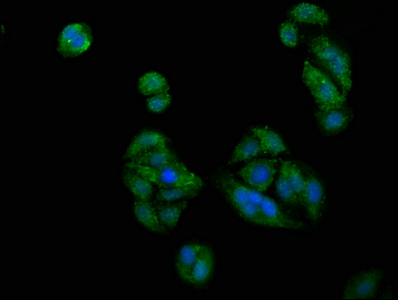
The antibody against PICALM was raised in rabbit using the Recombinant Human Phosphatidylinositol-binding clathrin assembly protein (517-624AA) as the immunogen. This antibody exists as a non-conjugated isotype IgG, purified by protein G with a purity greater than 95%. This antibody has been validated on ELISA, IHC, IF.

ADC-05708A

The antibody against PICALM was raised in rabbit using the Recombinant Human Phosphatidylinositol-binding clathrin assembly protein (517-624AA) as the immunogen. This antibody exists as a non-conjugated isotype IgG, purified by protein G with a purity greater than 95%. This antibody has been validated on ELISA, IHC, IF.

$299.00

Number
Order Exclusive Products Now

Request a Quote
High Purity LevelsPrecision and ReliabilityCustomization Options

Specifications


Cat.No ADC-05708A ClonalityPolyclonal
Host SpeciesRabbitTarget NamePICALM
FormLiquidSpecies ReactivityHuman
IsotypeIgGStorage Buffer0.01M PBS, 0.03% Proclin 300; Constituents: 50% Glycerol, PH 7.4
Purification Method>95%, Protein G purifiedConjugateNon-conjugated
ApplicationELISA, IF, IHCStorageUpon receipt

Immunogen Information


Immunogen DescriptionRecombinant Human Phosphatidylinositol-binding clathrin assembly protein (517-624AA)Target SpeciesHuman
Immunogen SequenceComplete sequences for the immunogen, target protein, and peptides are available upon request.Uniprot IDQ13492
Background Information
  • Uniprot Id

    Q13492

  • Target Species

    Human

  • Target Name

    PICALM

  • Target Full Name

    Phosphatidylinositol-binding clathrin assembly protein

  • Target Function

    Cytoplasmic adapter protein that plays a critical role in clathrin-mediated endocytosis which is important in processes such as internalization of cell receptors, synaptic transmission or removal of apoptotic cells. Recruits AP-2 and attaches clathrin triskelions to the cytoplasmic side of plasma membrane leading to clathrin-coated vesicles (CCVs) assembly. Furthermore, regulates clathrin-coated vesicle size and maturation by directly sensing and driving membrane curvature. In addition to binding to clathrin, mediates the endocytosis of small R-SNARES (Soluble NSF Attachment Protein REceptors) between plasma membranes and endosomes including VAMP2, VAMP3, VAMP4, VAMP7 or VAMP8. In turn, PICALM-dependent SNARE endocytosis is required for the formation and maturation of autophagic precursors. Modulates thereby autophagy and the turnover of autophagy substrates such as MAPT/TAU or amyloid precursor protein cleaved C-terminal fragment (APP-CTF).

  • Target Involvement

    A chromosomal aberration involving PICALM is found in diffuse histiocytic lymphomas. Translocation t(10;11)(p13;q14) with MLLT10.

  • Target Subcellular Location

    Cell membrane. Membrane, clathrin-coated pit. Golgi apparatus. Cytoplasmic vesicle, clathrin-coated vesicle. Nucleus.

  • Target Protein Families

    PICALM/SNAP91 family

  • Target Tissue Specificity

    Expressed in all tissues examined.

  • Target Synonyms

    CALM; Clathrin assembly lymphoid myeloid leukemia; Clathrin assembly lymphoid myeloid leukemia protein; CLTH; LAP; Phosphatidylinositol-binding clathrin assembly protein; PICAL_HUMAN; PICALM

  • Target Background

    This gene encodes a clathrin assembly protein, which recruits clathrin and adaptor protein complex 2 (AP2) to cell membranes at sites of coated-pit formation and clathrin-vesicle assembly. The protein may be required to determine the amount of membrane to be recycled, possibly by regulating the size of the clathrin cage. The protein is involved in AP2-dependent clathrin-mediated endocytosis at the neuromuscular junction. A chromosomal translocation t(10;11)(p13;q14) leading to the fusion of this gene and the MLLT10 gene is found in acute lymphoblastic leukemia, acute myeloid leukemia and malignant lymphomas. The polymorphisms of this gene are associated with the risk of Alzheimer disease. Multiple alternatively spliced transcript variants encoding different isoforms have been found for this gene.

Inquire Rabbit anti-Human PICALM Polyclonal Antibody Now


AbTriva respects your privacy and protects your personal data in accordance with AbTriva. For more information, please see our data protection statement. *

Notification