-
Chinese (Simplified)
-
English
-
German
-
Korean
-
Spanish

Chinese (Simplified)
English
German
Korean
Spanish
Sign up for an account to enjoy easy online shopping and instant order tracking.
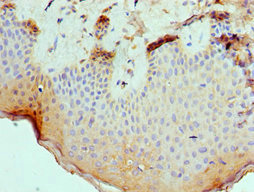
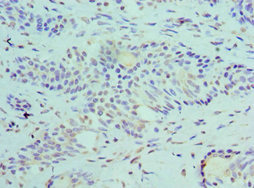
The antibody against SLURP1 was raised in rabbit using the Recombinant Human Secreted Ly-6/uPAR-related protein 1 protein (1-103AA) as the immunogen. This antibody exists as a non-conjugated isotype IgG, Antigen affinity purified. This antibody has been validated on ELISA, IHC.
$299.00
| Cat.No | ADC-45185A | Clonality | Polyclonal |
|---|---|---|---|
| Host Species | Rabbit | Target Name | SLURP1 |
| Form | Liquid | Species Reactivity | Human |
| Isotype | IgG | Storage Buffer | 50% Glycerol, PBS with 0.02% sodium azide, pH7.3. |
| Purification Method | Antigen affinity purified | Conjugate | Non-conjugated |
| Application | ELISA, IHC | Storage | Upon receipt |
| Immunogen Description | Recombinant Human Secreted Ly-6/uPAR-related protein 1 protein (1-103AA) | Target Species | Human |
|---|---|---|---|
| Immunogen Sequence | Complete sequences for the immunogen, target protein, and peptides are available upon request. | Uniprot ID | P55000 |
Uniprot Id
P55000
Target Species
Human
Target Name
SLURP1
Target Full Name
Secreted Ly-6/uPAR-related protein 1
Target Function
Has an antitumor activity. Was found to be a marker of late differentiation of the skin. Implicated in maintaining the physiological and structural integrity of the keratinocyte layers of the skin. In vitro down-regulates keratinocyte proliferation; the function may involve the proposed role as modulator of nicotinic acetylcholine receptors (nAChRs) activity. In vitro inhibits alpha-7-dependent nAChR currents in an allosteric manner. In T cells may be involved in regulation of intracellular Ca(2+) signaling. Seems to have an immunomodulatory function in the cornea. The function may implicate a possible role as a scavenger receptor for PLAU thereby blocking PLAU-dependent functions of PLAUR such as in cell migration and proliferation.
Target Involvement
Mal de Meleda (MDM)
Target Subcellular Location
Secreted.
Target Tissue Specificity
Granulocytes. Expressed in skin. Predominantly expressed in the granular layer of skin, notably the acrosyringium. Identified in several biological fluids such as sweat, saliva, tears, plasma and urine.
Target Research Area
Cardiovascular
Target Synonyms
SLURP1; ARS; Secreted Ly-6/uPAR-related protein 1; SLURP-1; ARS component B; ARS(component B)-81/S; Anti-neoplastic urinary protein; ANUP
Target Background
The protein encoded by this gene is a member of the Ly6/uPAR family but lacks a GPI-anchoring signal sequence. It is thought that this secreted protein contains antitumor activity. Mutations in this gene have been associated with Mal de Meleda, a rare autosomal recessive skin disorder. This gene maps to the same chromosomal region as several members of the Ly6/uPAR family of glycoprotein receptors.
Notification