-
Chinese (Simplified)
-
English
-
German
-
Korean
-
Spanish
Chinese (Simplified)
English
German
Korean
Spanish
Sign up for an account to enjoy easy online shopping and instant order tracking.
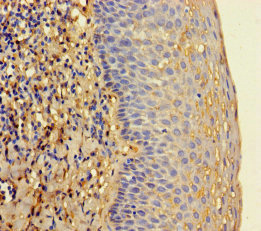
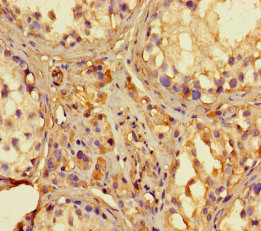
The antibody against RNASEL was raised in rabbit using the Recombinant Human 2-5A-dependent ribonuclease protein (330-741AA) as the immunogen. This antibody exists as a non-conjugated isotype IgG, purified by protein G with a purity greater than 95%. This antibody has been validated on ELISA, IHC.
$299.00
| Cat.No | ADC-49814A | Clonality | Polyclonal |
|---|---|---|---|
| Host Species | Rabbit | Target Name | RNASEL |
| Form | Liquid | Species Reactivity | Human |
| Isotype | IgG | Storage Buffer | 0.01M PBS, 0.03% Proclin 300; Constituents: 50% Glycerol, PH 7.4 |
| Purification Method | >95%, Protein G purified | Conjugate | Non-conjugated |
| Application | ELISA, IHC | Storage | Upon receipt |
| Immunogen Description | Recombinant Human 2-5A-dependent ribonuclease protein (330-741AA) | Target Species | Human |
|---|---|---|---|
| Immunogen Sequence | Complete sequences for the immunogen, target protein, and peptides are available upon request. | Uniprot ID | Q05823 |
Uniprot Id
Q05823
Target Species
Human
Target Name
RNASEL
Target Full Name
2-5A-dependent ribonuclease
Target Function
Endoribonuclease that functions in the interferon (IFN) antiviral response. In INF treated and virus infected cells, RNASEL probably mediates its antiviral effects through a combination of direct cleavage of single-stranded viral RNAs, inhibition of protein synthesis through the degradation of rRNA, induction of apoptosis, and induction of other antiviral genes. RNASEL mediated apoptosis is the result of a JNK-dependent stress-response pathway leading to cytochrome c release from mitochondria and caspase-dependent apoptosis. Therefore, activation of RNASEL could lead to elimination of virus infected cells under some circumstances. In the crosstalk between autophagy and apoptosis proposed to induce autophagy as an early stress response to small double-stranded RNA and at later stages of prolonged stress to activate caspase-dependent proteolytic cleavage of BECN1 to terminate autophagy and promote apoptosis. Might play a central role in the regulation of mRNA turnover. Cleaves 3' of UpNp dimers, with preference for UU and UA sequences, to sets of discrete products ranging from between 4 and 22 nucleotides in length.
Target Involvement
Prostate cancer, hereditary, 1 (HPC1)
Target Subcellular Location
Cytoplasm. Mitochondrion.
Target Protein Families
Protein kinase superfamily
Target Tissue Specificity
Highly expressed in spleen and thymus followed by prostate, testis, uterus, small intestine, colon and peripheral blood leukocytes.
Target Research Area
Epigenetics and Nuclear Signaling
Target Synonyms
2 5A dependent ribonuclease; 2 5A dependent RNase; 2' 5' oligoisoadenylate synthetase dependent; 2-5A-dependent ribonuclease; 2-5A-dependent RNase; DKFZp781D08126; Interferon induced 2 5A dependent RNase; MGC104972; MGC133329; PRCA 1; PRCA1; Ribonuclease 4; Ribonuclease L (2' 5' oligoisoadenylate synthetase dependent) ; Ribonuclease L; Ribonuclease4; RibonucleaseL; RN5A_HUMAN; RNase L; Rnasel; RNS 4; RNS4
Target Background
This gene encodes a component of the interferon-regulated 2-5A system that functions in the antiviral and antiproliferative roles of interferons. The protein is involved in innate immunity and is active against multiple RNA viruses, including the influenza and SARS-CoV-2 viruses. Mutations in this gene have been associated with predisposition to prostate cancer and this gene is a candidate for the hereditary prostate cancer 1 (HPC1) allele.
Notification