• Contact info@abtriva.com for inquiries and orders.
  • Chinese (Simplified)

  • English

  • German

  • Korean

  • Spanish

United States (English / $ USD)

Rabbit anti-Human EGLN2 Polyclonal Antibody

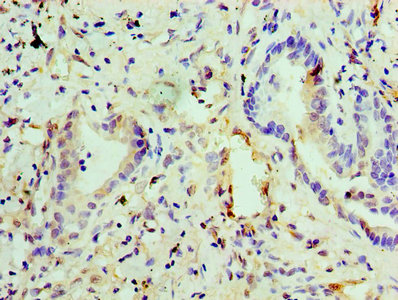
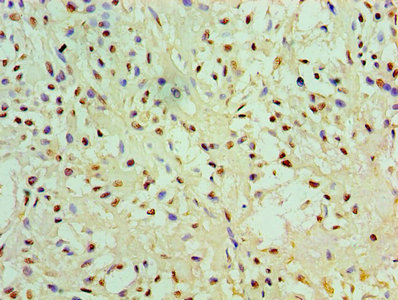
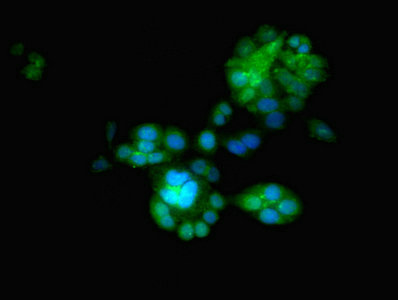
The antibody against EGLN2 was raised in rabbit using the Recombinant Human Egl nine homolog 2 protein (283-407AA) as the immunogen. This antibody exists as a non-conjugated isotype IgG, purified by protein G with a purity greater than 95%. This antibody has been validated on ELISA, IHC, IF.

ADC-49910A

The antibody against EGLN2 was raised in rabbit using the Recombinant Human Egl nine homolog 2 protein (283-407AA) as the immunogen. This antibody exists as a non-conjugated isotype IgG, purified by protein G with a purity greater than 95%. This antibody has been validated on ELISA, IHC, IF.

$299.00

Number
Order Exclusive Products Now

Request a Quote
High Purity LevelsPrecision and ReliabilityCustomization Options

Specifications


Cat.No ADC-49910A ClonalityPolyclonal
Host SpeciesRabbitTarget NameEGLN2
FormLiquidSpecies ReactivityHuman
IsotypeIgGStorage Buffer0.01M PBS, 0.03% Proclin 300; Constituents: 50% Glycerol, PH 7.4
Purification Method>95%, Protein G purifiedConjugateNon-conjugated
ApplicationELISA, IF, IHCStorageUpon receipt

Immunogen Information


Immunogen DescriptionRecombinant Human Egl nine homolog 2 protein (283-407AA)Target SpeciesHuman
Immunogen SequenceComplete sequences for the immunogen, target protein, and peptides are available upon request.Uniprot IDQ96KS0
Background Information
  • Uniprot Id

    Q96KS0

  • Target Species

    Human

  • Target Name

    EGLN2

  • Target Full Name

    Prolyl hydroxylase EGLN2

  • Target Function

    Prolyl hydroxylase that mediates hydroxylation of proline residues in target proteins, such as ATF4, IKBKB, CEP192 and HIF1A. Target proteins are preferentially recognized via a LXXLAP motif. Cellular oxygen sensor that catalyzes, under normoxic conditions, the post-translational formation of 4-hydroxyproline in hypoxia-inducible factor (HIF) alpha proteins. Hydroxylates a specific proline found in each of the oxygen-dependent degradation (ODD) domains (N-terminal, NODD, and C-terminal, CODD) of HIF1A. Also hydroxylates HIF2A. Has a preference for the CODD site for both HIF1A and HIF2A. Hydroxylated HIFs are then targeted for proteasomal degradation via the von Hippel-Lindau ubiquitination complex. Under hypoxic conditions, the hydroxylation reaction is attenuated allowing HIFs to escape degradation resulting in their translocation to the nucleus, heterodimerization with HIF1B, and increased expression of hypoxy-inducible genes. EGLN2 is involved in regulating hypoxia tolerance and apoptosis in cardiac and skeletal muscle. Also regulates susceptibility to normoxic oxidative neuronal death. Links oxygen sensing to cell cycle and primary cilia formation by hydroxylating the critical centrosome component CEP192 which promotes its ubiquitination and subsequent proteasomal degradation. Hydroxylates IKBKB, mediating NF-kappa-B activation in hypoxic conditions. Also mediates hydroxylation of ATF4, leading to decreased protein stability of ATF4.

  • Target Subcellular Location

    Nucleus.

  • Target Tissue Specificity

    Expressed in adult and fetal heart, brain, liver, lung, skeletal muscle, and kidney. Also expressed in testis and placenta. Highest levels in adult brain, placenta, lung, kidney, and testis. Expressed in hormone responsive tissues, including normal and ca

  • Target Research Area

    Cancer

  • Target Synonyms

    DKFZp434E026; EGL nine (C.elegans) homolog 2; Egl nine homolog 2 (C. elegans); Egl nine homolog 2; EGLN 2; EGLN2; EGLN2_HUMAN; EIT 6; EIT6; Estrogen-induced tag 6; HIF P4H 1; HIF PH1; HIF prolyl hydroxylase 1; HIF-PH1; HIF-prolyl hydroxylase 1; HIFPH 1; HIFPH1; HPH 3; HPH-1; HPH-3; HPH3; Hypoxia inducible factor prolyl hydroxylase 1; Hypoxia-inducible factor prolyl hydroxylase 1; P4H1; PHD 1; PhD1; prolyl hydroxylase domain containing protein 1; Prolyl hydroxylase domain-containing protein 1

  • Target Background

    The hypoxia inducible factor (HIF) is a transcriptional complex that is involved in oxygen homeostasis. At normal oxygen levels, the alpha subunit of HIF is targeted for degration by prolyl hydroxylation. This gene encodes an enzyme responsible for this post-translational modification. Alternative splicing results in multiple transcript variants. Read-through transcription also exists between this gene and the upstream RAB4B (RAB4B, member RAS oncogene family) gene.

Inquire Rabbit anti-Human EGLN2 Polyclonal Antibody Now


AbTriva respects your privacy and protects your personal data in accordance with AbTriva. For more information, please see our data protection statement. *

Notification