• Contact info@abtriva.com for inquiries and orders.
  • Chinese (Simplified)

  • English

  • German

  • Korean

  • Spanish

United States (English / $ USD)

Rabbit anti-Human SPAST Polyclonal Antibody

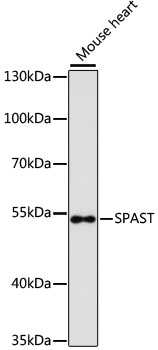
The antibody against SPAST was raised in Rabbit using the recombinant fusion protein containing a sequence corresponding to amino acids 120-325 of human SPAST (NP_055761.2) as the immunogen. The polyclonal antibody exists as a isotype IgG, by affinity purification. This antibody has been validated on WB, ELISA.

ADA-00963A

The antibody against SPAST was raised in Rabbit using the recombinant fusion protein containing a sequence corresponding to amino acids 120-325 of human SPAST (NP_055761.2) as the immunogen. The polyclonal antibody exists as a isotype IgG, by affinity purification. This antibody has been validated on WB, ELISA.

Number
Order Exclusive Products Now

Request a Quote
High Purity LevelsPrecision and ReliabilityCustomization Options

Specifications


Cat.No ADA-00963A ClonalityPolyclonal
Host SpeciesRabbitTarget NameSPAST
Target SynonymsFSP2; SPG4; ADPSP; SPASTFormLiquid
Species ReactivityMouseIsotypeIgG
Storage Buffer50% Glycerol, PBS with 0.01% thimerosal, pH7.3.Purification MethodAffinity purification
Positive SamplesMouse heartApplicationELISA, WB

Immunogen Information


Immunogen DescriptionRecombinant fusion protein containing a sequence corresponding to amino acids 120-325 of human SPAST (NP_055761.2).Target SpeciesHuman
Uniprot IDQ9UBP0Immunogen Sequence
Background Information
  • Uniprot Id

    Q9UBP0

  • Target Species

    Human

  • Target Name

    SPAST

  • Target Full Name

    Spastin

  • Target Function

    ATP-dependent microtubule severing protein that specifically recognizes and cuts microtubules that are polyglutamylated. Preferentially recognizes and acts on microtubules decorated with short polyglutamate tails: severing activity increases as the number of glutamates per tubulin rises from one to eight, but decreases beyond this glutamylation threshold. Severing activity is not dependent on tubulin acetylation or detyrosination. Microtubule severing promotes reorganization of cellular microtubule arrays and the release of microtubules from the centrosome following nucleation. It is critical for the biogenesis and maintenance of complex microtubule arrays in axons, spindles and cilia. SPAST is involved in abscission step of cytokinesis and nuclear envelope reassembly during anaphase in cooperation with the ESCRT-III complex. Recruited at the midbody, probably by IST1, and participates in membrane fission during abscission together with the ESCRT-III complex. Recruited to the nuclear membrane by IST1 and mediates microtubule severing, promoting nuclear envelope sealing and mitotic spindle disassembly during late anaphase. Required for membrane traffic from the endoplasmic reticulum (ER) to the Golgi and endosome recycling. Recruited by IST1 to endosomes and regulates early endosomal tubulation and recycling by mediating microtubule severing. Probably plays a role in axon growth and the formation of axonal branches.; Involved in lipid metabolism by regulating the size and distribution of lipid droplets.

  • Target Involvement

    Spastic paraplegia 4, autosomal dominant (SPG4)

  • Target Subcellular Location

    Membrane; Peripheral membrane protein. Endoplasmic reticulum. Midbody. Cytoplasm, cytoskeleton, microtubule organizing center, centrosome. Cytoplasm, cytoskeleton. Cytoplasm, perinuclear region. Nucleus. Cytoplasm, cytoskeleton, spindle. Cytoplasm.; [Isoform 1]: Endoplasmic reticulum membrane; Peripheral membrane protein. Nucleus membrane. Lipid droplet. Cytoplasm, cytoskeleton. Endosome.; [Isoform 3]: Cytoplasm. Endosome. Nucleus membrane.

  • Target Protein Families

    AAA ATPase family, Spastin subfamily

  • Target Tissue Specificity

    Expressed in brain, heart, kidney, liver, lung, pancreas, placenta and skeletal muscle. The short isoforms may predominate in brain and spinal cord.

  • Target Research Area

    Signal Transduction

  • Target Synonyms

    SPAST; ADPSP; FSP2; KIAA1083; SPG4; Spastin; EC 5.6.1.1; Spastic paraplegia 4 protein

  • Target Background

    This gene encodes a member of the AAA (ATPases associated with a variety of cellular activities) protein family. Members of this protein family share an ATPase domain and have roles in diverse cellular processes including membrane trafficking, intracellular motility, organelle biogenesis, protein folding, and proteolysis. The use of alternative translational initiation sites in this gene results in a single transcript variant that can produce isoforms that differ in the length of their N-terminus and which thereby differ in the efficiency of their export from the nucleus to the cytoplasm. In addition, alternative splicing results in multiple transcript variants that encode isoforms that differ in other protein regions as well. One isoform of this gene has been shown to be a microtubule-severing enzyme that regulates microtubule abundance, mobility, and plus-end distribution. Mutations in this gene cause the most frequent form of autosomal dominant spastic paraplegia 4.

Inquire Rabbit anti-Human SPAST Polyclonal Antibody Now


AbTriva respects your privacy and protects your personal data in accordance with AbTriva. For more information, please see our data protection statement. *

Notification