• Contact info@abtriva.com for inquiries and orders.
  • Chinese (Simplified)

  • English

  • German

  • Korean

  • Spanish

United States (English / $ USD)

CD163 Recombinant Monoclonal Antibody

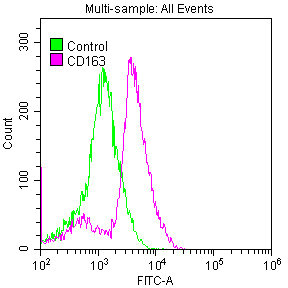
The recombinant antibody against CD163 was produced using a synthesized peptide as the immunogen. This antibody exists as a non-conjugated isotype Rabbit IgG, Affinity-chromatography purified. This antibody has been validated on ELISA, IHC, FC.

ADC-56312A

The recombinant antibody against CD163 was produced using a synthesized peptide as the immunogen. This antibody exists as a non-conjugated isotype Rabbit IgG, Affinity-chromatography purified. This antibody has been validated on ELISA, IHC, FC.

$350.00

Number
Order Exclusive Products Now

Request a Quote
High Purity LevelsPrecision and ReliabilityCustomization Options

Specifications


Cat.No ADC-56312A ClonalityMonoclonal
Target NameCD163FormLiquid
Species ReactivityHumanIsotypeRabbit IgG
Storage BufferPH 7.4, 0.02% sodium azide and 50% glycerol., 150mM NaCl, Rabbit IgG in phosphate buffered salinePurification MethodAffinity-chromatography purified
ConjugateNon-conjugatedApplicationELISA, IHC, FC
StorageUpon receipt

Immunogen Information


Immunogen DescriptionA synthesized peptideTarget SpeciesHuman
Immunogen SequenceComplete sequences for the immunogen, target protein, and peptides are available upon request.Uniprot IDQ86VB7
Background Information
  • Uniprot Id

    Q86VB7

  • Target Species

    Human

  • Target Name

    CD163

  • Target Full Name

    Scavenger receptor cysteine-rich type 1 protein M130

  • Target Function

    Acute phase-regulated receptor involved in clearance and endocytosis of hemoglobin/haptoglobin complexes by macrophages and may thereby protect tissues from free hemoglobin-mediated oxidative damage. May play a role in the uptake and recycling of iron, via endocytosis of hemoglobin/haptoglobin and subsequent breakdown of heme. Binds hemoglobin/haptoglobin complexes in a calcium-dependent and pH-dependent manner. Exhibits a higher affinity for complexes of hemoglobin and multimeric haptoglobin of HP*1F phenotype than for complexes of hemoglobin and dimeric haptoglobin of HP*1S phenotype. Induces a cascade of intracellular signals that involves tyrosine kinase-dependent calcium mobilization, inositol triphosphate production and secretion of IL6 and CSF1. Isoform 3 exhibits the higher capacity for ligand endocytosis and the more pronounced surface expression when expressed in cells.; After shedding, the soluble form (sCD163) may play an anti-inflammatory role, and may be a valuable diagnostic parameter for monitoring macrophage activation in inflammatory conditions.

  • Target Subcellular Location

    [Soluble CD163]: Secreted.; Cell membrane; Single-pass type I membrane protein. Note=Isoform 1 and isoform 2 show a lower surface expression when expressed in cells.

  • Target Tissue Specificity

    Expressed in monocytes and mature macrophages such as Kupffer cells in the liver, red pulp macrophages in the spleen, cortical macrophages in the thymus, resident bone marrow macrophages and meningeal macrophages of the central nervous system. Expressed a

  • Target Research Area

    Cardiovascular

  • Target Synonyms

    C163A_HUMAN; CD 163; CD163; CD163 antigen; CD163 molecule; Hemoglobin scavenger receptor; M130; M130 antigen precursor; Macrophage associated antigen; MM130; OTTHUMP00000238617; OTTHUMP00000238618; OTTHUMP00000238619; OTTHUMP00000238620; SCARI1; Scavenger receptor cysteine rich type 1 protein M130; sCD163; Soluble CD163

  • Target Background

    The protein encoded by this gene is a member of the scavenger receptor cysteine-rich (SRCR) superfamily, and is exclusively expressed in monocytes and macrophages. It functions as an acute phase-regulated receptor involved in the clearance and endocytosis of hemoglobin/haptoglobin complexes by macrophages, and may thereby protect tissues from free hemoglobin-mediated oxidative damage. This protein may also function as an innate immune sensor for bacteria and inducer of local inflammation. Alternatively spliced transcript variants encoding different isoforms have been described for this gene.

Inquire CD163 Recombinant Monoclonal Antibody Now


AbTriva respects your privacy and protects your personal data in accordance with AbTriva. For more information, please see our data protection statement. *

Notification