• Contact info@abtriva.com for inquiries and orders.
  • Chinese (Simplified)

  • English

  • German

  • Korean

  • Spanish

United States (English / $ USD)

DDB2 Recombinant Monoclonal Antibody

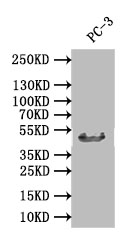
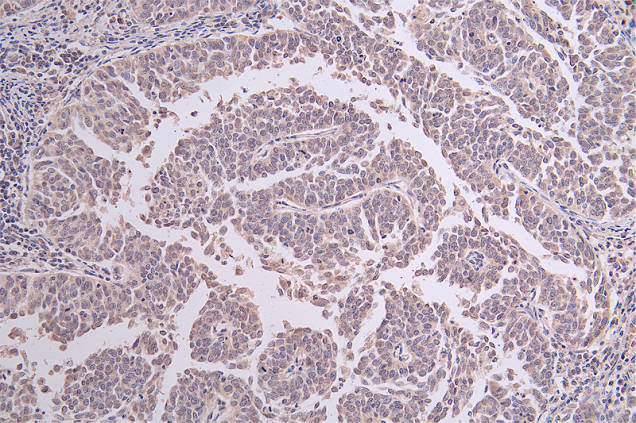
The recombinant antibody against DDB2 was produced using a synthesized peptide derived from Human DDB2 as the immunogen. This antibody exists as a non-conjugated isotype Rabbit IgG, Affinity-chromatography purified. This antibody has been validated on ELISA, WB, IHC, FC.

ADC-56510A

The recombinant antibody against DDB2 was produced using a synthesized peptide derived from Human DDB2 as the immunogen. This antibody exists as a non-conjugated isotype Rabbit IgG, Affinity-chromatography purified. This antibody has been validated on ELISA, WB, IHC, FC.

$350.00

Number
Order Exclusive Products Now

Request a Quote
High Purity LevelsPrecision and ReliabilityCustomization Options

Specifications


Cat.No ADC-56510A ClonalityMonoclonal
Target NameDDB2Target SynonymsDDB2, DNA damage-binding protein 2 (DDB p48 subunit) (DDBb) (Damage-specific DNA-binding protein 2) (UV-damaged DNA-binding protein 2) (UV-DDB 2)
FormLiquidSpecies ReactivityHuman
IsotypeRabbit IgGStorage BufferPH 7.4, 0.02% sodium azide and 50% glycerol., 150mM NaCl, Rabbit IgG in phosphate buffered saline
Purification MethodAffinity-chromatography purifiedConjugateNon-conjugated
ApplicationELISA, IHC, WB, FCStorageUpon receipt

Immunogen Information


Immunogen DescriptionA synthesized peptide derived from Human DDB2Target SpeciesHuman
Immunogen SequenceComplete sequences for the immunogen, target protein, and peptides are available upon request.Uniprot IDQ92466
Background Information
  • Uniprot Id

    Q92466

  • Target Species

    Human

  • Target Name

    DDB2

  • Target Full Name

    DNA damage-binding protein 2

  • Target Function

    Protein, which is both involved in DNA repair and protein ubiquitination, as part of the UV-DDB complex and DCX (DDB1-CUL4-X-box) complexes, respectively. Core component of the UV-DDB complex (UV-damaged DNA-binding protein complex), a complex that recognizes UV-induced DNA damage and recruit proteins of the nucleotide excision repair pathway (the NER pathway) to initiate DNA repair. The UV-DDB complex preferentially binds to cyclobutane pyrimidine dimers (CPD), 6-4 photoproducts (6-4 PP), apurinic sites and short mismatches. Also functions as the substrate recognition module for the DCX (DDB2-CUL4-X-box) E3 ubiquitin-protein ligase complex DDB2-CUL4-ROC1 (also known as CUL4-DDB-ROC1 and CUL4-DDB-RBX1). The DDB2-CUL4-ROC1 complex may ubiquitinate histone H2A, histone H3 and histone H4 at sites of UV-induced DNA damage. The ubiquitination of histones may facilitate their removal from the nucleosome and promote subsequent DNA repair. The DDB2-CUL4-ROC1 complex also ubiquitinates XPC, which may enhance DNA-binding by XPC and promote NER. The DDB2-CUL4-ROC1 complex also ubiquitinates KAT7/HBO1 in response to DNA damage, leading to its degradation: recognizes KAT7/HBO1 following phosphorylation by ATR.; Inhibits UV-damaged DNA repair.; Inhibits UV-damaged DNA repair.

  • Target Involvement

    Xeroderma pigmentosum complementation group E (XP-E)

  • Target Subcellular Location

    Nucleus. Note=Accumulates at sites of DNA damage following UV irradiation.

  • Target Protein Families

    WD repeat DDB2/WDR76 family

  • Target Tissue Specificity

    Ubiquitously expressed; with highest levels in corneal endothelium and lowest levels in brain. Isoform D1 is highly expressed in brain and heart. Isoform D2, isoform D3 and isoform D4 are weakly expressed.

  • Target Research Area

    Epigenetics and Nuclear Signaling

  • Target Synonyms

    damage-specific DNA binding protein 2; Damage-specific DNA-binding protein 2; DDB p48 subunit; Ddb2; DDB2_HUMAN; DDBb; DNA damage-binding protein 2; UV-damaged DNA-binding protein 2; UV-DDB 2; Xeroderma pigmentosum group E protei

  • Target Background

    This gene encodes a protein that is necessary for the repair of ultraviolet light-damaged DNA. This protein is the smaller subunit of a heterodimeric protein complex that participates in nucleotide excision repair, and this complex mediates the ubiquitylation of histones H3 and H4, which facilitates the cellular response to DNA damage. This subunit appears to be required for DNA binding. Mutations in this gene cause xeroderma pigmentosum complementation group E, a recessive disease that is characterized by an increased sensitivity to UV light and a high predisposition for skin cancer development, in some cases accompanied by neurological abnormalities. Two transcript variants encoding different isoforms have been found for this gene.

Inquire DDB2 Recombinant Monoclonal Antibody Now


AbTriva respects your privacy and protects your personal data in accordance with AbTriva. For more information, please see our data protection statement. *

Notification