-
Chinese (Simplified)
-
English
-
German
-
Korean
-
Spanish

Chinese (Simplified)
English
German
Korean
Spanish
Sign up for an account to enjoy easy online shopping and instant order tracking.
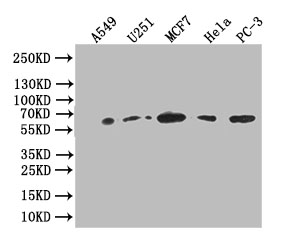
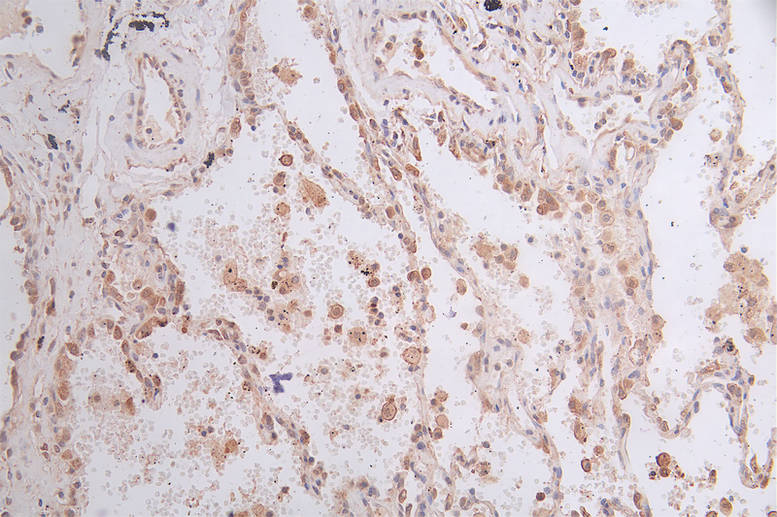
The recombinant antibody against GPI was produced using a synthesized peptide derived from Human GPI as the immunogen. This antibody exists as a non-conjugated isotype Rabbit IgG, Affinity-chromatography purified. This antibody has been validated on ELISA, WB, IHC, FC.
$350.00
| Cat.No | ADC-56511A | Clonality | Monoclonal |
|---|---|---|---|
| Target Name | Gpi | Target Synonyms | Glucose-6-phosphate isomerase (GPI) (EC 5.3.1.9) (Autocrine motility factor) (AMF) (Neuroleukin) (NLK) (Phosphoglucose isomerase) (PGI) (Phosphohexose isomerase) (PHI) (Sperm antigen 36) (SA-36), GPI |
| Form | Liquid | Species Reactivity | Human |
| Isotype | Rabbit IgG | Storage Buffer | PH 7.4, 0.02% sodium azide and 50% glycerol., 150mM NaCl, Rabbit IgG in phosphate buffered saline |
| Purification Method | Affinity-chromatography purified | Conjugate | Non-conjugated |
| Application | ELISA, IHC, WB, FC | Storage | Upon receipt |
| Immunogen Description | A synthesized peptide derived from Human GPI | Target Species | Human |
|---|---|---|---|
| Immunogen Sequence | Complete sequences for the immunogen, target protein, and peptides are available upon request. | Uniprot ID | P06744 |
Uniprot Id
P06744
Target Species
Human
Target Name
GPI
Target Full Name
Glucose-6-phosphate isomerase
Target Function
In the cytoplasm, catalyzes the conversion of glucose-6-phosphate to fructose-6-phosphate, the second step in glycolysis, and the reverse reaction during gluconeogenesis. Besides it's role as a glycolytic enzyme, also acts as a secreted cytokine: acts as an angiogenic factor (AMF) that stimulates endothelial cell motility. Acts as a neurotrophic factor, neuroleukin, for spinal and sensory neurons. It is secreted by lectin-stimulated T-cells and induces immunoglobulin secretion.
Target Involvement
Hemolytic anemia, non-spherocytic, due to glucose phosphate isomerase deficiency (HA-GPID)
Target Subcellular Location
Cytoplasm. Secreted.
Target Protein Families
GPI family
Target Synonyms
AMF; Aurocrine motility factor; Autocrine motility factor; DKFZp686C13233; EC 5.3.1.9; G6PI_HUMAN; Glucose phosphate isomerase; Glucose-6-phosphate isomerase; GNPI; GPI; Gpi1; Hexose monophosphate isomerase; Hexosephosphate isomerase; Neuroleukin; NLK; Oxoisomerase; PGI; PHI; Phosphoglucose isomerase; Phosphohexomutase; Phosphohexose isomerase; Phosphosaccharomutase; SA 36; SA-36; SA36; Sperm antigen 36
Target Background
This gene encodes a member of the glucose phosphate isomerase protein family. The encoded protein has been identified as a moonlighting protein based on its ability to perform mechanistically distinct functions. In the cytoplasm, the gene product functions as a glycolytic enzyme (glucose-6-phosphate isomerase) that interconverts glucose-6-phosphate and fructose-6-phosphate. Extracellularly, the encoded protein (also referred to as neuroleukin) functions as a neurotrophic factor that promotes survival of skeletal motor neurons and sensory neurons, and as a lymphokine that induces immunoglobulin secretion. The encoded protein is also referred to as autocrine motility factor based on an additional function as a tumor-secreted cytokine and angiogenic factor. Defects in this gene are the cause of nonspherocytic hemolytic anemia and a severe enzyme deficiency can be associated with hydrops fetalis, immediate neonatal death and neurological impairment. Alternative splicing results in multiple transcript variants.
Notification