-
Chinese (Simplified)
-
English
-
German
-
Korean
-
Spanish
Chinese (Simplified)
English
German
Korean
Spanish
Sign up for an account to enjoy easy online shopping and instant order tracking.
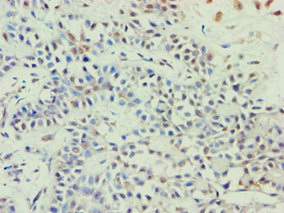
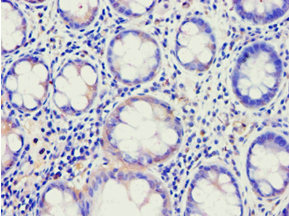
The antibody against ABCE1 was raised in rabbit using the Recombinant Human ATP-binding cassette sub-family E member 1 protein (320-599AA) as the immunogen. This antibody exists as a non-conjugated isotype IgG, Antigen affinity purified. This antibody has been validated on ELISA, WB, IHC.
$299.00
| Cat.No | ADC-40254A | Clonality | Polyclonal |
|---|---|---|---|
| Host Species | Rabbit | Target Name | ABCE1 |
| Form | Liquid | Species Reactivity | Human |
| Isotype | IgG | Storage Buffer | 50% Glycerol, PBS with 0.02% sodium azide, pH7.3. |
| Purification Method | Antigen affinity purified | Conjugate | Non-conjugated |
| Application | ELISA, IHC, WB | Storage | Upon receipt |
| Immunogen Description | Recombinant Human ATP-binding cassette sub-family E member 1 protein (320-599AA) | Target Species | Human |
|---|---|---|---|
| Immunogen Sequence | Complete sequences for the immunogen, target protein, and peptides are available upon request. | Uniprot ID | P61221 |
Uniprot Id
P61221
Target Species
Human
Target Name
ABCE1
Target Full Name
ATP-binding cassette sub-family E member 1
Target Function
Cotranslational quality control factor involved in the No-Go Decay (NGD) pathway. Together with PELO and HBS1L, is required for 48S complex formation from 80S ribosomes and dissociation of vacant 80S ribosomes. Together with PELO and HBS1L, recognizes stalled ribosomes and promotes dissociation of elongation complexes assembled on non-stop mRNAs; this triggers endonucleolytic cleavage of the mRNA, a mechanism to release non-functional ribosomes and to degrade damaged mRNAs as part of the No-Go Decay (NGD) pathway. Plays a role in the regulation of mRNA turnover. Plays a role in quality control of translation of mitochondrial outer membrane-localized mRNA. As part of the PINK1-regulated signaling, ubiquitinated by CNOT4 upon mitochondria damage; this modification generates polyubiquitin signals that recruit autophagy receptors to the mitochondrial outer membrane and initiate mitophagy. RNASEL-specific protein inhibitor which antagonizes the binding of 2-5A (5'-phosphorylated 2',5'-linked oligoadenylates) to RNASEL. Negative regulator of the anti-viral effect of the interferon-regulated 2-5A/RNASEL pathway.; (Microbial infection) May act as a chaperone for post-translational events during HIV-1 capsid assembly.; (Microbial infection) Plays a role in the down-regulation of the 2-5A/RNASEL pathway during encephalomyocarditis virus (EMCV) and HIV-1 infections.
Target Subcellular Location
Cytoplasm. Mitochondrion. Note=Localized to clusters of virus formation at the plasma membrane.
Target Protein Families
ABC transporter superfamily, ABCE family
Target Synonyms
2' 5' oligoadenylate binding protein; 2''-5''-oligoadenylate-binding protein; 2'5' oligoadenylate binding protein; ABC 38; ABC38; ABCE 1; ABCE1; ABCE1_HUMAN; ATP binding cassette sub family E (OABP) member 1; ATP binding cassette sub family E member 1; ATP-binding cassette sub-family E member 1; HuHP 68; HuHP68; OABP; Ribonuclease 4 inhibitor; Ribonuclease L (2' 5' oligoisoadenylate synthetase dependent) inhibitor; Ribonuclease L (2'5' oligoisoadenylate synthetase dependent) inhibitor; Ribonuclease L inhibitor; RLI; RNase L inhibitor; RNASEL1; RNASELI; RNS 4I; RNS4I
Target Background
The protein encoded by this gene is a member of the superfamily of ATP-binding cassette (ABC) transporters. ABC proteins transport various molecules across extra- and intra-cellular membranes. ABC genes are divided into seven distinct subfamilies (ABC1, MDR/TAP, MRP, ALD, OABP, GCN20, White). This protein is a member of the OABP subfamily. Alternatively referred to as the RNase L inhibitor, this protein functions to block the activity of ribonuclease L. Activation of ribonuclease L leads to inhibition of protein synthesis in the 2-5A/RNase L system, the central pathway for viral interferon action. Two transcript variants encoding the same protein have been found for this gene.
Notification