• Contact info@abtriva.com for inquiries and orders.
  • Chinese (Simplified)

  • English

  • German

  • Korean

  • Spanish

United States (English / $ USD)

Rabbit anti-Human ACADSB Polyclonal Antibody

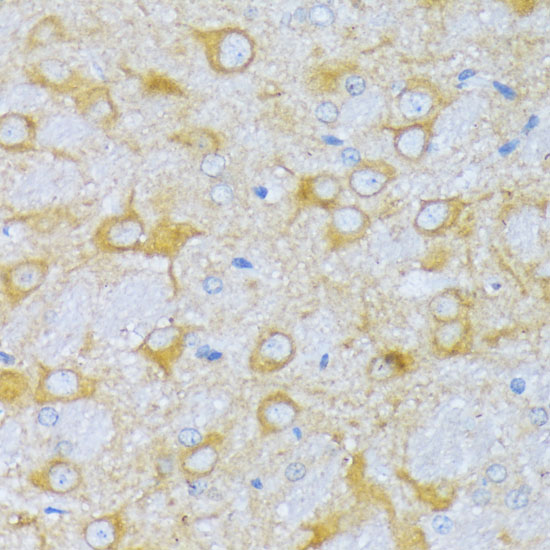
The antibody against ACADSB was raised in Rabbit using the recombinant fusion protein containing a sequence corresponding to amino acids 133-432 of human ACADSB (NP_001600.1) as the immunogen. The polyclonal antibody exists as a isotype IgG, by affinity purification. This antibody has been validated on IHC-P, ELISA.

ADA-05310A

The antibody against ACADSB was raised in Rabbit using the recombinant fusion protein containing a sequence corresponding to amino acids 133-432 of human ACADSB (NP_001600.1) as the immunogen. The polyclonal antibody exists as a isotype IgG, by affinity purification. This antibody has been validated on IHC-P, ELISA.

Number
Order Exclusive Products Now

Request a Quote
High Purity LevelsPrecision and ReliabilityCustomization Options

Specifications


Cat.No ADA-05310A ClonalityPolyclonal
Host SpeciesRabbitTarget NameACADSB
Target SynonymsACAD7; SBCAD; 2-MEBCAD; ACADSBFormLiquid
Species ReactivityHuman, Mouse, RatIsotypeIgG
Storage Buffer50% Glycerol, PBS with 0.01% thimerosal, pH7.3.Purification MethodAffinity purification
ApplicationELISA, IHC-P

Immunogen Information


Immunogen DescriptionRecombinant fusion protein containing a sequence corresponding to amino acids 133-432 of human ACADSB (NP_001600.1).Target SpeciesHuman
Uniprot IDP45954Immunogen Sequence
Background Information
  • Uniprot Id

    P45954

  • Target Species

    Human

  • Target Name

    ACADSB

  • Target Full Name

    Short/branched chain specific acyl-CoA dehydrogenase, mitochondrial

  • Target Function

    Short and branched chain specific acyl-CoA dehydrogenase that catalyzes the removal of one hydrogen from C-2 and C-3 of the fatty acyl-CoA thioester, resulting in the formation of trans-2-enoyl-CoA. Among the different mitochondrial acyl-CoA dehydrogenases, acts specifically on short and branched chain acyl-CoA derivatives such as (S)-2-methylbutyryl-CoA as well as short straight chain acyl-CoAs such as butyryl-CoA. Plays an important role in the metabolism of L-isoleucine by catalyzing the dehydrogenation of 2-methylbutyryl-CoA, one of the steps of the L-isoleucine catabolic pathway. Can also act on valproyl-CoA, a metabolite of valproic acid, an antiepileptic drug.

  • Target Involvement

    Short/branched-chain acyl-CoA dehydrogenase deficiency (SBCADD)

  • Target Subcellular Location

    Mitochondrion matrix.

  • Target Protein Families

    Acyl-CoA dehydrogenase family

  • Target Tissue Specificity

    Ubiquitously expressed.

  • Target Synonyms

    2 MEBCAD; 2 methyl branched chain acyl CoA dehydrogenase; 2 methylbutyryl CoA dehydrogenase; 2 methylbutyryl coenzyme A dehydrogenase; 2-MEBCAD; 2-methyl branched chain acyl-CoA dehydrogenase; 2-methylbutyryl-CoA dehydrogenase; 2-methylbutyryl-coenzyme A dehydrogenase; ACAD7; ACADSB; ACDSB_HUMAN; acyl CoA dehydrogenase; short/branched chain; acyl Coenzyme A dehydrogenase short branched chain; mitochondrial; OTTHUMP00000020685; OTTHUMP00000046795; SBCAD; Short/branched chain specific acyl-CoA dehydrogenase; short/branched chain specific acyl-CoA dehydrogenase; mitochondrial

  • Target Background

    Short/branched chain acyl-CoA dehydrogenase(ACADSB) is a member of the acyl-CoA dehydrogenase family of enzymes that catalyze the dehydrogenation of acyl-CoA derivatives in the metabolism of fatty acids or branch chained amino acids. Substrate specificity is the primary characteristic used to define members of this gene family. The ACADSB gene product has the greatest activity towards the short branched chain acyl-CoA derivative, (S)-2-methylbutyryl-CoA, but also reacts significantly with other 2-methyl branched chain substrates and with short straight chain acyl-CoAs. The cDNA encodes for a mitochondrial precursor protein which is cleaved upon mitochondrial import and predicted to yield a mature peptide of approximately 43.7-KDa.

Inquire Rabbit anti-Human ACADSB Polyclonal Antibody Now


AbTriva respects your privacy and protects your personal data in accordance with AbTriva. For more information, please see our data protection statement. *

Notification