-
Chinese (Simplified)
-
English
-
German
-
Korean
-
Spanish
Chinese (Simplified)
English
German
Korean
Spanish
Sign up for an account to enjoy easy online shopping and instant order tracking.
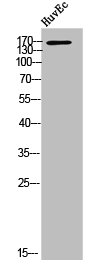
The antibody against ACE was raised in rabbit using the Synthesized peptide derived from the Internal region of Human ACE1. as the immunogen. This antibody exists as a non-conjugated isotype IgG. The antibody was affinity-purified from rabbit antiserum by affinity-chromatography using epitope-specific immunogen. This antibody has been validated on WB, IHC, ELISA.
$167.00
| Cat.No | ADC-36156A | Clonality | Polyclonal |
|---|---|---|---|
| Host Species | Rabbit | Target Name | Ace |
| Form | Liquid | Species Reactivity | Human, Mouse, Rat |
| Isotype | IgG | Storage Buffer | 0.5% BSA and 0.02% sodium azide., Liquid in PBS containing 50% glycerol |
| Purification Method | The antibody was affinity-purified from rabbit antiserum by affinity-chromatography using epitope-specific immunogen. | Conjugate | Non-conjugated |
| Application | ELISA, IHC, WB | Storage | Upon receipt |
| Immunogen Description | Synthesized peptide derived from the Internal region of Human ACE1. | Target Species | Human |
|---|---|---|---|
| Immunogen Sequence | Complete sequences for the immunogen, target protein, and peptides are available upon request. | Uniprot ID | P12821 |
Uniprot Id
P12821
Target Species
Human
Target Name
ACE
Target Full Name
Angiotensin-converting enzyme
Target Function
Converts angiotensin I to angiotensin II by release of the terminal His-Leu, this results in an increase of the vasoconstrictor activity of angiotensin. Also able to inactivate bradykinin, a potent vasodilator. Has also a glycosidase activity which releases GPI-anchored proteins from the membrane by cleaving the mannose linkage in the GPI moiety.
Target Involvement
Ischemic stroke (ISCHSTR); Renal tubular dysgenesis (RTD); Microvascular complications of diabetes 3 (MVCD3); Intracerebral hemorrhage (ICH)
Target Subcellular Location
[Angiotensin-converting enzyme, soluble form]: Secreted.; Cell membrane; Single-pass type I membrane protein. Cytoplasm.
Target Protein Families
Peptidase M2 family
Target Tissue Specificity
Ubiquitously expressed, with highest levels in lung, kidney, heart, gastrointestinal system and prostate. Isoform Testis-specific is expressed in spermatocytes and adult testis.
Target Synonyms
ACE 1; ACE; ACE T; ACE_HUMAN; ACE1; Angiotensin converting enzyme somatic isoform; Angiotensin converting enzyme testis specific isoform; Angiotensin I converting enzyme 1; Angiotensin I converting enzyme; Angiotensin I converting enzyme peptidyl dipeptidase A 1; angiotensin I converting enzyme peptidyl-dipeptidase A 1 transcript; Angiotensin-converting enzyme; Carboxycathepsin; CD 143; CD143; CD143 antigen; DCP 1; DCP; DCP1; Dipeptidyl carboxypeptidase 1; Dipeptidyl carboxypeptidase I; Kininase II; MGC26566; MVCD3; Peptidase P; Peptidyl dipeptidase A; soluble form; Testicular ECA
Target Background
This gene encodes an enzyme involved in blood pressure regulation and electrolyte balance. It catalyzes the conversion of angiotensin I into a physiologically active peptide angiotensin II. Angiotensin II is a potent vasopressor and aldosterone-stimulating peptide that controls blood pressure and fluid-electrolyte balance. This angiotensin converting enzyme (ACE) also inactivates the vasodilator protein, bradykinin. Accordingly, the encoded enzyme increases blood pressure and is a drug target of ACE inhibitors, which are often prescribed to reduce blood pressure. This enzyme additionally plays a role in fertility through its ability to cleave and release GPI-anchored membrane proteins in spermatozoa. Many studies have associated the presence or absence of a 287 bp Alu repeat element in this gene with the levels of circulating enzyme. This polymorphism, as well as mutations in this gene, have been implicated in a wide variety of diseases including cardiovascular pathophysiologies, psoriasis, renal disease, stroke, and Alzheimer's disease. Regulation of the homologous ACE2 gene may be involved in progression of disease caused by several human coronaviruses, including SARS-CoV and SARS-CoV-2. Alternative splicing results in multiple transcript variants encoding both somatic (sACE) and male-specific testicular (tACE) isoforms.
Notification