• Contact info@abtriva.com for inquiries and orders.
  • Chinese (Simplified)

  • English

  • German

  • Korean

  • Spanish

United States (English / $ USD)

Rabbit anti-Human ACSL6 Polyclonal Antibody

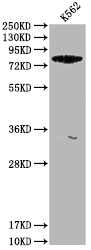
The antibody against ACSL6 was raised in rabbit using the Recombinant Human Long-chain-fatty-acid--CoA ligase 6 protein (214-484aa) as the immunogen. This antibody exists as a non-conjugated isotype IgG, purified by protein G with a purity greater than 95%. This antibody has been validated on ELISA, WB.

ADC-55246A

The antibody against ACSL6 was raised in rabbit using the Recombinant Human Long-chain-fatty-acid–CoA ligase 6 protein (214-484aa) as the immunogen. This antibody exists as a non-conjugated isotype IgG, purified by protein G with a purity greater than 95%. This antibody has been validated on ELISA, WB.

$299.00

Number
Order Exclusive Products Now

Request a Quote
High Purity LevelsPrecision and ReliabilityCustomization Options

Specifications


Cat.No ADC-55246A ClonalityPolyclonal
Host SpeciesRabbitTarget NameACSL6
Target SynonymsACS2 FACL6 KIAA0837 LACS5, ACSL6, Long-chain-fatty-acid--CoA ligase 6 (EC 6.2.1.3) (Long-chain acyl-CoA synthetase 6) (LACS 6)FormLiquid
Species ReactivityHumanIsotypeIgG
Storage Buffer0.01M PBS, 0.03% Proclin 300; Constituents: 50% Glycerol, PH 7.4Purification Method>95%, Protein G purified
ConjugateNon-conjugatedApplicationELISA, WB
StorageUpon receipt

Immunogen Information


Immunogen DescriptionRecombinant Human Long-chain-fatty-acid--CoA ligase 6 protein (214-484aa)Target SpeciesHuman
Immunogen SequenceComplete sequences for the immunogen, target protein, and peptides are available upon request.Uniprot IDQ9UKU0
Background Information
  • Uniprot Id

    Q9UKU0

  • Target Species

    Human

  • Target Name

    ACSL6

  • Target Full Name

    Long-chain-fatty-acid--CoA ligase 6

  • Target Function

    Catalyzes the conversion of long-chain fatty acids to their active form acyl-CoA for both synthesis of cellular lipids, and degradation via beta-oxidation. Plays an important role in fatty acid metabolism in brain and the acyl-CoAs produced may be utilized exclusively for the synthesis of the brain lipid.

  • Target Involvement

    A chromosomal aberration involving ACSL6 may be a cause of myelodysplastic syndrome with basophilia. Translocation t(5;12)(q31;p13) with ETV6.

  • Target Subcellular Location

    Mitochondrion outer membrane; Single-pass type III membrane protein. Peroxisome membrane; Single-pass type III membrane protein. Microsome membrane; Single-pass type III membrane protein. Endoplasmic reticulum membrane; Single-pass type III membrane protein.

  • Target Protein Families

    ATP-dependent AMP-binding enzyme family

  • Target Tissue Specificity

    Expressed predominantly in erythrocyte precursors, in particular in reticulocytes, fetal blood cells derived from fetal liver, hemopoietic stem cells from cord blood, bone marrow and brain.

  • Target Synonyms

    ACSL6; ACS2; FACL6; KIAA0837; LACS5Long-chain-fatty-acid--CoA ligase 6; EC 6.2.1.3; Arachidonate--CoA ligase; EC 6.2.1.15; Long-chain acyl-CoA synthetase 6; LACS 6

  • Target Background

    The protein encoded by this gene catalyzes the formation of acyl-CoA from fatty acids, ATP, and CoA, using magnesium as a cofactor. The encoded protein plays a major role in fatty acid metabolism in the brain. Translocations with the ETV6 gene are causes of myelodysplastic syndrome with basophilia, acute myelogenous leukemia with eosinophilia, and acute eosinophilic leukemia. Several transcript variants encoding different isoforms have been found for this gene.

Inquire Rabbit anti-Human ACSL6 Polyclonal Antibody Now


AbTriva respects your privacy and protects your personal data in accordance with AbTriva. For more information, please see our data protection statement. *

Notification