-
Chinese (Simplified)
-
English
-
German
-
Korean
-
Spanish
Chinese (Simplified)
English
German
Korean
Spanish
Sign up for an account to enjoy easy online shopping and instant order tracking.
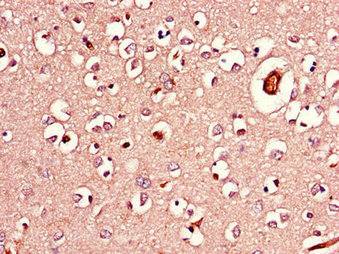
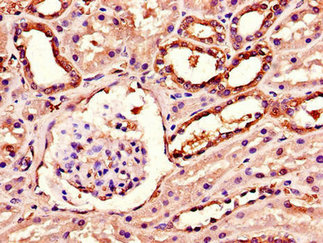
The antibody against AGK was raised in rabbit using the Recombinant Human Acylglycerol kinase, mitochondrial protein (32-65AA) as the immunogen. This antibody exists as a non-conjugated isotype IgG, purified by protein G with a purity greater than 95%. This antibody has been validated on ELISA, WB, IHC.
$299.00
| Cat.No | ADC-14329A | Clonality | Polyclonal |
|---|---|---|---|
| Host Species | Rabbit | Target Name | AGK |
| Form | Liquid | Species Reactivity | Human, Mouse |
| Isotype | IgG | Storage Buffer | 0.01M PBS, 0.03% Proclin 300; Constituents: 50% Glycerol, PH 7.4 |
| Purification Method | >95%, Protein G purified | Conjugate | Non-conjugated |
| Application | ELISA, IHC, WB | Storage | Upon receipt |
| Immunogen Description | Recombinant Human Acylglycerol kinase, mitochondrial protein (32-65AA) | Target Species | Human |
|---|---|---|---|
| Immunogen Sequence | Complete sequences for the immunogen, target protein, and peptides are available upon request. | Uniprot ID | Q53H12 |
Uniprot Id
Q53H12
Target Species
Human
Target Name
AGK
Target Full Name
Acylglycerol kinase, mitochondrial
Target Function
Lipid kinase that can phosphorylate both monoacylglycerol and diacylglycerol to form lysophosphatidic acid (LPA) and phosphatidic acid (PA), respectively. Does not phosphorylate sphingosine. Phosphorylates ceramide. Phosphorylates 1,2-dioleoylglycerol more rapidly than 2,3-dioleoylglycerol. Independently of its lipid kinase activity, acts as a component of the TIM22 complex. The TIM22 complex mediates the import and insertion of multi-pass transmembrane proteins into the mitochondrial inner membrane by forming a twin-pore translocase that uses the membrane potential as the external driving force. In the TIM22 complex, required for the import of a subset of metabolite carriers into mitochondria, such as ANT1/SLC25A4 and SLC25A24, while it is not required for the import of TIMM23. Overexpression increases the formation and secretion of LPA, resulting in transactivation of EGFR and activation of the downstream MAPK signaling pathway, leading to increased cell growth.
Target Involvement
Mitochondrial DNA depletion syndrome 10 (MTDPS10); Cataract 38 (CTRCT38)
Target Subcellular Location
Mitochondrion inner membrane; Peripheral membrane protein. Mitochondrion intermembrane space.
Target Protein Families
AGK family
Target Tissue Specificity
Highly expressed in muscle, heart, kidney and brain.
Target Synonyms
2610037M15Rik; 6720408I04Rik; Acylglycerol Kinase; Acylglycerol kinase mitochondrial; Acylglycerol kinase; mitochondrial; agk; AGK_HUMAN; AI465370; FLJ10842; hAGK; HsMuLK; MuLK; Multi substrate lipid kinase; Multi-substrate lipid kinase; Multiple substrate lipid kinase; RGD1562046
Target Background
The protein encoded by this gene is a mitochondrial membrane protein involved in lipid and glycerolipid metabolism. The encoded protein is a lipid kinase that catalyzes the formation of phosphatidic and lysophosphatidic acids. Defects in this gene have been associated with mitochondrial DNA depletion syndrome 10.
Notification