-
Chinese (Simplified)
-
English
-
German
-
Korean
-
Spanish

Chinese (Simplified)
English
German
Korean
Spanish
Sign up for an account to enjoy easy online shopping and instant order tracking.
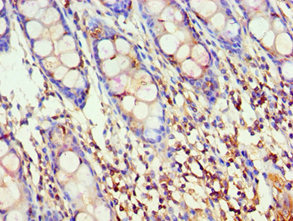
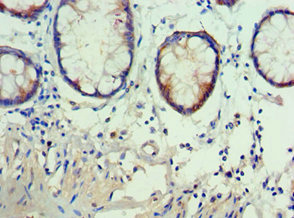
The antibody against AKAP5 was raised in rabbit using the Recombinant Human A-kinase anchor protein 5 protein (1-270AA) as the immunogen. This antibody exists as a non-conjugated isotype IgG, Antigen affinity purified. This antibody has been validated on ELISA, IHC.
$299.00
| Cat.No | ADC-44452A | Clonality | Polyclonal |
|---|---|---|---|
| Host Species | Rabbit | Target Name | AKAP5 |
| Form | Liquid | Species Reactivity | Human |
| Isotype | IgG | Storage Buffer | 50% Glycerol, PBS with 0.02% sodium azide, pH7.3. |
| Purification Method | Antigen affinity purified | Conjugate | Non-conjugated |
| Application | ELISA, IHC | Storage | Upon receipt |
| Immunogen Description | Recombinant Human A-kinase anchor protein 5 protein (1-270AA) | Target Species | Human |
|---|---|---|---|
| Immunogen Sequence | Complete sequences for the immunogen, target protein, and peptides are available upon request. | Uniprot ID | P24588 |
Uniprot Id
P24588
Target Species
Human
Target Name
AKAP5
Target Full Name
A-kinase anchor protein 5
Target Function
Multivalent scaffold protein that anchors the cAMP-dependent protein kinase/PKA to cytoskeletal and/or organelle-associated proteins, targeting the signal carried by cAMP to specific intracellular effectors. Association with the beta2-adrenergic receptor (beta2-AR) not only regulates beta2-AR signaling pathway, but also the activation by PKA by switching off the beta2-AR signaling cascade. Plays a role in long term synaptic potentiation by regulating protein trafficking from the dendritic recycling endosomes to the plasma membrane and controlling both structural and functional plasticity at excitatory synapses.
Target Subcellular Location
Postsynaptic recycling endosome membrane; Lipid-anchor.
Target Tissue Specificity
Predominantly in the cerebral cortex and the postsynaptic densities of the forebrain, and to a lesser extent in adrenal medulla, lung and anterior pituitary.
Target Synonyms
A kinase (PRKA) anchor protein 5; A kinase anchor protein 5; A kinase anchor protein 79kDa; A kinase anchoring protein 75/79; A-kinase anchor protein 5; A-kinase anchor protein 79 kDa; AKAP 5; AKAP 75; AKAP 79; AKAP-5; Akap5; AKAP5_HUMAN; AKAP75; AKAP79; cAMP dependent protein kinase regulatory subunit II high affinity binding protein; cAMP-dependent protein kinase regulatory subunit II high affinity-binding protein; H21
Target Background
The A-kinase anchor proteins (AKAPs) are a group of structurally diverse proteins, which have the common function of binding to the regulatory subunit of protein kinase A (PKA) and confining the holoenzyme to discrete locations within the cell. This gene encodes a member of the AKAP family. The encoded protein binds to the RII-beta regulatory subunit of PKA, and also to protein kinase C and the phosphatase calcineurin. It is predominantly expressed in cerebral cortex and may anchor the PKA protein at postsynaptic densities (PSD) and be involved in the regulation of postsynaptic events. It is also expressed in T lymphocytes and may function to inhibit interleukin-2 transcription by disrupting calcineurin-dependent dephosphorylation of NFAT.
Notification