• Contact info@abtriva.com for inquiries and orders.
  • Chinese (Simplified)

  • English

  • German

  • Korean

  • Spanish

United States (English / $ USD)

Rabbit anti-Human AKR1A1 Polyclonal Antibody

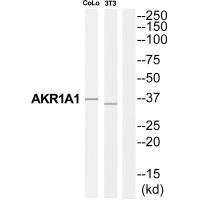
The antibody against AKR1A1 was raised in rabbit using the Synthesized peptide derived from C-terminal of Human AKR1A1. as the immunogen. The antibody was affinity-purified from rabbit antiserum by affinity-chromatography using epitope-specific immunogen. This antibody has been validated on ELISA, WB.

ADC-41508A

The antibody against AKR1A1 was raised in rabbit using the Synthesized peptide derived from C-terminal of Human AKR1A1. as the immunogen. The antibody was affinity-purified from rabbit antiserum by affinity-chromatography using epitope-specific immunogen. This antibody has been validated on ELISA, WB.

$297.00

Number
Order Exclusive Products Now

Request a Quote
High Purity LevelsPrecision and ReliabilityCustomization Options

Specifications


Cat.No ADC-41508A ClonalityPolyclonal
Host SpeciesRabbitTarget NameAKR1A1
FormLiquidSpecies ReactivityHuman, Mouse, Rat
Storage BufferPH 7.4, 0.02% sodium azide and 50% glycerol., 150mM NaCl, Rabbit IgG in phosphate buffered saline (without Mg2+ and Ca2+)Purification MethodThe antibody was affinity-purified from rabbit antiserum by affinity-chromatography using epitope-specific immunogen.
ApplicationELISA, WBStorageUpon receipt

Immunogen Information


Immunogen DescriptionSynthesized peptide derived from C-terminal of Human AKR1A1.Target SpeciesHuman
Immunogen SequenceComplete sequences for the immunogen, target protein, and peptides are available upon request.Uniprot IDP14550
Background Information
  • Uniprot Id

    P14550

  • Target Species

    Human

  • Target Name

    AKR1A1

  • Target Full Name

    Aldo-keto reductase family 1 member A1

  • Target Function

    Catalyzes the NADPH-dependent reduction of a wide variety of carbonyl-containing compounds to their corresponding alcohols. Displays enzymatic activity towards endogenous metabolites such as aromatic and aliphatic aldehydes, ketones, monosaccharides and bile acids, with a preference for negatively charged substrates, such as glucuronate and succinic semialdehyde. Functions as a detoxifiying enzyme by reducing a range of toxic aldehydes. Reduces methylglyoxal and 3-deoxyglucosone, which are present at elevated levels under hyperglycemic conditions and are cytotoxic. Involved also in the detoxification of lipid-derived aldehydes like acrolein. Plays a role in the activation of procarcinogens, such as polycyclic aromatic hydrocarbon trans-dihydrodiols, and in the metabolism of various xenobiotics and drugs, including the anthracyclines doxorubicin (DOX) and daunorubicin (DAUN). Displays no reductase activity towards retinoids.

  • Target Subcellular Location

    Cytoplasm, cytosol. Apical cell membrane.

  • Target Protein Families

    Aldo/keto reductase family

  • Target Tissue Specificity

    Widely expressed. Highly expressed in kidney, salivary gland and liver. Detected in trachea, stomach, brain, lung, prostate, placenta, mammary gland, small intestine and lung.

  • Target Synonyms

    AK1A1_HUMAN; Akr1a1; Alcohol dehydrogenase [NADP+]; Alcohol dehydrogenase; Aldehyde reductase; Aldo keto reductase family 1 member A1 (aldehyde reductase); Aldo-keto reductase family 1 member A1; ALDR1; ALR; ARM; DD3; MGC12529; MGC1380

  • Target Background

    This gene encodes a member of the aldo/keto reductase superfamily, which consists of more than 40 known enzymes and proteins. This member, also known as aldehyde reductase, is involved in the reduction of biogenic and xenobiotic aldehydes and is present in virtually every tissue. Multiple alternatively spliced transcript variants of this gene exist, all encoding the same protein.

Inquire Rabbit anti-Human AKR1A1 Polyclonal Antibody Now


AbTriva respects your privacy and protects your personal data in accordance with AbTriva. For more information, please see our data protection statement. *

Notification