-
Chinese (Simplified)
-
English
-
German
-
Korean
-
Spanish
Chinese (Simplified)
English
German
Korean
Spanish
Sign up for an account to enjoy easy online shopping and instant order tracking.
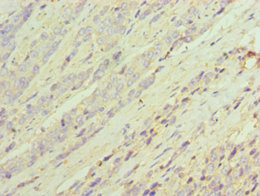
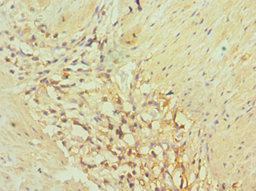
The antibody against AKR1C3 was raised in rabbit using the Recombinant Human Aldo-keto reductase family 1 member C3 protein (1-323AA) as the immunogen. This antibody exists as a non-conjugated isotype IgG, Antigen affinity purified. This antibody has been validated on ELISA, WB, IHC, IP.
$299.00
| Cat.No | ADC-45234A | Clonality | Polyclonal |
|---|---|---|---|
| Host Species | Rabbit | Target Name | AKR1C3 |
| Target Synonyms | 2 dihydrobenzene 1, 2-diol dehydrogenase antibody; Type IIb 3 alpha hydroxysteroid dehydrogenase antibody | Form | Liquid |
| Species Reactivity | Human | Isotype | IgG |
| Storage Buffer | 50% Glycerol, PBS with 0.02% sodium azide, pH7.3. | Purification Method | Antigen affinity purified |
| Conjugate | Non-conjugated | Application | ELISA, IHC, WB, IP |
| Storage | Upon receipt |
| Immunogen Description | Recombinant Human Aldo-keto reductase family 1 member C3 protein (1-323AA) | Target Species | Human |
|---|---|---|---|
| Immunogen Sequence | Complete sequences for the immunogen, target protein, and peptides are available upon request. | Uniprot ID | P42330 |
Uniprot Id
P42330
Target Species
Human
Target Name
AKR1C3
Target Full Name
Aldo-keto reductase family 1 member C3
Target Function
Cytosolic aldo-keto reductase that catalyzes the NADH and NADPH-dependent reduction of ketosteroids to hydroxysteroids. Acts as a NAD(P)(H)-dependent 3-, 17- and 20-ketosteroid reductase on the steroid nucleus and side chain and regulates the metabolism of androgens, estrogens and progesterone. Displays the ability to catalyze both oxidation and reduction in vitro, but most probably acts as a reductase in vivo since the oxidase activity measured in vitro is inhibited by physiological concentration of NADPH. Acts preferentially as a 17-ketosteroid reductase and has the highest catalytic efficiency of the AKR1C enzyme for the reduction of delta4-androstenedione to form testosterone. Reduces prostaglandin (PG) D2 to 11beta-prostaglandin F2, progesterone to 20alpha-hydroxyprogesterone and estrone to 17beta-estradiol. Catalyzes the transformation of the potent androgen dihydrotestosterone (DHT) into the less active form, 5-alpha-androstan-3-alpha,17-beta-diol (3-alpha-diol). Displays also retinaldehyde reductase activity toward 9-cis-retinal.
Target Subcellular Location
Cytoplasm.
Target Protein Families
Aldo/keto reductase family
Target Tissue Specificity
Expressed in many tissues including adrenal gland, brain, kidney, liver, lung, mammary gland, placenta, small intestine, colon, spleen, prostate and testis. High expression in prostate and mammary gland. In the prostate, higher levels in epithelial cells
Target Research Area
Signal Transduction
Target Synonyms
17 beta HSD 5; 17 beta hydroxysteroid dehydrogenase type 5; 17-beta-HSD 5; 17-beta-hydroxysteroid dehydrogenase type 5; 2-dihydrobenzene-1; 2-diol dehydrogenase; 20 alpha-hydroxysteroid dehydrogenase; 20-alpha-hydroxysteroid dehydrogenase; 3 alpha hydroxysteroid dehydrogenase type II; 3-alpha-HSD type 2; 3-alpha-HSD type II; 3-alpha-HSD type II; brain; 3-alpha-hydroxysteroid dehydrogenase type 2; AK1C3_HUMAN; AKR1 C3; Akr1c18; AKR1C3; Aldo keto reductase family 1 member C3; Aldo-keto reductase family 1 member C3; brain; Chlordecone reductase; Chlordecone reductase homolog HAKRb; DD-3; DD3; DDH1; DDX; Dihydrodiol dehydrogenase 3; Dihydrodiol dehydrogenase type I; Dihydrodiol dehydrogenase X; HA1753; HAKRB; HAKRe; hluPGFS; HSD17B5; Indanol dehydrogenase; KIAA0119; PGFS; Prostaglandin F synthase; Testosterone 17-beta-dehydrogenase 5; Trans-1; Trans-1,2-dihydrobenzene-1,2-diol dehydrogenase; Type IIb 3 alpha hydroxysteroid dehydrogenase
Target Background
This gene encodes a member of the aldo/keto reductase superfamily, which consists of more than 40 known enzymes and proteins. These enzymes catalyze the conversion of aldehydes and ketones to their corresponding alcohols by utilizing NADH and/or NADPH as cofactors. The enzymes display overlapping but distinct substrate specificity. This enzyme catalyzes the reduction of prostaglandin (PG) D2, PGH2 and phenanthrenequinone (PQ), and the oxidation of 9alpha, 11beta-PGF2 to PGD2. It may play an important role in the pathogenesis of allergic diseases such as asthma, and may also have a role in controlling cell growth and/or differentiation. This gene shares high sequence identity with three other gene members and is clustered with those three genes at chromosome 10p15-p14. Three transcript variants encoding different isoforms have been found for this gene.
Notification