-
Chinese (Simplified)
-
English
-
German
-
Korean
-
Spanish
Chinese (Simplified)
English
German
Korean
Spanish
Sign up for an account to enjoy easy online shopping and instant order tracking.
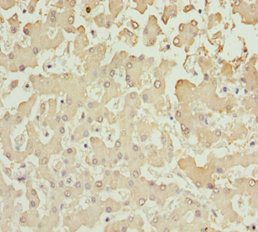
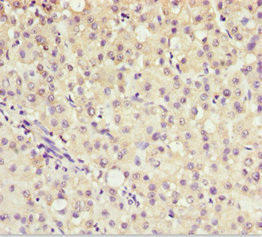
The antibody against AKR7A2 was raised in rabbit using the Recombinant Human Aflatoxin B1 aldehyde reductase member 2 protein (100-359AA) as the immunogen. This antibody exists as a non-conjugated isotype IgG, Antigen affinity purified. This antibody has been validated on ELISA, WB, IHC.
$299.00
| Cat.No | ADC-16895A | Clonality | Polyclonal |
|---|---|---|---|
| Host Species | Rabbit | Target Name | AKR7A2 |
| Form | Liquid | Species Reactivity | Human, Mouse |
| Isotype | IgG | Storage Buffer | 50% Glycerol, PBS with 0.02% sodium azide, pH7.3. |
| Purification Method | Antigen affinity purified | Conjugate | Non-conjugated |
| Application | ELISA, IHC, WB | Storage | Upon receipt |
| Immunogen Description | Recombinant Human Aflatoxin B1 aldehyde reductase member 2 protein (100-359AA) | Target Species | Human |
|---|---|---|---|
| Immunogen Sequence | Complete sequences for the immunogen, target protein, and peptides are available upon request. | Uniprot ID | O43488 |
Uniprot Id
O43488
Target Species
Human
Target Name
AKR7A2
Target Full Name
Aflatoxin B1 aldehyde reductase member 2
Target Function
Catalyzes the NADPH-dependent reduction of succinic semialdehyde to gamma-hydroxybutyrate. May have an important role in producing the neuromodulator gamma-hydroxybutyrate (GHB). Has broad substrate specificity. Has NADPH-dependent aldehyde reductase activity towards 2-carboxybenzaldehyde, 2-nitrobenzaldehyde and pyridine-2-aldehyde (in vitro). Can reduce 1,2-naphthoquinone and 9,10-phenanthrenequinone (in vitro). Can reduce the dialdehyde protein-binding form of aflatoxin B1 (AFB1) to the non-binding AFB1 dialcohol. May be involved in protection of liver against the toxic and carcinogenic effects of AFB1, a potent hepatocarcinogen.
Target Subcellular Location
Golgi apparatus. Cytoplasm.
Target Protein Families
Aldo/keto reductase family, Aldo/keto reductase 2 subfamily
Target Tissue Specificity
Detected in brain, liver, small intestine and testis, and at lower levels in heart, prostate, skeletal muscle and spleen. Detected in kidney proximal and distal tubules, endothelial cells lining the Bowman's capsules and some cysts. Detected at low levels
Target Synonyms
AFAR; AFAR1; AFB1 aldehyde reductase 1; AFB1 AR1; AFB1-AR 1; AFB1AR1; Aflatoxin aldehyde reductase; Aflatoxin B1 aldehyde reductase member 2; Aflatoxin beta1 aldehyde reductase; Aiar; AKR7; Akr7a2; Aldo keto reductase family 7; Aldo keto reductase family 7 member A2 aflatoxin aldehyde reductase; Aldo keto reductase family 7 member A2; Aldo keto reductase family 7; member A2 (aflatoxin aldehyde reductase); Aldoketoreductase 7; ARK72_HUMAN; SSA reductase; Succinic semialdehyde reductase
Target Background
The protein encoded by this gene belongs to the aldo/keto reductase (AKR) superfamily and AKR7 family, which are involved in the detoxification of aldehydes and ketones. The AKR7 family consists of 3 genes that are present in a cluster on the p arm of chromosome 1. This protein, thought to be localized in the golgi, catalyzes the NADPH-dependent reduction of succinic semialdehyde to the endogenous neuromodulator, gamma-hydroxybutyrate. It may also function as a detoxication enzyme in the reduction of aflatoxin B1 and 2-carboxybenzaldehyde. Alternative splicing results in multiple transcript variants.
Notification