-
Chinese (Simplified)
-
English
-
German
-
Korean
-
Spanish
Chinese (Simplified)
English
German
Korean
Spanish
Sign up for an account to enjoy easy online shopping and instant order tracking.
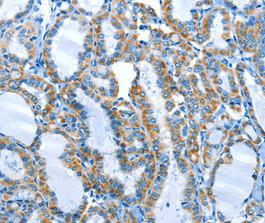
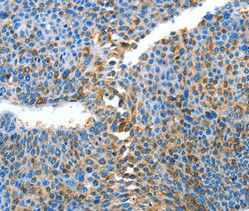
The antibody against ALPK1 was raised in rabbit using the Fusion protein corresponding to residues near the C terminal of Human alpha-kinase 1 as the immunogen. This antibody exists as a polyclonal antibody to the immunogen, Antigen affinity purified. This antibody has been validated on ELISA, IHC.
$297.00
| Cat.No | ADC-40646A | Clonality | Polyclonal |
|---|---|---|---|
| Host Species | Rabbit | Target Name | ALPK1 |
| Form | Liquid | Species Reactivity | Human, Mouse, Rat |
| Storage Buffer | 0.05% NaN3, 50% Glycerol, Rabbit IgG in pH7.3 PBS | Purification Method | Antigen affinity purified |
| Application | ELISA, IHC | Storage | Upon receipt |
| Immunogen Description | Fusion protein corresponding to residues near the C terminal of Human alpha-kinase 1 | Target Species | Human |
|---|---|---|---|
| Immunogen Sequence | Complete sequences for the immunogen, target protein, and peptides are available upon request. | Uniprot ID | Q96QP1 |
Uniprot Id
Q96QP1
Target Species
Human
Target Name
ALPK1
Target Full Name
Alpha-protein kinase 1
Target Function
Serine/threonine-protein kinase that detects bacterial pathogen-associated molecular pattern metabolites (PAMPs) and initiates an innate immune response, a critical step for pathogen elimination and engagement of adaptive immunity. Specifically recognizes and binds ADP-D-glycero-beta-D-manno-heptose (ADP-Heptose), a potent PAMP present in all Gram-negative and some Gram-positive bacteria. ADP-Heptose-binding stimulates its kinase activity to phosphorylate and activate TIFA, triggering proinflammatory NF-kappa-B signaling. May be involved in monosodium urate monohydrate (MSU)-induced inflammation by mediating phosphorylation of unconventional myosin MYO9A. May also play a role in apical protein transport by mediating phosphorylation of unconventional myosin MYO1A. May play a role in ciliogenesis.
Target Subcellular Location
Cytoplasm, cytosol. Cytoplasm, cytoskeleton, spindle pole. Cytoplasm, cytoskeleton, microtubule organizing center, centrosome. Cell projection, cilium.
Target Protein Families
Protein kinase superfamily, Alpha-type protein kinase family, ALPK subfamily
Target Tissue Specificity
Highly expressed in liver. Expressed in the optic nerve and retinal pigmented epithelium. Lower expression is observed in the macula and extramacular retina.
Target Synonyms
8430410J10Rik; Alpha protein kinase 1; Alpha-protein kinase 1; ALPK1; ALPK1_HUMAN; Chromosome 4 kinase; LAK; Lymphocyte alpha kinase; Lymphocyte alpha protein kinase; Lymphocyte alpha-protein kinase; RGD1304613
Target Background
This gene encodes an alpha kinase. Mice which were homozygous for disrupted copies of this gene exhibited coordination defects (PMID: 21208416). Multiple transcript variants encoding different isoforms have been found for this gene.
Notification