-
Chinese (Simplified)
-
English
-
German
-
Korean
-
Spanish
Chinese (Simplified)
English
German
Korean
Spanish
Sign up for an account to enjoy easy online shopping and instant order tracking.
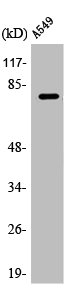
The antibody against APPL1 was raised in rabbit using the Synthesized peptide derived from the Internal region of Human APPL1. as the immunogen. This antibody exists as a non-conjugated isotype IgG. The antibody was affinity-purified from rabbit antiserum by affinity-chromatography using epitope-specific immunogen. This antibody has been validated on WB, ELISA.
$167.00
| Cat.No | ADC-39309A | Clonality | Polyclonal |
|---|---|---|---|
| Host Species | Rabbit | Target Name | APPL1 |
| Form | Liquid | Species Reactivity | Human, Mouse |
| Isotype | IgG | Storage Buffer | 0.5% BSA and 0.02% sodium azide., Liquid in PBS containing 50% glycerol |
| Purification Method | The antibody was affinity-purified from rabbit antiserum by affinity-chromatography using epitope-specific immunogen. | Conjugate | Non-conjugated |
| Application | ELISA, WB | Storage | Upon receipt |
| Immunogen Description | Synthesized peptide derived from the Internal region of Human APPL1. | Target Species | Human |
|---|---|---|---|
| Immunogen Sequence | Complete sequences for the immunogen, target protein, and peptides are available upon request. | Uniprot ID | Q9UKG1 |
Uniprot Id
Q9UKG1
Target Species
Human
Target Name
APPL1
Target Full Name
DCC-interacting protein 13-alpha
Target Function
Multifunctional adapter protein that binds to various membrane receptors, nuclear factors and signaling proteins to regulate many processes, such as cell proliferation, immune response, endosomal trafficking and cell metabolism. Regulates signaling pathway leading to cell proliferation through interaction with RAB5A and subunits of the NuRD/MeCP1 complex. Functions as a positive regulator of innate immune response via activation of AKT1 signaling pathway by forming a complex with APPL1 and PIK3R1. Inhibits Fc-gamma receptor-mediated phagocytosis through PI3K/Akt signaling in macrophages. Regulates TLR4 signaling in activated macrophages. Involved in trafficking of the TGFBR1 from the endosomes to the nucleus via microtubules in a TRAF6-dependent manner. Plays a role in cell metabolism by regulating adiponecting and insulin signaling pathways. Required for fibroblast migration through HGF cell signaling. Positive regulator of beta-catenin/TCF-dependent transcription through direct interaction with RUVBL2/reptin resulting in the relief of RUVBL2-mediated repression of beta-catenin/TCF target genes by modulating the interactions within the beta-catenin-reptin-HDAC complex.
Target Involvement
Maturity-onset diabetes of the young 14 (MODY14)
Target Subcellular Location
Early endosome membrane; Peripheral membrane protein. Nucleus. Cytoplasm. Endosome. Cell projection, ruffle. Cytoplasmic vesicle, phagosome.
Target Tissue Specificity
High levels in heart, ovary, pancreas and skeletal muscle.
Target Research Area
Cell Biology
Target Synonyms
Adapter protein containing PH domain; Adaptor Protein Containing pH Domain; Adaptor protein containing pH domain PTB domain and leucine zipper motif 1; Adaptor protein containing pH domain PTB domain and leucine zipper motif; Adaptor protein phosphotyrosine interacting with PH domain and leucine zipper 1; AKT2 INTERACTOR; APPL 1; Appl1; DCC interacting protein 13 alpha; DCC-interacting protein 13-alpha; DIP 13 alpha; DIP13 alpha; Dip13-alpha; DIP13alpha; DP13A_HUMAN; KIAA1428; PTB domain and leucine zipper motif 1; PTB Domain and Leucine Zipper Motif; Signaling adaptor protein DIP13alpha
Target Background
The protein encoded by this gene has been shown to be involved in the regulation of cell proliferation, and in the crosstalk between the adiponectin signalling and insulin signalling pathways. The encoded protein binds many other proteins, including RAB5A, DCC, AKT2, PIK3CA, adiponectin receptors, and proteins of the NuRD/MeCP1 complex. This protein is found associated with endosomal membranes, but can be released by EGF and translocated to the nucleus.
Notification