• Contact info@abtriva.com for inquiries and orders.
  • Chinese (Simplified)

  • English

  • German

  • Korean

  • Spanish

United States (English / $ USD)

Rabbit anti-Human ASIC3 Polyclonal Antibody

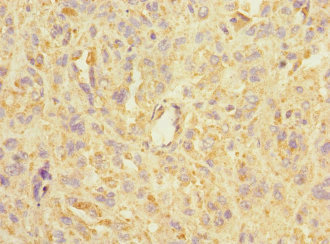
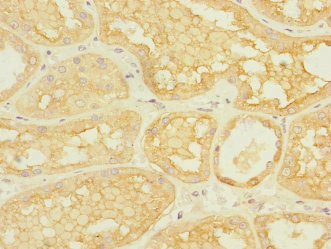
The antibody against ASIC3 was raised in rabbit using the Recombinant Human Acid-sensing ion channel 3 protein (62-320AA) as the immunogen. This antibody exists as a non-conjugated isotype IgG, Antigen affinity purified. This antibody has been validated on ELISA, WB, IHC.

ADC-16387A

The antibody against ASIC3 was raised in rabbit using the Recombinant Human Acid-sensing ion channel 3 protein (62-320AA) as the immunogen. This antibody exists as a non-conjugated isotype IgG, Antigen affinity purified. This antibody has been validated on ELISA, WB, IHC.

$299.00

Number
Order Exclusive Products Now

Request a Quote
High Purity LevelsPrecision and ReliabilityCustomization Options

Specifications


Cat.No ADC-16387A ClonalityPolyclonal
Host SpeciesRabbitTarget NameASIC3
FormLiquidSpecies ReactivityHuman
IsotypeIgGStorage Buffer50% Glycerol, PBS with 0.02% sodium azide, pH7.3.
Purification MethodAntigen affinity purifiedConjugateNon-conjugated
ApplicationELISA, IHC, WBStorageUpon receipt

Immunogen Information


Immunogen DescriptionRecombinant Human Acid-sensing ion channel 3 protein (62-320AA)Target SpeciesHuman
Immunogen SequenceComplete sequences for the immunogen, target protein, and peptides are available upon request.Uniprot IDQ9UHC3
Background Information
  • Uniprot Id

    Q9UHC3

  • Target Species

    Human

  • Target Name

    ASIC3

  • Target Full Name

    Acid-sensing ion channel 3

  • Target Function

    Cation channel with high affinity for sodium, which is gated by extracellular protons and inhibited by the diuretic amiloride. Generates a biphasic current with a fast inactivating and a slow sustained phase. In sensory neurons is proposed to mediate the pain induced by acidosis that occurs in ischemic, damaged or inflamed tissue. May be involved in hyperalgesia. May play a role in mechanoreception. Heteromeric channel assembly seems to modulate channel properties.

  • Target Subcellular Location

    Cell membrane; Multi-pass membrane protein. Cytoplasm.

  • Target Protein Families

    Amiloride-sensitive sodium channel (TC 1.A.6) family, ASIC3 subfamily

  • Target Tissue Specificity

    Expressed by sensory neurons. Strongly expressed in brain, spinal chord, lung, lymph nodes, kidney, pituitary, heart and testis.

  • Target Synonyms

    ACCN 3; Accn3; ACCN3_HUMAN; Acid sensing ion channel 3; Acid-sensing ion channel 3; Amiloride sensitive cation channel 3; Amiloride sensitive cation channel 3 testis; Amiloride-sensitive cation channel 3; ASIC 3; ASIC3; DRASIC; hASIC 3; hASIC3; hTNaC 1; hTNaC1; Modulatory subunit of ASIC 2a; Modulatory subunit of ASIC2a; Neuronal amiloride sensitive cation channel 3; Neuronal amiloride-sensitive cation channel 3; Proton gated cation channel subunit; SLNAC 1; SLNAC1; Testis sodium channel 1; TNaC 1; TNaC1

  • Target Background

    This gene encodes a member of the degenerin/epithelial sodium channel (DEG/ENaC) superfamily. The members of this family are amiloride-sensitive sodium channels that contain intracellular N and C termini, two hydrophobic transmembrane regions, and a large extracellular loop, which has many cysteine residues with conserved spacing. The member encoded by this gene is an acid sensor and may play an important role in the detection of lasting pH changes. In addition, a heteromeric association between this member and acid-sensing (proton-gated) ion channel 2 has been observed as proton-gated channels sensitive to gadolinium. Alternatively spliced transcript variants have been described.

Inquire Rabbit anti-Human ASIC3 Polyclonal Antibody Now


AbTriva respects your privacy and protects your personal data in accordance with AbTriva. For more information, please see our data protection statement. *

Notification