• Contact info@abtriva.com for inquiries and orders.
  • Chinese (Simplified)

  • English

  • German

  • Korean

  • Spanish

United States (English / $ USD)

Rabbit anti-Human ASIP Polyclonal Antibody

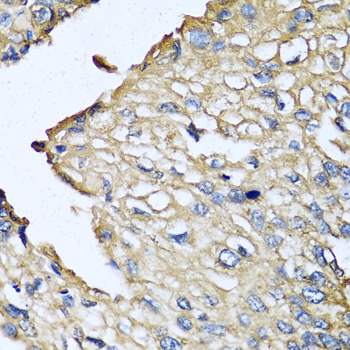
The antibody against ASIP was raised in Rabbit using the recombinant fusion protein containing a sequence corresponding to amino acids 23-132 of human ASIP (NP_001663.2) as the immunogen. The polyclonal antibody exists as a isotype IgG, by affinity purification. This antibody has been validated on IHC-P, ELISA.

ADA-02815A

The antibody against ASIP was raised in Rabbit using the recombinant fusion protein containing a sequence corresponding to amino acids 23-132 of human ASIP (NP_001663.2) as the immunogen. The polyclonal antibody exists as a isotype IgG, by affinity purification. This antibody has been validated on IHC-P, ELISA.

Number
Order Exclusive Products Now

Request a Quote
High Purity LevelsPrecision and ReliabilityCustomization Options

Specifications


Cat.No ADA-02815A ClonalityPolyclonal
Host SpeciesRabbitTarget NameASIP
Target SynonymsASP; AGSW; AGTI; AGTIL; SHEP9; ASIPFormLiquid
Species ReactivityMouse, RatIsotypeIgG
Storage Buffer50% Glycerol, PBS with 0.02% sodium azide, pH7.3.Purification MethodAffinity purification
ApplicationELISA, IHC-P

Immunogen Information


Immunogen DescriptionRecombinant fusion protein containing a sequence corresponding to amino acids 23-132 of human ASIP (NP_001663.2).Target SpeciesHuman
Immunogen SequenceHLPPEEKLRDDRSLRSNSSVNLLDVPSVSIVALNKKSKQIGRKAAEKKRSSKKEASMKKVVRPRTPLSAPCVATRNSCKPPAPACCDPCASCQCRFFRSACSCRVLSLNCUniprot IDP42127
Background Information
  • Uniprot Id

    P42127

  • Target Species

    Human

  • Target Name

    ASIP

  • Target Full Name

    Agouti-signaling protein

  • Target Function

    Involved in the regulation of melanogenesis. The binding of ASP to MC1R precludes alpha-MSH initiated signaling and thus blocks production of cAMP, leading to a down-regulation of eumelanogenesis (brown/black pigment) and thus increasing synthesis of pheomelanin (yellow/red pigment). In higher primates, agouti may affect the quality of hair pigmentation rather than its pattern of deposition. Could well play a role in neuroendocrine aspects of melanocortin action. May have some functional role in regulating the lipid metabolism with adipocytes.

  • Target Subcellular Location

    Secreted.

  • Target Tissue Specificity

    Expressed in adipose tissue, testis, ovary and heart and at lower levels in liver, kidney and foreskin.

  • Target Research Area

    Neuroscience

  • Target Synonyms

    ASIP; AGTI; AGTIL; ASP; Agouti-signaling protein; ASP; Agouti switch protein

  • Target Background

    In mice, the agouti gene encodes a paracrine signaling molecule that causes hair follicle melanocytes to synthesize pheomelanin, a yellow pigment, instead of the black or brown pigment, eumelanin. Pleiotropic effects of constitutive expression of the mouse gene include adult-onset obesity, increased tumor susceptibility, and premature infertility. This gene is highly similar to the mouse gene and encodes a secreted protein that may (1) affect the quality of hair pigmentation, (2) act as a pharmacological antagonist of alpha-melanocyte-stimulating hormone, (3) play a role in neuroendocrine aspects of melanocortin action, and (4) have a functional role in regulating lipid metabolism in adipocytes.

Inquire Rabbit anti-Human ASIP Polyclonal Antibody Now


AbTriva respects your privacy and protects your personal data in accordance with AbTriva. For more information, please see our data protection statement. *

Notification