-
Chinese (Simplified)
-
English
-
German
-
Korean
-
Spanish

Chinese (Simplified)
English
German
Korean
Spanish
Sign up for an account to enjoy easy online shopping and instant order tracking.
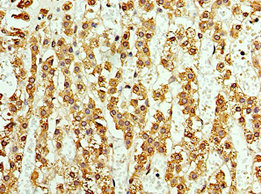
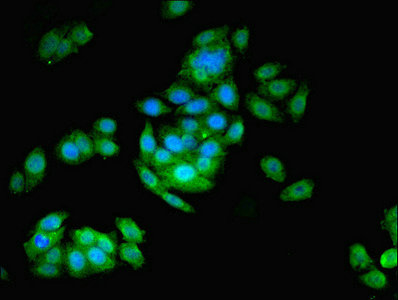
The antibody against ASNA1 was raised in rabbit using the Recombinant Human ATPase ASNA1 protein (1-348AA) as the immunogen. This antibody exists as a non-conjugated isotype IgG, Antigen affinity purified. This antibody has been validated on ELISA, IHC, IF.
$299.00
| Cat.No | ADC-40481A | Clonality | Polyclonal |
|---|---|---|---|
| Host Species | Rabbit | Target Name | ASNA1 |
| Form | Liquid | Species Reactivity | Human |
| Isotype | IgG | Storage Buffer | 50% Glycerol, PBS with 0.02% sodium azide, pH7.3. |
| Purification Method | Antigen affinity purified | Conjugate | Non-conjugated |
| Application | ELISA, IF, IHC | Storage | Upon receipt |
| Immunogen Description | Recombinant Human ATPase ASNA1 protein (1-348AA) | Target Species | Human |
|---|---|---|---|
| Immunogen Sequence | Complete sequences for the immunogen, target protein, and peptides are available upon request. | Uniprot ID | O43681 |
Uniprot Id
O43681
Target Species
Human
Target Name
GET3
Target Full Name
ATPase GET3
Target Function
ATPase required for the post-translational delivery of tail-anchored (TA) proteins to the endoplasmic reticulum. Recognizes and selectively binds the transmembrane domain of TA proteins in the cytosol. This complex then targets to the endoplasmic reticulum by membrane-bound receptors GET1/WRB and CAMLG/GET2, where the tail-anchored protein is released for insertion. This process is regulated by ATP binding and hydrolysis. ATP binding drives the homodimer towards the closed dimer state, facilitating recognition of newly synthesized TA membrane proteins. ATP hydrolysis is required for insertion. Subsequently, the homodimer reverts towards the open dimer state, lowering its affinity for the GET1-CAMLG receptor, and returning it to the cytosol to initiate a new round of targeting. May be involved in insulin signaling.
Target Subcellular Location
Cytoplasm. Endoplasmic reticulum. Nucleus, nucleolus.
Target Protein Families
ArsA ATPase family
Target Tissue Specificity
Expressed in the epithelial cells of the liver, kidney, and stomach wall, in the adrenal medulla, in the islet cells of the pancreas, in the red pulp of the spleen, and in cardiac and skeletal muscle.
Target Research Area
Transport
Target Synonyms
ARSA 1; ARSA; ArsA arsenite transporter ATP binding homolog 1; ArsA arsenite transporter; ATP binding; E. coli; homolog of; 1; ArsA arsenite transporter; ATP-binding; homolog 1 (bacterial); ARSA I; ARSA-I; ARSA1; ARSAI; Arsenical pump driving ATPase; Arsenical pump-driving ATPase; Arsenical resistance ATPase; Arsenite translocating ATPase; Arsenite transporting ATPase; Arsenite-stimulated ATPase; ASNA 1; ASNA I; ASNA-I; ASNA_HUMAN; ASNA1; Asna1 protein ; ASNAI; ATPase ASNA1; GET3; Golgi to ER traffic 3 homolog; hARSA-I; hASNA-I; MGC3821; Transmembrane domain recognition complex 40 kDa ATPase subunit; Transmembrane domain recognition complex; 40kDa; TRC40
Target Background
This gene represents the human homolog of the bacterial arsA gene, encoding the arsenite-stimulated ATPase component of the arsenite transporter responsible for resistance to arsenicals. This protein is also a central component of a transmembrane domain (TMD) recognition complex (TRC) that is involved in the post-translational delivery of tail-anchored (TA) proteins from the cytosol to the endoplasmic reticulum (ER). It recognizes and selectively binds the TMD of TA proteins in the cytosol, and delivers them to the ER for insertion.
Notification