• Contact info@abtriva.com for inquiries and orders.
  • Chinese (Simplified)

  • English

  • German

  • Korean

  • Spanish

United States (English / $ USD)

Rabbit anti-Human ASPN Polyclonal Antibody

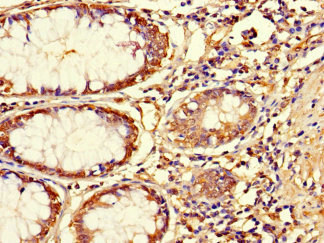
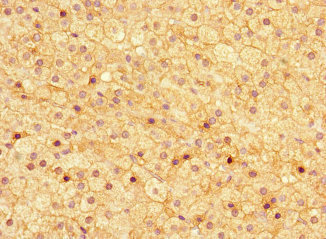
The antibody against ASPN was raised in rabbit using the Recombinant Human Asporin protein (33-380AA) as the immunogen. This antibody exists as a non-conjugated isotype IgG, purified by protein G with a purity greater than 95%. This antibody has been validated on ELISA, WB, IHC.

ADC-16139A

The antibody against ASPN was raised in rabbit using the Recombinant Human Asporin protein (33-380AA) as the immunogen. This antibody exists as a non-conjugated isotype IgG, purified by protein G with a purity greater than 95%. This antibody has been validated on ELISA, WB, IHC.

$299.00

Number
Order Exclusive Products Now

Request a Quote
High Purity LevelsPrecision and ReliabilityCustomization Options

Specifications


Cat.No ADC-16139A ClonalityPolyclonal
Host SpeciesRabbitTarget NameASPN
FormLiquidSpecies ReactivityHuman, Mouse
IsotypeIgGStorage Buffer0.01M PBS, 0.03% Proclin 300; Constituents: 50% Glycerol, PH 7.4
Purification Method>95%, Protein G purifiedConjugateNon-conjugated
ApplicationELISA, IHC, WBStorageUpon receipt

Immunogen Information


Immunogen DescriptionRecombinant Human Asporin protein (33-380AA)Target SpeciesHuman
Immunogen SequenceComplete sequences for the immunogen, target protein, and peptides are available upon request.Uniprot IDQ9BXN1
Background Information
  • Uniprot Id

    Q9BXN1

  • Target Species

    Human

  • Target Name

    ASPN

  • Target Full Name

    Asporin

  • Target Function

    Negatively regulates periodontal ligament (PDL) differentiation and mineralization to ensure that the PDL is not ossified and to maintain homeostasis of the tooth-supporting system. Inhibits BMP2-induced cytodifferentiation of PDL cells by preventing its binding to BMPR1B/BMP type-1B receptor, resulting in inhibition of BMP-dependent activation of SMAD proteins. Critical regulator of TGF-beta in articular cartilage and plays an essential role in cartilage homeostasis and osteoarthritis (OA) pathogenesis. Negatively regulates chondrogenesis in the articular cartilage by blocking the TGF-beta/receptor interaction on the cell surface and inhibiting the canonical TGF-beta/Smad signal. Binds calcium and plays a role in osteoblast-driven collagen biomineralization activity.

  • Target Involvement

    Osteoarthritis 3 (OS3); Intervertebral disc disease (IDD)

  • Target Subcellular Location

    Secreted, extracellular space, extracellular matrix.

  • Target Protein Families

    Small leucine-rich proteoglycan (SLRP) family, SLRP class I subfamily

  • Target Tissue Specificity

    Higher levels in osteoarthritic articular cartilage, aorta, uterus. Moderate expression in small intestine, heart, liver, bladder, ovary, stomach, and in the adrenal, thyroid, and mammary glands. Low expression in trachea, bone marrow, and lung. Colocaliz

  • Target Research Area

    Signal Transduction

  • Target Synonyms

    ASPN; ASPN protein; ASPN_HUMAN; Asporin (LRR class 1); Asporin; Asporin proteoglycan; FLJ20129; LRR class 1; Periodontal ligament associated protein 1; Periodontal ligament-associated protein 1; PLAP 1; PLAP-1; PLAP1; SLRR 1C; SLRR1C; Small leucine rich protein 1C

  • Target Background

    This gene encodes a cartilage extracellular protein that is member of the small leucine-rich proteoglycan family. The encoded protein may regulate chondrogenesis by inhibiting transforming growth factor-beta 1-induced gene expression in cartilage. This protein also binds collagen and calcium and may induce collagen mineralization. Polymorphisms in the aspartic acid repeat region of this gene are associated with a susceptibility to osteoarthritis, and also with intervertebral disc disease. Alternative splicing of this gene results in multiple transcript variants.

Inquire Rabbit anti-Human ASPN Polyclonal Antibody Now


AbTriva respects your privacy and protects your personal data in accordance with AbTriva. For more information, please see our data protection statement. *

Notification