• Contact info@abtriva.com for inquiries and orders.
  • Chinese (Simplified)

  • English

  • German

  • Korean

  • Spanish

United States (English / $ USD)

Rabbit anti-Human ASPSCR1 Polyclonal Antibody

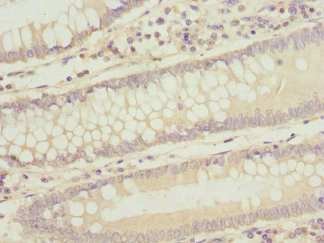
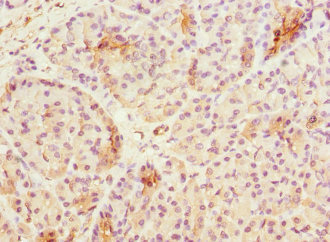
The antibody against ASPSCR1 was raised in rabbit using the Recombinant Human Tether containing UBX domain for GLUT4 protein (284-553AA) as the immunogen. This antibody exists as a non-conjugated isotype IgG, Antigen affinity purified. This antibody has been validated on ELISA, WB, IHC.

ADC-16974A

The antibody against ASPSCR1 was raised in rabbit using the Recombinant Human Tether containing UBX domain for GLUT4 protein (284-553AA) as the immunogen. This antibody exists as a non-conjugated isotype IgG, Antigen affinity purified. This antibody has been validated on ELISA, WB, IHC.

$299.00

Number
Order Exclusive Products Now

Request a Quote
High Purity LevelsPrecision and ReliabilityCustomization Options

Specifications


Cat.No ADC-16974A ClonalityPolyclonal
Host SpeciesRabbitTarget NameASPSCR1
FormLiquidSpecies ReactivityHuman
IsotypeIgGStorage Buffer50% Glycerol, PBS with 0.02% sodium azide, pH7.3.
Purification MethodAntigen affinity purifiedConjugateNon-conjugated
ApplicationELISA, IHC, WBStorageUpon receipt

Immunogen Information


Immunogen DescriptionRecombinant Human Tether containing UBX domain for GLUT4 protein (284-553AA)Target SpeciesHuman
Immunogen SequenceComplete sequences for the immunogen, target protein, and peptides are available upon request.Uniprot IDQ9BZE9
Background Information
  • Uniprot Id

    Q9BZE9

  • Target Species

    Human

  • Target Name

    ASPSCR1

  • Target Full Name

    Tether containing UBX domain for GLUT4

  • Target Function

    Tethering protein that sequesters GLUT4-containing vesicles in the cytoplasm in the absence of insulin. Modulates the amount of GLUT4 that is available at the cell surface. Enhances VCP methylation catalyzed by VCPKMT.

  • Target Involvement

    A chromosomal aberration involving ASPSCR1 is found in patients with alveolar soft part sarcoma. Translocation t(X;17)(p11;q25) with TFE3 forms a ASPSCR1-TFE3 fusion protein.

  • Target Subcellular Location

    Endomembrane system; Peripheral membrane protein. Endoplasmic reticulum-Golgi intermediate compartment membrane; Peripheral membrane protein. Cytoplasm. Nucleus.

  • Target Tissue Specificity

    Ubiquitous. Highly expressed in testis, heart, skeletal muscle and pancreas.

  • Target Synonyms

    Alveolar soft part sarcoma chromosomal region candidate gene 1 protein; Alveolar soft part sarcoma chromosome region candidate 1 (human); Alveolar soft part sarcoma locus; ASPC; ASPC1_HUMAN; ASPCR 1; ASPCR1; ASPL; ASPS; ASPSCR 1; Aspscr1; FLJ45380; RCC 17; RCC17; renal cell carcinoma gene on chromosome 17; renal cell carcinoma papillary 17; Renal papillary cell carcinoma protein 17; Tether containing a UBX domain for GLUT4; Tether containing UBX domain for GLUT4; TUG; UBX domain containing protein 9; UBX domain protein 9; UBX domain-containing protein 9; UBXD 9; UBXD9; UBXN 9; UBXN9

  • Target Background

    The protein encoded by this gene contains a UBX domain and interacts with glucose transporter type 4 (GLUT4). This protein is a tether, which sequesters the GLUT4 in intracellular vesicles in muscle and fat cells in the absence of insulin, and redistributes the GLUT4 to the plasma membrane within minutes of insulin stimulation. Translocation t(X;17)(p11;q25) of this gene with transcription factor TFE3 gene results in a ASPSCR1-TFE3 fusion protein in alveolar soft part sarcoma and in renal cell carcinomas. Multiple alternatively spliced transcript variants have been found.

Inquire Rabbit anti-Human ASPSCR1 Polyclonal Antibody Now


AbTriva respects your privacy and protects your personal data in accordance with AbTriva. For more information, please see our data protection statement. *

Notification