• Contact info@abtriva.com for inquiries and orders.
  • Chinese (Simplified)

  • English

  • German

  • Korean

  • Spanish

United States (English / $ USD)

Rabbit anti-Human ATG16L1 Polyclonal Antibody

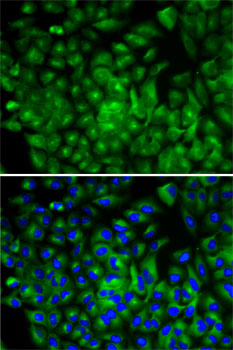
The antibody against ATG16L1 was raised in Rabbit using the recombinant fusion protein containing a sequence corresponding to amino acids 90-300 of human ATG16L1 (NP_110430.5) as the immunogen. The polyclonal antibody exists as a isotype IgG, by affinity purification. This antibody has been validated on WB, IHC-P, IF/ICC, ELISA.

ADA-12466A

The antibody against ATG16L1 was raised in Rabbit using the recombinant fusion protein containing a sequence corresponding to amino acids 90-300 of human ATG16L1 (NP_110430.5) as the immunogen. The polyclonal antibody exists as a isotype IgG, by affinity purification. This antibody has been validated on WB, IHC-P, IF/ICC, ELISA.

Number
Order Exclusive Products Now

Request a Quote
High Purity LevelsPrecision and ReliabilityCustomization Options

Specifications


Cat.No ADA-12466A ClonalityPolyclonal
Host SpeciesRabbitTarget NameATG16L1
Target SynonymsIBD10; WDR30; APG16L; ATG16A; ATG16L; ATG16L1FormLiquid
Species ReactivityHuman, Mouse, RatIsotypeIgG
Storage Buffer50% Glycerol, PBS with 0.02% sodium azide, pH7.3.Purification MethodAffinity purification
Positive SamplesJurkat, Mouse thymus, Rat thymusApplicationELISA, WB, IF/ICC, IHC-P

Immunogen Information


Immunogen DescriptionRecombinant fusion protein containing a sequence corresponding to amino acids 90-300 of human ATG16L1 (NP_110430.5).Target SpeciesHuman
Uniprot IDQ676U5Immunogen Sequence
Background Information
  • Uniprot Id

    Q676U5

  • Target Species

    Human

  • Target Name

    ATG16L1

  • Target Full Name

    Autophagy-related protein 16-1

  • Target Function

    Plays an essential role in autophagy: interacts with ATG12-ATG5 to mediate the conjugation of phosphatidylethanolamine (PE) to LC3 (MAP1LC3A, MAP1LC3B or MAP1LC3C), to produce a membrane-bound activated form of LC3 named LC3-II. Thereby, controls the elongation of the nascent autophagosomal membrane. Regulates mitochondrial antiviral signaling (MAVS)-dependent type I interferon (IFN-I) production. Negatively regulates NOD1- and NOD2-driven inflammatory cytokine response. Instead, promotes with NOD2 an autophagy-dependent antibacterial pathway. Plays a role in regulating morphology and function of Paneth cell.

  • Target Involvement

    Inflammatory bowel disease 10 (IBD10)

  • Target Subcellular Location

    Cytoplasm. Preautophagosomal structure membrane; Peripheral membrane protein.

  • Target Protein Families

    WD repeat ATG16 family

  • Target Research Area

    Cancer

  • Target Synonyms

    A16L1_HUMAN; APG16 like 1; APG16-like 1; APG16L; APG16L beta; ATG16 autophagy related 16 like 1; ATG16 autophagy related 16-like 1 (S. cerevisiae); ATG16A; ATG16L; Atg16l1; Autophagy related protein 16 1; Autophagy-related protein 16-1; FLJ00045; FLJ10035; FLJ10828; FLJ22677; IBD10; OTTHUMP00000164391; OTTHUMP00000164393; OTTHUMP00000165876; OTTHUMP00000165877; WD repeat domain 30; WDR30

  • Target Background

    The protein encoded by this gene is part of a large protein complex that is necessary for autophagy, the major process by which intracellular components are targeted to lysosomes for degradation. Defects in this gene are a cause of susceptibility to inflammatory bowel disease type 10 (IBD10). Several transcript variants encoding different isoforms have been found for this gene.

Inquire Rabbit anti-Human ATG16L1 Polyclonal Antibody Now


AbTriva respects your privacy and protects your personal data in accordance with AbTriva. For more information, please see our data protection statement. *

Notification