• Contact info@abtriva.com for inquiries and orders.
  • Chinese (Simplified)

  • English

  • German

  • Korean

  • Spanish

United States (English / $ USD)

Rabbit anti-Human ATP1B2 Polyclonal Antibody

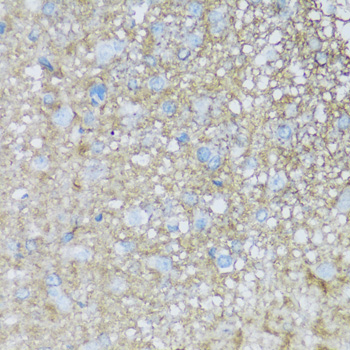
The antibody against ATP1B2 was raised in Rabbit using the recombinant fusion protein containing a sequence corresponding to amino acids 68-290 of human ATP1B2 (NP_001669.3) as the immunogen. The polyclonal antibody exists as a isotype IgG, by affinity purification. This antibody has been validated on IHC-P, ELISA.

ADA-01662A

The antibody against ATP1B2 was raised in Rabbit using the recombinant fusion protein containing a sequence corresponding to amino acids 68-290 of human ATP1B2 (NP_001669.3) as the immunogen. The polyclonal antibody exists as a isotype IgG, by affinity purification. This antibody has been validated on IHC-P, ELISA.

Number
Order Exclusive Products Now

Request a Quote
High Purity LevelsPrecision and ReliabilityCustomization Options

Specifications


Cat.No ADA-01662A ClonalityPolyclonal
Host SpeciesRabbitTarget NameATP1B2
Target SynonymsAMOG; ATP1B2FormLiquid
Species ReactivityMouse, RatIsotypeIgG
Storage Buffer50% Glycerol, PBS with 0.02% sodium azide, pH7.3.Purification MethodAffinity purification
ApplicationELISA, IHC-P

Immunogen Information


Immunogen DescriptionRecombinant fusion protein containing a sequence corresponding to amino acids 68-290 of human ATP1B2 (NP_001669.3).Target SpeciesHuman
Uniprot IDP14415Immunogen Sequence
Background Information
  • Uniprot Id

    P14415

  • Target Species

    Human

  • Target Name

    ATP1B2

  • Target Full Name

    Sodium/potassium-transporting ATPase subunit beta-2

  • Target Function

    This is the non-catalytic component of the active enzyme, which catalyzes the hydrolysis of ATP coupled with the exchange of Na(+) and K(+) ions across the plasma membrane. The exact function of the beta-2 subunit is not known.; Mediates cell adhesion of neurons and astrocytes, and promotes neurite outgrowth.

  • Target Subcellular Location

    Cell membrane; Single-pass type II membrane protein.

  • Target Protein Families

    X(+)/potassium ATPases subunit beta family

  • Target Synonyms

    ATP1B2; Sodium/potassium-transporting ATPase subunit beta-2; Adhesion molecule in glia; AMOG; Sodium/potassium-dependent ATPase subunit beta-2

  • Target Background

    The protein encoded by this gene belongs to the family of Na+/K+ and H+/K+ ATPases beta chain proteins, and to the subfamily of Na+/K+ -ATPases. Na+/K+ -ATPase is an integral membrane protein responsible for establishing and maintaining the electrochemical gradients of Na and K ions across the plasma membrane. These gradients are essential for osmoregulation, for sodium-coupled transport of a variety of organic and inorganic molecules, and for electrical excitability of nerve and muscle. This enzyme is composed of two subunits, a large catalytic subunit (alpha) and a smaller glycoprotein subunit (beta). The beta subunit regulates, through assembly of alpha/beta heterodimers, the number of sodium pumps transported to the plasma membrane. The glycoprotein subunit of Na+/K+ -ATPase is encoded by multiple genes. This gene encodes a beta 2 subunit. Two transcript variants encoding different isoforms have been found for this gene.

Inquire Rabbit anti-Human ATP1B2 Polyclonal Antibody Now


AbTriva respects your privacy and protects your personal data in accordance with AbTriva. For more information, please see our data protection statement. *

Notification