-
Chinese (Simplified)
-
English
-
German
-
Korean
-
Spanish
Chinese (Simplified)
English
German
Korean
Spanish
Sign up for an account to enjoy easy online shopping and instant order tracking.
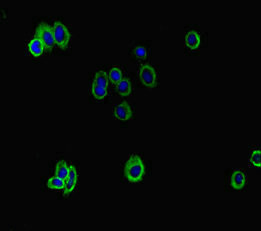
The antibody against ATP8B1 was raised in rabbit using the Recombinant Human Phospholipid-transporting ATPase IC protein (217-330AA) as the immunogen. This antibody exists as a non-conjugated isotype IgG, purified by protein G with a purity greater than 95%. This antibody has been validated on ELISA, IF.
$299.00
| Cat.No | ADC-16120A | Clonality | Polyclonal |
|---|---|---|---|
| Host Species | Rabbit | Target Name | ATP8B1 |
| Form | Liquid | Species Reactivity | Human |
| Isotype | IgG | Storage Buffer | 0.01M PBS, 0.03% Proclin 300; Constituents: 50% Glycerol, PH 7.4 |
| Purification Method | >95%, Protein G purified | Conjugate | Non-conjugated |
| Application | ELISA, IF | Storage | Upon receipt |
| Immunogen Description | Recombinant Human Phospholipid-transporting ATPase IC protein (217-330AA) | Target Species | Human |
|---|---|---|---|
| Immunogen Sequence | Complete sequences for the immunogen, target protein, and peptides are available upon request. | Uniprot ID | O43520 |
Uniprot Id
O43520
Target Species
Human
Target Name
ATP8B1
Target Full Name
Phospholipid-transporting ATPase IC
Target Function
Catalytic component of a P4-ATPase flippase complex which catalyzes the hydrolysis of ATP coupled to the transport of phospholipids, in particular phosphatidylcholines (PC), from the outer to the inner leaflet of the plasma membrane. May participate in the establishment of the canalicular membrane integrity by ensuring asymmetric distribution of phospholipids in the canicular membrane. Thus may have a role in the regulation of bile acids transport into the canaliculus, uptake of bile acids from intestinal contents into intestinal mucosa or both and protect hepatocytes from bile salts. Involved in the microvillus formation in polarized epithelial cells; the function seems to be independent from its flippase activity. Participates in correct apical membrane localization of CDC42, CFTR and SLC10A2. Enables CDC42 clustering at the apical membrane during enterocyte polarization through the interaction between CDC42 polybasic region and negatively charged membrane lipids provided by ATP8B1. Together with TMEM30A is involved in uptake of the synthetic drug alkylphospholipid perifosine. Required for the preservation of cochlear hair cells in the inner ear. May act as cardiolipin transporter during inflammatory injury.
Target Involvement
Cholestasis, progressive familial intrahepatic, 1 (PFIC1); Cholestasis, benign recurrent intrahepatic, 1 (BRIC1); Cholestasis of pregnancy, intrahepatic 1 (ICP1)
Target Subcellular Location
Cell membrane; Multi-pass membrane protein. Apical cell membrane. Cell projection, stereocilium. Endoplasmic reticulum. Golgi apparatus.
Target Protein Families
Cation transport ATPase (P-type) (TC 3.A.3) family, Type IV subfamily
Target Tissue Specificity
Found in most tissues except brain and skeletal muscle. Most abundant in pancreas and small intestine.
Target Synonyms
AT8B1_HUMAN; ATP8B1; ATPase class I type 8B member 1; ATPase; aminophospholipid transporter; class I; type 8B; member 1; ATPIC; BRIC; E1-E2 ATPase; Familial intrahepatic cholestasis type 1; FIC1; OTTHUMP00000163615; PFIC; PFIC1; Phospholipid transporting ATPase IC; Probable phospholipid-transporting ATPase IC
Notification