• Contact info@abtriva.com for inquiries and orders.
  • Chinese (Simplified)

  • English

  • German

  • Korean

  • Spanish

United States (English / $ USD)

Rabbit anti-Human ATXN1 Polyclonal Antibody

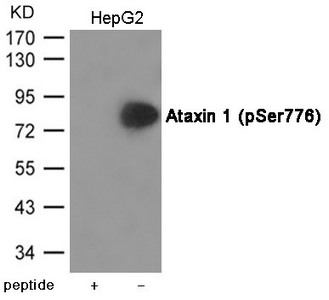
The antibody against ATXN1 was raised in rabbit using the Peptide sequence around phosphorylation site of Serine 776(R-W-S(p)-A-P) derived from Human Ataxin 1. as the immunogen. Antibodies were produced by immunizing rabbits with synthetic phosphopeptide and KLH conjugates. Antibodies were purified by affinity-chromatography using epitope-specific phosphopeptide. Non-phospho specific antibodies were removed by chromatogramphy usi This antibody has been validated on ELISA, WB.

ADC-42989A

The antibody against ATXN1 was raised in rabbit using the Peptide sequence around phosphorylation site of Serine 776(R-W-S(p)-A-P) derived from Human Ataxin 1. as the immunogen. Antibodies were produced by immunizing rabbits with synthetic phosphopeptide and KLH conjugates. Antibodies were purified by affinity-chromatography using epitope-specific phosphopeptide. Non-phospho specific antibodies were removed by chromatogramphy usi This antibody has been validated on ELISA, WB.

$360.00

Number
Order Exclusive Products Now

Request a Quote
High Purity LevelsPrecision and ReliabilityCustomization Options

Specifications


Cat.No ADC-42989A ClonalityPolyclonal
Host SpeciesRabbitTarget NameATXN1
FormLiquidSpecies ReactivityHuman, Mouse
Storage BufferPH 7.4, 0.02% sodium azide and 50% glycerol., 150mM NaCl, Supplied at 1.0mg/mL in phosphate buffered saline (without Mg2+ and Ca2+)ApplicationELISA, WB
StorageUpon receipt

Immunogen Information


Immunogen DescriptionPeptide sequence around phosphorylation site of Serine 776(R-W-S(p)-A-P) derived from Human Ataxin 1.Target SpeciesHuman
Immunogen SequenceComplete sequences for the immunogen, target protein, and peptides are available upon request.Uniprot IDP54253
Background Information
  • Uniprot Id

    P54253

  • Target Species

    Human

  • Target Name

    ATXN1

  • Target Full Name

    Ataxin-1

  • Target Function

    Chromatin-binding factor that repress Notch signaling in the absence of Notch intracellular domain by acting as a CBF1 corepressor. Binds to the HEY promoter and might assist, along with NCOR2, RBPJ-mediated repression. Binds RNA in vitro. May be involved in RNA metabolism. In concert with CIC and ATXN1L, involved in brain development.

  • Target Involvement

    Spinocerebellar ataxia 1 (SCA1)

  • Target Subcellular Location

    Cytoplasm. Nucleus.

  • Target Protein Families

    ATXN1 family

  • Target Tissue Specificity

    Widely expressed throughout the body.

  • Target Synonyms

    alternative ataxin1; Ataxin-1; ATX1; ATX1_HUMAN; Atxn1; D6S504E; OTTHUMP00000016065; SCA1; Spinocerebellar ataxia type 1 protein

  • Target Background

    The autosomal dominant cerebellar ataxias (ADCA) are a heterogeneous group of neurodegenerative disorders characterized by progressive degeneration of the cerebellum, brain stem and spinal cord. Clinically, ADCA has been divided into three groups: ADCA types I-III. ADCAI is genetically heterogeneous, with five genetic loci, designated spinocerebellar ataxia (SCA) 1, 2, 3, 4 and 6, being assigned to five different chromosomes. ADCAII, which always presents with retinal degeneration (SCA7), and ADCAIII often referred to as the `pure' cerebellar syndrome (SCA5), are most likely homogeneous disorders. Several SCA genes have been cloned and shown to contain CAG repeats in their coding regions. ADCA is caused by the expansion of the CAG repeats, producing an elongated polyglutamine tract in the corresponding protein. The expanded repeats are variable in size and unstable, usually increasing in size when transmitted to successive generations. The function of the ataxins is not known. This locus has been mapped to chromosome 6, and it has been determined that the diseased allele contains 40-83 CAG repeats, compared to 6-39 in the normal allele, and is associated with spinocerebellar ataxia type 1 (SCA1). Alternative splicing results in multiple transcript variants, with one variant encoding multiple distinct proteins, ATXN1 and Alt-ATXN1, due to the use of overlapping alternate reading frames.

Inquire Rabbit anti-Human ATXN1 Polyclonal Antibody Now


AbTriva respects your privacy and protects your personal data in accordance with AbTriva. For more information, please see our data protection statement. *

Notification