-
Chinese (Simplified)
-
English
-
German
-
Korean
-
Spanish
Chinese (Simplified)
English
German
Korean
Spanish
Sign up for an account to enjoy easy online shopping and instant order tracking.
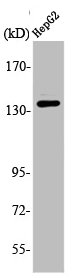
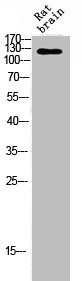
The antibody against ATXN2 was raised in rabbit using the Synthesized peptide derived from the Internal region of Human Ataxin-2. as the immunogen. This antibody exists as a non-conjugated isotype IgG. The antibody was affinity-purified from rabbit antiserum by affinity-chromatography using epitope-specific immunogen. This antibody has been validated on WB, IHC, ELISA.
$167.00
| Cat.No | ADC-39274A | Clonality | Polyclonal |
|---|---|---|---|
| Host Species | Rabbit | Target Name | ATXN2 |
| Form | Liquid | Species Reactivity | Human |
| Isotype | IgG | Storage Buffer | 0.5% BSA and 0.02% sodium azide., Liquid in PBS containing 50% glycerol |
| Purification Method | The antibody was affinity-purified from rabbit antiserum by affinity-chromatography using epitope-specific immunogen. | Conjugate | Non-conjugated |
| Application | ELISA, IHC, WB | Storage | Upon receipt |
| Immunogen Description | Synthesized peptide derived from the Internal region of Human Ataxin-2. | Target Species | Human |
|---|---|---|---|
| Immunogen Sequence | Complete sequences for the immunogen, target protein, and peptides are available upon request. | Uniprot ID | Q99700 |
Uniprot Id
Q99700
Target Species
Human
Target Name
ATXN2
Target Full Name
Ataxin-2
Target Function
Involved in EGFR trafficking, acting as negative regulator of endocytic EGFR internalization at the plasma membrane.
Target Involvement
Spinocerebellar ataxia 2 (SCA2); Amyotrophic lateral sclerosis 13 (ALS13)
Target Subcellular Location
Cytoplasm.
Target Protein Families
Ataxin-2 family
Target Tissue Specificity
Expressed in the brain, heart, liver, skeletal muscle, pancreas and placenta. Isoform 1 is predominant in the brain and spinal cord. Isoform 4 is more abundant in the cerebellum. In the brain, broadly expressed in the amygdala, caudate nucleus, corpus cal
Target Research Area
Neuroscience
Target Synonyms
ASL13; Ataxin 2; Ataxin-2; ATX2_HUMAN; Atxn2; Olivopontocerebellar ataxia 2; autosomal dominant; SCA2; Spinocerebellar ataxia type 2 protein; TNRC13; Trinucleotide repeat containing 13; Trinucleotide repeat containing gene 13 protein; Trinucleotide repeat-containing gene 13 protein
Target Background
This gene belongs to a group of genes that is associated with microsatellite-expansion diseases, a class of neurological and neuromuscular disorders caused by expansion of short stretches of repetitive DNA. The protein encoded by this gene has two globular domains near the N-terminus, one of which contains a clathrin-mediated trans-Golgi signal and an endoplasmic reticulum exit signal. The encoded cytoplasmic protein localizes to the endoplasmic reticulum and plasma membrane, is involved in endocytosis, and modulates mTOR signals, modifying ribosomal translation and mitochondrial function. The N-terminal region of the protein contains a polyglutamine tract of 14-31 residues that can be expanded in the pathogenic state to 32-200 residues. Intermediate length expansions of this tract increase susceptibility to amyotrophic lateral sclerosis, while long expansions of this tract result in spinocerebellar ataxia-2, an autosomal-dominantly inherited, neurodegenerative disorder. Genome-wide association studies indicate that loss-of-function mutations in this gene may be associated with susceptibility to type I diabetes, obesity and hypertension. Alternative splicing results in multiple transcript variants.
Notification