• Contact info@abtriva.com for inquiries and orders.
  • Chinese (Simplified)

  • English

  • German

  • Korean

  • Spanish

United States (English / $ USD)

Rabbit anti-Human AURKB Polyclonal Antibody

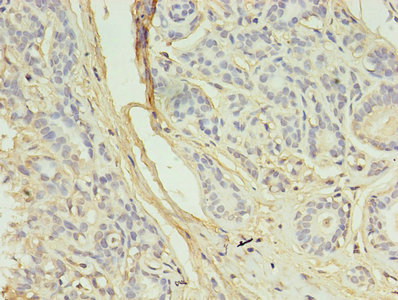
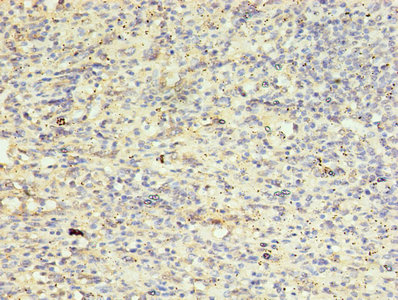
The antibody against AURKB was raised in rabbit using the Recombinant Human Aurora kinase B protein (1-255AA) as the immunogen. This antibody exists as a non-conjugated isotype IgG, purified by protein G with a purity greater than 95%. This antibody has been validated on ELISA, IHC, IF.

ADC-39986A

The antibody against AURKB was raised in rabbit using the Recombinant Human Aurora kinase B protein (1-255AA) as the immunogen. This antibody exists as a non-conjugated isotype IgG, purified by protein G with a purity greater than 95%. This antibody has been validated on ELISA, IHC, IF.

$299.00

Number
Order Exclusive Products Now

Request a Quote
High Purity LevelsPrecision and ReliabilityCustomization Options

Specifications


Cat.No ADC-39986A ClonalityPolyclonal
Host SpeciesRabbitTarget NameAURKB
FormLiquidSpecies ReactivityHuman
IsotypeIgGStorage Buffer0.01M PBS, 0.03% Proclin 300; Constituents: 50% Glycerol, PH 7.4
Purification Method>95%, Protein G purifiedConjugateNon-conjugated
ApplicationELISA, IF, IHCStorageUpon receipt

Immunogen Information


Immunogen DescriptionRecombinant Human Aurora kinase B protein (1-255AA)Target SpeciesHuman
Immunogen SequenceComplete sequences for the immunogen, target protein, and peptides are available upon request.Uniprot IDQ96GD4
Background Information
  • Uniprot Id

    Q96GD4

  • Target Species

    Human

  • Target Name

    AURKB

  • Target Full Name

    Aurora kinase B

  • Target Function

    Serine/threonine-protein kinase component of the chromosomal passenger complex (CPC), a complex that acts as a key regulator of mitosis. The CPC complex has essential functions at the centromere in ensuring correct chromosome alignment and segregation and is required for chromatin-induced microtubule stabilization and spindle assembly. Involved in the bipolar attachment of spindle microtubules to kinetochores and is a key regulator for the onset of cytokinesis during mitosis. Required for central/midzone spindle assembly and cleavage furrow formation. Key component of the cytokinesis checkpoint, a process required to delay abscission to prevent both premature resolution of intercellular chromosome bridges and accumulation of DNA damage: phosphorylates CHMP4C, leading to retain abscission-competent VPS4 (VPS4A and/or VPS4B) at the midbody ring until abscission checkpoint signaling is terminated at late cytokinesis. AURKB phosphorylates the CPC complex subunits BIRC5/survivin, CDCA8/borealin and INCENP. Phosphorylation of INCENP leads to increased AURKB activity. Other known AURKB substrates involved in centromeric functions and mitosis are CENPA, DES/desmin, GPAF, KIF2C, NSUN2, RACGAP1, SEPTIN1, VIM/vimentin, HASPIN, and histone H3. A positive feedback loop involving HASPIN and AURKB contributes to localization of CPC to centromeres. Phosphorylation of VIM controls vimentin filament segregation in cytokinetic process, whereas histone H3 is phosphorylated at 'Ser-10' and 'Ser-28' during mitosis (H3S10ph and H3S28ph, respectively). A positive feedback between HASPIN and AURKB contributes to CPC localization. AURKB is also required for kinetochore localization of BUB1 and SGO1. Phosphorylation of p53/TP53 negatively regulates its transcriptional activity. Key regulator of active promoters in resting B- and T-lymphocytes: acts by mediating phosphorylation of H3S28ph at active promoters in resting B-cells, inhibiting RNF2/RING1B-mediated ubiquitination of histone H2A and enhancing binding and activity of the USP16 deubiquitinase at transcribed genes.

  • Target Involvement

    Disruptive regulation of expression is a possible mechanism of the perturbation of chromosomal integrity in cancer cells through its dominant-negative effect on cytokinesis.

  • Target Subcellular Location

    Nucleus. Chromosome. Chromosome, centromere. Cytoplasm, cytoskeleton, spindle. Midbody.

  • Target Protein Families

    Protein kinase superfamily, Ser/Thr protein kinase family, Aurora subfamily

  • Target Tissue Specificity

    High level expression seen in the thymus. It is also expressed in the spleen, lung, testis, colon, placenta and fetal liver. Expressed during S and G2/M phase and expression is up-regulated in cancer cells during M phase.

  • Target Synonyms

    AIK2; AIM-1; AIM1; ARK-2; ARK2; AurB; AURKB; AURKB_HUMAN; Aurora 1; Aurora and Ipl1 like midbody associated protein 1; Aurora kinase B; Aurora related kinase 2; Aurora- and Ipl1-like midbody-associated protein 1; Aurora-B; Aurora-related kinase 2; Aurora/IPL1 related kinase 2; Aurora/IPL1-related kinase 2; IPL1; PPP1R48; Protein phosphatase 1 regulatory subunit 48; Serine/theronine kinase 12; Serine/threonine protein kinase 12; Serine/threonine-protein kinase 12; Serine/threonine-protein kinase aurora-B; STK-1; STK1; STK12; STK5

  • Target Background

    This gene encodes a member of the aurora kinase subfamily of serine/threonine kinases. The genes encoding the other two members of this subfamily are located on chromosomes 19 and 20. These kinases participate in the regulation of alignment and segregation of chromosomes during mitosis and meiosis through association with microtubules. A pseudogene of this gene is located on chromosome 8. Alternatively spliced transcript variants have been found for this gene.

Inquire Rabbit anti-Human AURKB Polyclonal Antibody Now


AbTriva respects your privacy and protects your personal data in accordance with AbTriva. For more information, please see our data protection statement. *

Notification