-
Chinese (Simplified)
-
English
-
German
-
Korean
-
Spanish
Chinese (Simplified)
English
German
Korean
Spanish
Sign up for an account to enjoy easy online shopping and instant order tracking.
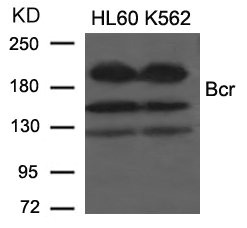
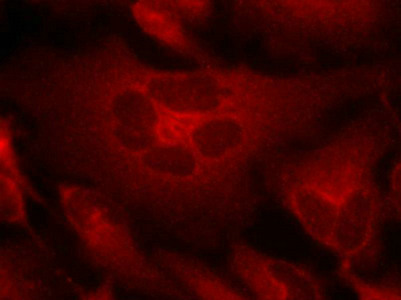
The antibody against BCR was raised in rabbit using the Peptide sequence around aa. 175~179 (P-F-Y-V-N) derived from Human Bcr. as the immunogen. Antibodies were produced by immunizing rabbits with synthetic peptide and KLH conjugates. Antibodies were purified by affinity-chromatography using epitope-specific peptide. This antibody has been validated on ELISA, WB, IF.
$297.00
| Cat.No | ADC-43392A | Clonality | Polyclonal |
|---|---|---|---|
| Host Species | Rabbit | Target Name | BCR |
| Target Synonyms | ALL antibody; bcr antibody; BCR/ABL FUSION GENE, INCLUDED antibody; BCR/FGFR1 chimera protein antibody; BCR/FGFR1 FUSION GENE, INCLUDED antibody; BCR/PDGFRA FUSION GENE | Form | Liquid |
| Species Reactivity | Human, Mouse | Storage Buffer | PH 7.4, 0.02% sodium azide and 50% glycerol., 150mM NaCl, Supplied at 1.0mg/mL in phosphate buffered saline (without Mg2+ and Ca2+) |
| Purification Method | Antibodies were produced by immunizing rabbits with synthetic peptide and KLH conjugates. Antibodies were purified by affinity-chromatography using epitope-specific peptide. | Application | ELISA, IF, WB |
| Storage | Upon receipt |
| Immunogen Description | Peptide sequence around aa. 175~179 (P-F-Y-V-N) derived from Human Bcr. | Target Species | Human |
|---|---|---|---|
| Immunogen Sequence | Complete sequences for the immunogen, target protein, and peptides are available upon request. | Uniprot ID | P11274 |
Uniprot Id
P11274
Target Species
Human
Target Name
BCR
Target Full Name
Breakpoint cluster region protein
Target Function
Protein with a unique structure having two opposing regulatory activities toward small GTP-binding proteins. The C-terminus is a GTPase-activating protein (GAP) domain which stimulates GTP hydrolysis by RAC1, RAC2 and CDC42. Accelerates the intrinsic rate of GTP hydrolysis of RAC1 or CDC42, leading to down-regulation of the active GTP-bound form. The central Dbl homology (DH) domain functions as guanine nucleotide exchange factor (GEF) that modulates the GTPases CDC42, RHOA and RAC1. Promotes the conversion of CDC42, RHOA and RAC1 from the GDP-bound to the GTP-bound form. The amino terminus contains an intrinsic kinase activity. Functions as an important negative regulator of neuronal RAC1 activity. Regulates macrophage functions such as CSF1-directed motility and phagocytosis through the modulation of RAC1 activity. Plays a major role as a RHOA GEF in keratinocytes being involved in focal adhesion formation and keratinocyte differentiation.
Target Involvement
Leukemia, chronic myeloid (CML)
Target Subcellular Location
Cell junction, synapse, postsynaptic density. Cell projection, dendritic spine. Cell projection, axon. Cell junction, synapse.
Target Synonyms
ALL; bcr; BCR/ABL FUSION GENE, INCLUDED; BCR/FGFR1 chimera protein; BCR/FGFR1 FUSION GENE, INCLUDED; BCR/PDGFRA FUSION GENE, INCLUDED; BCR_HUMAN; BCR1; Breakpoint cluster region; Breakpoint cluster region protein; CML; D22S11; D22S662; FGFR1/BCR chimera protein; PHL; Renal carcinoma antigen NY-REN-26
Target Background
A reciprocal translocation between chromosomes 22 and 9 produces the Philadelphia chromosome, which is often found in patients with chronic myelogenous leukemia. The chromosome 22 breakpoint for this translocation is located within the BCR gene. The translocation produces a fusion protein which is encoded by sequence from both BCR and ABL, the gene at the chromosome 9 breakpoint. Although the BCR-ABL fusion protein has been extensively studied, the function of the normal BCR gene product is not clear. The unregulated tyrosine kinase activity of BCR-ABL1 contributes to the immortality of leukaemic cells. The BCR protein has serine/threonine kinase activity and is a GTPase-activating protein for p21rac and other kinases. Two transcript variants encoding different isoforms have been found for this gene.
Notification