-
Chinese (Simplified)
-
English
-
German
-
Korean
-
Spanish
Chinese (Simplified)
English
German
Korean
Spanish
Sign up for an account to enjoy easy online shopping and instant order tracking.
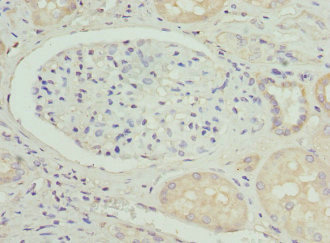
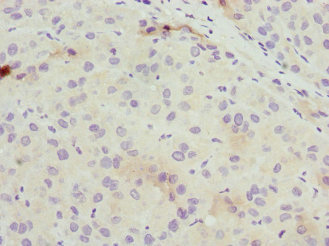
The antibody against BGLAP was raised in rabbit using the Recombinant Human Osteocalcin protein (52-100AA) as the immunogen. This antibody exists as a non-conjugated isotype IgG, purified by protein G with a purity greater than 95%. This antibody has been validated on ELISA, IHC.
$299.00
| Cat.No | ADC-46413A | Clonality | Polyclonal |
|---|---|---|---|
| Host Species | Rabbit | Target Name | BGLAP |
| Form | Liquid | Species Reactivity | Human |
| Isotype | IgG | Storage Buffer | 0.01M PBS, 0.03% Proclin 300; Constituents: 50% Glycerol, PH 7.4 |
| Purification Method | >95%, Protein G purified | Conjugate | Non-conjugated |
| Application | ELISA, IHC | Storage | Upon receipt |
| Immunogen Description | Recombinant Human Osteocalcin protein (52-100AA) | Target Species | Human |
|---|---|---|---|
| Immunogen Sequence | Complete sequences for the immunogen, target protein, and peptides are available upon request. | Uniprot ID | P02818 |
Uniprot Id
P02818
Target Species
Human
Target Name
BGLAP
Target Full Name
Osteocalcin
Target Function
Constitutes 1-2% of the total bone protein. It binds strongly to apatite and calcium.
Target Subcellular Location
Secreted.
Target Protein Families
Osteocalcin/matrix Gla protein family
Target Synonyms
OC; BGP; OCN; Osteocalcin (BGLAP)
Target Background
This gene encodes a highly abundant bone protein secreted by osteoblasts that regulates bone remodeling and energy metabolism. The encoded protein contains a Gla (gamma carboxyglutamate) domain, which functions in binding to calcium and hydroxyapatite, the mineral component of bone. Serum osteocalcin levels may be negatively correlated with metabolic syndrome. Read-through transcription exists between this gene and the neighboring upstream gene, PMF1 (polyamine-modulated factor 1), but the encoded protein only shows sequence identity with the upstream gene product.
Notification