• Contact info@abtriva.com for inquiries and orders.
  • Chinese (Simplified)

  • English

  • German

  • Korean

  • Spanish

United States (English / $ USD)

Rabbit anti-Human BiP/GRP78 Polyclonal Antibody

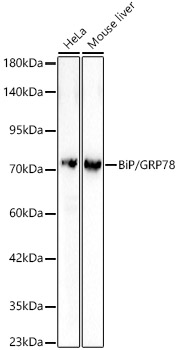
The antibody against BiP/GRP78 was raised in Rabbit using a synthetic peptide corresponding to a sequence within amino acids 550-650 of human BiP/GRP78 (NP_005338.1) as the immunogen. The polyclonal antibody exists as a isotype IgG, by affinity purification. This antibody has been validated on WB, IHC-P, ELISA.

ADA-13106A

The antibody against BiP/GRP78 was raised in Rabbit using a synthetic peptide corresponding to a sequence within amino acids 550-650 of human BiP/GRP78 (NP_005338.1) as the immunogen. The polyclonal antibody exists as a isotype IgG, by affinity purification. This antibody has been validated on WB, IHC-P, ELISA.

Number
Order Exclusive Products Now

Request a Quote
High Purity LevelsPrecision and ReliabilityCustomization Options

Specifications


Cat.No ADA-13106A ClonalityPolyclonal
Host SpeciesRabbitTarget NameBiP/GRP78
Target SynonymsBIP; GRP78; HEL-S-89n; BiP/GRP78FormLiquid
Species ReactivityHuman, Mouse, RatIsotypeIgG
Storage Buffer50% Glycerol, PBS with 0.02% sodium azide, pH7.3.Purification MethodAffinity purification
Positive SamplesHeLa, Mouse liver, Mouse placenta, Rat liver, Rat lungApplicationELISA, WB, IHC-P

Immunogen Information


Immunogen DescriptionA synthetic peptide corresponding to a sequence within amino acids 550-650 of human BiP/GRP78 (NP_005338.1).Target SpeciesHuman
Immunogen SequenceEEDKKLKERIDTRNELESYAYSLKNQIGDKEKLGGKLSSEDKETMEKAVEEKIEWLESHQDADIEDFKAKKKELEEIVQPIISKLYGSAGPPPTGEEDTAEUniprot IDP11021
Background Information
  • Uniprot Id

    P11021

  • Target Species

    Human

  • Target Name

    HSPA5

  • Target Full Name

    Endoplasmic reticulum chaperone BiP

  • Target Function

    Endoplasmic reticulum chaperone that plays a key role in protein folding and quality control in the endoplasmic reticulum lumen. Involved in the correct folding of proteins and degradation of misfolded proteins via its interaction with DNAJC10/ERdj5, probably to facilitate the release of DNAJC10/ERdj5 from its substrate. Acts as a key repressor of the ERN1/IRE1-mediated unfolded protein response (UPR). In the unstressed endoplasmic reticulum, recruited by DNAJB9/ERdj4 to the luminal region of ERN1/IRE1, leading to disrupt the dimerization of ERN1/IRE1, thereby inactivating ERN1/IRE1. Accumulation of misfolded protein in the endoplasmic reticulum causes release of HSPA5/BiP from ERN1/IRE1, allowing homodimerization and subsequent activation of ERN1/IRE1. Plays an auxiliary role in post-translational transport of small presecretory proteins across endoplasmic reticulum (ER). May function as an allosteric modulator for SEC61 channel-forming translocon complex, likely cooperating with SEC62 to enable the productive insertion of these precursors into SEC61 channel. Appears to specifically regulate translocation of precursors having inhibitory residues in their mature region that weaken channel gating. May also play a role in apoptosis and cell proliferation.; (Microbial infection) Plays an important role in viral binding to the host cell membrane and entry for several flaviruses such as Dengue virus, Zika virus and Japanese encephalitis virus. Acts as a component of the cellular receptor for Dengue virus serotype 2/DENV-2 on human liver cells.; (Microbial infection) Acts as a receptor for CotH proteins expressed by fungi of the order mucorales, the causative agent of mucormycosis, which plays an important role in epithelial cell invasion by the fungi. Acts as a receptor for R.delemar CotH3 in nasal epithelial cells, which may be an early step in rhinoorbital/cerebral mucormycosis (RCM) disease progression.

  • Target Involvement

    Autoantigen in rheumatoid arthritis.

  • Target Subcellular Location

    Endoplasmic reticulum lumen. Melanosome. Cytoplasm. Cell surface.

  • Target Protein Families

    Heat shock protein 70 family

  • Target Synonyms

    78 kDa glucose regulated protein; 78 kDa glucose-regulated protein; AL022860; AU019543; BIP; D2Wsu141e; D2Wsu17e; Endoplasmic reticulum lumenal Ca(2+)-binding protein grp78; Endoplasmic reticulum lumenal Ca2+ binding protein grp78; Epididymis secretory sperm binding protein Li 89n; FLJ26106; Glucose Regulated Protein 78; Glucose Regulated Protein 78kDa; GRP 78; GRP-78; GRP78; GRP78_HUMAN; Heat shock 70 kDa protein 5; Heat Shock 70kDa Protein 5; Heat shock protein family A (Hsp70) member 5; HEL S 89n; Hsce70; HSPA 5; HSPA5; Immunoglobulin Heavy Chain Binding Protein; Immunoglobulin heavy chain-binding protein; mBiP; MIF2; Sez7

  • Target Background

    The protein encoded by this gene is a member of the heat shock protein 70 (HSP70) family. This protein localizes to the lumen of the endoplasmic reticulum (ER) where it operates as a typical HSP70 chaperone involved in the folding and assembly of proteins in the ER and is a master regulator of ER homeostasis. During cellular stress, as during viral infection or tumorogenesis, this protein interacts with the transmembrane stress sensor proteins PERK (protein kinase R-like endoplasmic reticulum kinase), IRE1 (inositol-requiring kinase 1), and ATF6 (activating transcription factor 6) where it acts as a repressor of the unfolded protein response (UPR) and also plays a role in cellular apoptosis and senescence. Elevated expression and atypical translocation of this protein to the cell surface has been reported in viral infections and some types of cancer cells. At the cell surface this protein may facilitate viral attachment and entry to host cells. This gene is a therapeutic target for the treatment of coronavirus diseases and chemoresistant cancers.

Inquire Rabbit anti-Human BiP/GRP78 Polyclonal Antibody Now


AbTriva respects your privacy and protects your personal data in accordance with AbTriva. For more information, please see our data protection statement. *

Notification