-
Chinese (Simplified)
-
English
-
German
-
Korean
-
Spanish
Chinese (Simplified)
English
German
Korean
Spanish
Sign up for an account to enjoy easy online shopping and instant order tracking.
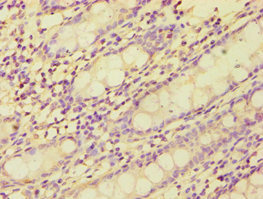
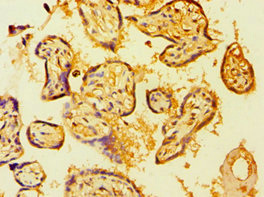
The antibody against BMX was raised in rabbit using the Recombinant Human Cytoplasmic tyrosine-protein kinase BMX protein (65-280AA) as the immunogen. This antibody exists as a non-conjugated isotype IgG, Antigen affinity purified. This antibody has been validated on ELISA, WB, IHC.
$299.00
| Cat.No | ADC-43898A | Clonality | Polyclonal |
|---|---|---|---|
| Host Species | Rabbit | Target Name | BMX |
| Form | Liquid | Species Reactivity | Human, Mouse |
| Isotype | IgG | Storage Buffer | 50% Glycerol, PBS with 0.02% sodium azide, pH7.3. |
| Purification Method | Antigen affinity purified | Conjugate | Non-conjugated |
| Application | ELISA, IHC, WB | Storage | Upon receipt |
| Immunogen Description | Recombinant Human Cytoplasmic tyrosine-protein kinase BMX protein (65-280AA) | Target Species | Human |
|---|---|---|---|
| Immunogen Sequence | Complete sequences for the immunogen, target protein, and peptides are available upon request. | Uniprot ID | P51813 |
Uniprot Id
P51813
Target Species
Human
Target Name
BMX
Target Full Name
Cytoplasmic tyrosine-protein kinase BMX
Target Function
Non-receptor tyrosine kinase that plays central but diverse modulatory roles in various signaling processes involved in the regulation of actin reorganization, cell migration, cell proliferation and survival, cell adhesion, and apoptosis. Participates in signal transduction stimulated by growth factor receptors, cytokine receptors, G-protein coupled receptors, antigen receptors and integrins. Induces tyrosine phosphorylation of BCAR1 in response to integrin regulation. Activation of BMX by integrins is mediated by PTK2/FAK1, a key mediator of integrin signaling events leading to the regulation of actin cytoskeleton and cell motility. Plays a critical role in TNF-induced angiogenesis, and implicated in the signaling of TEK and FLT1 receptors, 2 important receptor families essential for angiogenesis. Required for the phosphorylation and activation of STAT3, a transcription factor involved in cell differentiation. Also involved in interleukin-6 (IL6) induced differentiation. Plays also a role in programming adaptive cytoprotection against extracellular stress in different cell systems, salivary epithelial cells, brain endothelial cells, and dermal fibroblasts. May be involved in regulation of endocytosis through its interaction with an endosomal protein RUFY1. May also play a role in the growth and differentiation of hematopoietic cells; as well as in signal transduction in endocardial and arterial endothelial cells.
Target Subcellular Location
Cytoplasm. Note=Localizes to the edges of spreading cells when complexed with BCAR1.
Target Protein Families
Protein kinase superfamily, Tyr protein kinase family, TEC subfamily
Target Tissue Specificity
Highly expressed in cells with great migratory potential, including endothelial cells and metastatic carcinoma cell lines.
Target Synonyms
Bmx; BMX non receptor tyrosine kinase; BMX_HUMAN; BONE MARROW KINASE; X-LINKED; Bone marrow tyrosine kinase gene in chromosome X protein; Cytoplasmic tyrosine protein kinase BMX; Cytoplasmic tyrosine-protein kinase BMX; Epithelial and endothelial tyrosine kinase; ETK; NKT38; NTK 38; NTK38; Protein tyrosine kinase BMX; PSCTK 2; PSCTK 3; PSCTK2; PSCTK3
Target Background
This gene encodes a non-receptor tyrosine kinase belonging to the Tec kinase family. The protein contains a PH-like domain, which mediates membrane targeting by binding to phosphatidylinositol 3, 4, 5-triphosphate (PIP3), and a SH2 domain that binds to tyrosine-phosphorylated proteins and functions in signal transduction. The protein is implicated in several signal transduction pathways including the Stat pathway, and regulates differentiation and tumorigenicity of several types of cancer cells. Alternatively spliced transcript variants have been found for this gene.
Notification