• Contact info@abtriva.com for inquiries and orders.
  • Chinese (Simplified)

  • English

  • German

  • Korean

  • Spanish

United States (English / $ USD)

Rabbit anti-Human BNP Monoclonal Antibody

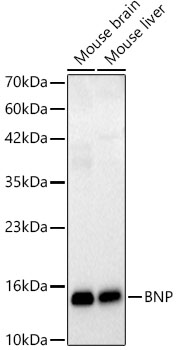
The antibody against BNP was raised in Rabbit using a synthetic peptide corresponding to a sequence within amino acids 35-134 of human BNP (NP_002512.1) as the immunogen. The monoclonal antibody exists as a isotype IgG, by affinity purification. This antibody has been validated on WB, ELISA.

ADA-15443A

The antibody against BNP was raised in Rabbit using a synthetic peptide corresponding to a sequence within amino acids 35-134 of human BNP (NP_002512.1) as the immunogen. The monoclonal antibody exists as a isotype IgG, by affinity purification. This antibody has been validated on WB, ELISA.

Number
Order Exclusive Products Now

Request a Quote
High Purity LevelsPrecision and ReliabilityCustomization Options

Specifications


Cat.No ADA-15443A ClonalityMonoclonal
Host SpeciesRabbitTarget NameBNP
Target SynonymsBNP; Iso-ANPFormLiquid
Species ReactivityHuman, Mouse, RatIsotypeIgG
Storage Buffer50% Glycerol, 0.05% BSA, PBS with 0.05% proclin300, pH7.3.Purification MethodAffinity purification
Positive SamplesMouse heart, Rat brain, Rat heart, Mouse brain, Mouse liverApplicationELISA, WB

Immunogen Information


Immunogen DescriptionA synthetic peptide corresponding to a sequence within amino acids 35-134 of human BNP (NP_002512.1).Target SpeciesHuman
Immunogen SequenceASDLETSGLQEQRNHLQGKLSELQVEQTSLEPLQESPRPTGVWKSREVATEGIRGHRKMVLYTLRAPRSPKMVQGSGCFGRKMDRISSSSGLGCKVLRRHUniprot IDP16860
Background Information
  • Uniprot Id

    P16860

  • Target Species

    Human

  • Target Name

    NPPB

  • Target Full Name

    Natriuretic peptides B

  • Target Function

    Cardiac hormone that plays a key role in mediating cardio-renal homeostasis. May also function as a paracrine antifibrotic factor in the heart. Acts by specifically binding and stimulating NPR1 to produce cGMP, which in turn activates effector proteins that drive various biological responses. Involved in regulating the extracellular fluid volume and maintaining the fluid-electrolyte balance through natriuresis, diuresis, vasorelaxation, and inhibition of renin and aldosterone secretion. Binds the clearance receptor NPR3.; May affect cardio-renal homeostasis. Able to promote the production of cGMP although its potency is very low compared to brain natriuretic peptide 32.; May have a role in cardio-renal homeostasis. Able to promote the production of cGMP.

  • Target Subcellular Location

    [NT-proBNP]: Secreted.; [proBNP(3-108)]: Secreted.; [Brain natriuretic peptide 32]: Secreted.; [BNP(3-32)]: Secreted.

  • Target Protein Families

    Natriuretic peptide family

  • Target Tissue Specificity

    [Brain natriuretic peptide 32]: Detected in the cardiac atria (at protein level). Detected in the kidney distal tubular cells (at protein level).

  • Target Research Area

    Signal Transduction

  • Target Synonyms

    ANFB_HUMAN; BNP; BNP(1-32); BNP(5-29); BNP-32; Brain type natriuretic peptide; Gamma brain natriuretic peptide; Gamma-brain natriuretic peptide; Natriuretic peptide precursor B; nppb; NT proBNP

  • Target Background

    This gene is a member of the natriuretic peptide family and encodes a secreted protein which functions as a cardiac hormone. The protein undergoes two cleavage events, one within the cell and a second after secretion into the blood. The protein's biological actions include natriuresis, diuresis, vasorelaxation, inhibition of renin and aldosterone secretion, and a key role in cardiovascular homeostasis. A high concentration of this protein in the bloodstream is indicative of heart failure. The presence of myocardial injury is a significant predictor of mortality in hospitalized coronavirus disease 2019 (COVID-19) patients, and there is evidence of increased levels of natriuretic peptide B in hospitalized non-survivor COVID-19 patients. The protein also acts as an antimicrobial peptide with antibacterial and antifungal activity. Mutations in this gene have been associated with postmenopausal osteoporosis.

Inquire Rabbit anti-Human BNP Monoclonal Antibody Now


AbTriva respects your privacy and protects your personal data in accordance with AbTriva. For more information, please see our data protection statement. *

Notification