• Contact info@abtriva.com for inquiries and orders.
  • Chinese (Simplified)

  • English

  • German

  • Korean

  • Spanish

United States (English / $ USD)

Rabbit anti-Human CACNA1D Polyclonal Antibody

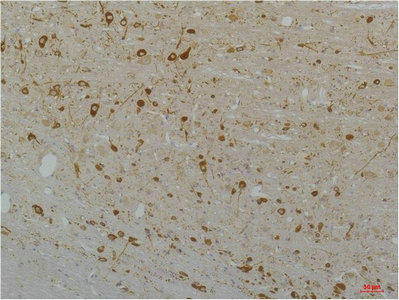
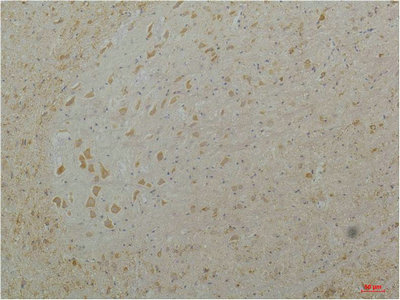
The antibody against CACNA1D was raised in rabbit using the Synthetic Peptide as the immunogen. This antibody exists as a non-conjugated antibody. The antibody was affinity-purified from rabbit antiserum by affinity-chromatography using specific immunogen. This antibody has been validated on IHC, ELISA.

ADC-13195A

The antibody against CACNA1D was raised in rabbit using the Synthetic Peptide as the immunogen. This antibody exists as a non-conjugated antibody. The antibody was affinity-purified from rabbit antiserum by affinity-chromatography using specific immunogen. This antibody has been validated on IHC, ELISA.

$167.00

Number
Order Exclusive Products Now

Request a Quote
High Purity LevelsPrecision and ReliabilityCustomization Options

Specifications


Cat.No ADC-13195A ClonalityPolyclonal
Host SpeciesRabbitTarget NameCACNA1D
FormLiquidSpecies ReactivityHuman, Mouse, Rat
Storage Buffer0.5% BSA and 0.02% sodium azide., Liquid in PBS containing 50% glycerolPurification MethodThe antibody was affinity-purified from rabbit antiserum by affinity-chromatography using specific immunogen.
ConjugateNon-conjugatedApplicationELISA, IHC
StorageUpon receipt

Immunogen Information


Immunogen DescriptionSynthetic PeptideTarget SpeciesHuman
Immunogen SequenceComplete sequences for the immunogen, target protein, and peptides are available upon request.Uniprot IDQ01668
Background Information
  • Uniprot Id

    Q01668

  • Target Species

    Human

  • Target Name

    CACNA1D

  • Target Full Name

    Voltage-dependent L-type calcium channel subunit alpha-1D

  • Target Function

    Voltage-sensitive calcium channels (VSCC) mediate the entry of calcium ions into excitable cells and are also involved in a variety of calcium-dependent processes, including muscle contraction, hormone or neurotransmitter release, gene expression, cell motility, cell division and cell death. The isoform alpha-1D gives rise to L-type calcium currents. Long-lasting (L-type) calcium channels belong to the 'high-voltage activated' (HVA) group. They are blocked by dihydropyridines (DHP), phenylalkylamines, and by benzothiazepines.

  • Target Involvement

    Sinoatrial node dysfunction and deafness (SANDD); Primary aldosteronism, seizures, and neurologic abnormalities (PASNA)

  • Target Subcellular Location

    Membrane; Multi-pass membrane protein.

  • Target Protein Families

    Calcium channel alpha-1 subunit (TC 1.A.1.11) family, CACNA1D subfamily

  • Target Tissue Specificity

    Expressed in pancreatic islets and in brain, where it has been seen in cerebral cortex, hippocampus, basal ganglia, habenula and thalamus. Expressed in the small cell lung carcinoma cell line SCC-9. No expression in skeletal muscle.

  • Target Synonyms

    alpha-1 polypeptide; CAC1D_HUMAN; CACH3; CACN4; CACNA 1D; Cacna1d; CACNL1A2; Calcium channel; Calcium channel L type alpha 1 polypeptide isoform 2; Calcium channel neuroendocrine/brain type alpha 1 subunit; Calcium channel voltage dependent L type alpha 1; Calcium channel voltage dependent L type alpha 1D subunit; Cav1.3; CCHL1A2; isoform 2; L type; PASNA; SANDD; Voltage dependent L type calcium channel subunit alpha 1D; Voltage gated calcium channel alpha 1 subunit; Voltage gated calcium channel alpha subunit Cav1.3; Voltage gated calcium channel subunit alpha Cav1.3; Voltage-dependent L-type calcium channel subunit alpha-1D; Voltage-gated calcium channel subunit alpha Cav1.3

  • Target Background

    Voltage-dependent calcium channels mediate the entry of calcium ions into excitable cells, and are also involved in a variety of calcium-dependent processes, including muscle contraction, hormone or neurotransmitter release, and gene expression. Calcium channels are multisubunit complexes composed of alpha-1, beta, alpha-2/delta, and gamma subunits. The channel activity is directed by the pore-forming alpha-1 subunit, whereas the others act as auxiliary subunits regulating this activity. The distinctive properties of the calcium channel types are related primarily to the expression of a variety of alpha-1 isoforms, namely alpha-1A, B, C, D, E, and S. This gene encodes the alpha-1D subunit. Several transcript variants encoding different isoforms have been found for this gene.

Inquire Rabbit anti-Human CACNA1D Polyclonal Antibody Now


AbTriva respects your privacy and protects your personal data in accordance with AbTriva. For more information, please see our data protection statement. *

Notification