-
Chinese (Simplified)
-
English
-
German
-
Korean
-
Spanish
Chinese (Simplified)
English
German
Korean
Spanish
Sign up for an account to enjoy easy online shopping and instant order tracking.
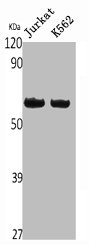
The antibody against CASP10 was raised in rabbit using the Synthesized peptide derived from the Internal region of Human Caspase-10. as the immunogen. This antibody exists as a non-conjugated isotype IgG. The antibody was affinity-purified from rabbit antiserum by affinity-chromatography using epitope-specific immunogen. This antibody has been validated on WB, ELISA.
$167.00
| Cat.No | ADC-37253A | Clonality | Polyclonal |
|---|---|---|---|
| Host Species | Rabbit | Target Name | CASP10 |
| Form | Liquid | Species Reactivity | Human |
| Isotype | IgG | Storage Buffer | 0.5% BSA and 0.02% sodium azide., Liquid in PBS containing 50% glycerol |
| Purification Method | The antibody was affinity-purified from rabbit antiserum by affinity-chromatography using epitope-specific immunogen. | Conjugate | Non-conjugated |
| Application | ELISA, WB | Storage | Upon receipt |
| Immunogen Description | Synthesized peptide derived from the Internal region of Human Caspase-10. | Target Species | Human |
|---|---|---|---|
| Immunogen Sequence | Complete sequences for the immunogen, target protein, and peptides are available upon request. | Uniprot ID | Q92851 |
Uniprot Id
Q92851
Target Species
Human
Target Name
CASP10
Target Full Name
Caspase-10
Target Function
Involved in the activation cascade of caspases responsible for apoptosis execution. Recruited to both Fas- and TNFR-1 receptors in a FADD dependent manner. May participate in the granzyme B apoptotic pathways. Cleaves and activates caspase-3, -4, -6, -7, -8, and -9. Hydrolyzes the small- molecule substrates, Tyr-Val-Ala-Asp-|-AMC and Asp-Glu-Val-Asp-|-AMC.; Isoform 7 can enhance NF-kappaB activity but promotes only slight apoptosis.; Isoform C is proteolytically inactive.
Target Involvement
Autoimmune lymphoproliferative syndrome 2A (ALPS2A); Familial non-Hodgkin lymphoma (NHL); Gastric cancer (GASC)
Target Protein Families
Peptidase C14A family
Target Tissue Specificity
Detectable in most tissues. Lowest expression is seen in brain, kidney, prostate, testis and colon.
Target Synonyms
ALPS2; Apoptotic protease Mch-4; CASP 10; CASP-10; CASP10; CASPA_HUMAN; Caspase 10 apoptosis related cysteine peptidase; Caspase-10; Caspase-10 subunit p12; FADD like ICE2; Fas associated death domain protein; FAS-associated death domain protein interleukin-1B-converting enzyme 2; FLICE 2; FLICE2; ICE like apoptotic protease 4; ICE-like apoptotic protease 4; Interleukin 1B converting enzyme 2; MCH 4
Target Background
This gene encodes a protein which is a member of the cysteine-aspartic acid protease (caspase) family. Sequential activation of caspases plays a central role in the execution-phase of cell apoptosis. Caspases exist as inactive proenzymes which undergo proteolytic processing at conserved aspartic residues to produce two subunits, large and small, that dimerize to form the active enzyme. This protein cleaves and activates caspases 3 and 7, and the protein itself is processed by caspase 8. Mutations in this gene are associated with type IIA autoimmune lymphoproliferative syndrome, non-Hodgkin lymphoma and gastric cancer. Alternatively spliced transcript variants encoding different isoforms have been described for this gene.
Notification