-
Chinese (Simplified)
-
English
-
German
-
Korean
-
Spanish
Chinese (Simplified)
English
German
Korean
Spanish
Sign up for an account to enjoy easy online shopping and instant order tracking.
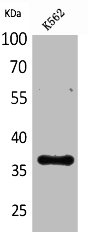
The antibody against CD207 was raised in rabbit using the Synthesized peptide derived from the Internal region of Human CD207. as the immunogen. This antibody exists as a non-conjugated isotype IgG. The antibody was affinity-purified from rabbit antiserum by affinity-chromatography using epitope-specific immunogen. This antibody has been validated on WB, ELISA.
$167.00
| Cat.No | ADC-37078A | Clonality | Polyclonal |
|---|---|---|---|
| Host Species | Rabbit | Target Name | CD207 |
| Form | Liquid | Species Reactivity | Human |
| Isotype | IgG | Storage Buffer | 0.5% BSA and 0.02% sodium azide., Liquid in PBS containing 50% glycerol |
| Purification Method | The antibody was affinity-purified from rabbit antiserum by affinity-chromatography using epitope-specific immunogen. | Conjugate | Non-conjugated |
| Application | ELISA, WB | Storage | Upon receipt |
| Immunogen Description | Synthesized peptide derived from the Internal region of Human CD207. | Target Species | Human |
|---|---|---|---|
| Immunogen Sequence | Complete sequences for the immunogen, target protein, and peptides are available upon request. | Uniprot ID | Q9UJ71 |
Uniprot Id
Q9UJ71
Target Species
Human
Target Name
CD207
Target Full Name
C-type lectin domain family 4 member K
Target Function
Calcium-dependent lectin displaying mannose-binding specificity. Induces the formation of Birbeck granules (BGs); is a potent regulator of membrane superimposition and zippering. Binds to sulfated as well as mannosylated glycans, keratan sulfate (KS) and beta-glucans. Facilitates uptake of antigens and is involved in the routing and/or processing of antigen for presentation to T cells. Major receptor on primary Langerhans cells for Candida species, Saccharomyces species, and Malassezia furfur. Protects against human immunodeficiency virus-1 (HIV-1) infection. Binds to high-mannose structures present on the envelope glycoprotein which is followed by subsequent targeting of the virus to the Birbeck granules leading to its rapid degradation.
Target Involvement
Birbeck granule deficiency (BIRGD)
Target Subcellular Location
Membrane; Single-pass type II membrane protein. Note=Found in Birbeck granules (BGs), which are organelles consisting of superimposed and zippered membranes.
Target Tissue Specificity
Exclusively expressed by Langerhans cells. Expressed in astrocytoma and malignant ependymoma, but not in normal brain tissues.
Target Synonyms
C type lectin domain family 4 member K; C-type lectin domain family 4 member K; CD 207; CD207; CD207 antigen; CD207 antigen; langerin; CD207 molecule; CLC4K_HUMAN; CLEC 4K; CLEC4K; Langerhans cell specific c type lectin; Langerin; RGD1565913
Target Background
The protein encoded by this gene is expressed only in Langerhans cells which are immature dendritic cells of the epidermis and mucosa. It is localized in the Birbeck granules, organelles present in the cytoplasm of Langerhans cells and consisting of superimposed and zippered membranes. It is a C-type lectin with mannose binding specificity, and it has been proposed that mannose binding by this protein leads to internalization of antigen into Birbeck granules and providing access to a nonclassical antigen-processing pathway. Mutations in this gene result in Birbeck granules deficiency or loss of sugar binding activity.
Notification