-
Chinese (Simplified)
-
English
-
German
-
Korean
-
Spanish
Chinese (Simplified)
English
German
Korean
Spanish
Sign up for an account to enjoy easy online shopping and instant order tracking.
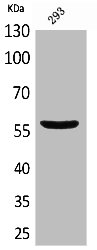
The antibody against CD276 was raised in rabbit using the Synthesized peptide derived from the Internal region of Human CD276. as the immunogen. This antibody exists as a non-conjugated isotype IgG. The antibody was affinity-purified from rabbit antiserum by affinity-chromatography using epitope-specific immunogen. This antibody has been validated on WB, ELISA.
$167.00
| Cat.No | ADC-37068A | Clonality | Polyclonal |
|---|---|---|---|
| Host Species | Rabbit | Target Name | CD276 |
| Form | Liquid | Species Reactivity | Human, Mouse, Rat |
| Isotype | IgG | Storage Buffer | 0.5% BSA and 0.02% sodium azide., Liquid in PBS containing 50% glycerol |
| Purification Method | The antibody was affinity-purified from rabbit antiserum by affinity-chromatography using epitope-specific immunogen. | Conjugate | Non-conjugated |
| Application | ELISA, WB | Storage | Upon receipt |
| Immunogen Description | Synthesized peptide derived from the Internal region of Human CD276. | Target Species | Human |
|---|---|---|---|
| Immunogen Sequence | Complete sequences for the immunogen, target protein, and peptides are available upon request. | Uniprot ID | Q5ZPR3 |
Uniprot Id
Q5ZPR3
Target Species
Human
Target Name
CD276
Target Full Name
CD276 antigen
Target Function
Earlier studies found that B7H3 (also known as B7H3) promotes the activation of T cells. Chapoval et al. confirmed that in the presence of anti-CD3 antibodies, B7H3 can promote the proliferation of CD4 and CD8+ T cells and selectively promote the secretion of IFN-γ. And B7H3 transfection into tumor cells can enhance the killing ability of CTL. Further research found that only TLT-2 transgenic cells could bind to mouse B7H3 with high affinity, and TLT-2 was determined to be the receptor molecule of B7H3. Moreover, Hashiguchi et al. confirmed that the B7H3-TLT-2 pathway enhanced T cell activation. However, Leitner et al. did not find the specific binding of B7H3 to TLT-2 by flow cytometry, therefore, the exact receptor molecule of B7H3 is still unclear.On the other hand, studies have found that B7H3 can also suppress T-cell immune responses. Some studies have shown that B7H3 can inhibit human and mouse T cells by activating or inhibiting NFTA (nuclear factor for activated T cells), NF-KB (nuclear factor kB) and AP-1 (activator protein-1) pathways. activation. In addition, results have demonstrated that B7H3 may inhibit T cell immune responses by inhibiting the activity of Thl. The study of Leiner et al. also found that B7H3 can down-regulate the secretion of IL-2 in T cells to inhibit the activity of T cells.
Target Subcellular Location
Membrane; Single-pass type I membrane protein.
Target Protein Families
Immunoglobulin superfamily, BTN/MOG family
Target Tissue Specificity
Ubiquitous but not detectable in peripheral blood lymphocytes or granulocytes. Weakly expressed in resting monocytes. Expressed in dendritic cells derived from monocytes. Expressed in epithelial cells of sinonasal tissue. Expressed in extravillous trophob
Target Research Area
Cancer
Target Synonyms
4Ig B7 H3; 4Ig-B7-H3; AU016588; B7 H3; B7 homolog 3; B7-H3; B7H3; B7RP-2; CD_antigen=CD276; CD276; CD276 antigen; CD276 molecule; CD276_HUMAN; Costimulatory molecule; Flags: Precursor; PSEC0249; UNQ309/PRO352
Target Background
The protein encoded by this gene belongs to the immunoglobulin superfamily, and thought to participate in the regulation of T-cell-mediated immune response. Studies show that while the transcript of this gene is ubiquitously expressed in normal tissues and solid tumors, the protein is preferentially expressed only in tumor tissues. Additionally, it was observed that the 3' UTR of this transcript contains a target site for miR29 microRNA, and there is an inverse correlation between the expression of this protein and miR29 levels, suggesting regulation of expression of this gene product by miR29. Alternatively spliced transcript variants encoding different isoforms have been found for this gene.
Notification