• Contact info@abtriva.com for inquiries and orders.
  • Chinese (Simplified)

  • English

  • German

  • Korean

  • Spanish

United States (English / $ USD)

Rabbit anti-Human CD6 Polyclonal Antibody

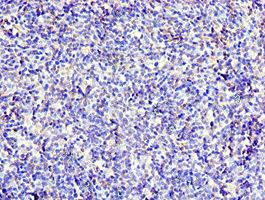
The antibody against CD6 was raised in rabbit using the Recombinant Human T-cell differentiation antigen CD6 protein (424-668AA) as the immunogen. This antibody exists as a non-conjugated isotype IgG, Antigen affinity purified. This antibody has been validated on ELISA, IHC.

ADC-40054A

The antibody against CD6 was raised in rabbit using the Recombinant Human T-cell differentiation antigen CD6 protein (424-668AA) as the immunogen. This antibody exists as a non-conjugated isotype IgG, Antigen affinity purified. This antibody has been validated on ELISA, IHC.

$299.00

Number
Order Exclusive Products Now

Request a Quote
High Purity LevelsPrecision and ReliabilityCustomization Options

Specifications


Cat.No ADC-40054A ClonalityPolyclonal
Host SpeciesRabbitTarget NameCD6
FormLiquidSpecies ReactivityHuman
IsotypeIgGStorage Buffer50% Glycerol, PBS with 0.02% sodium azide, pH7.3.
Purification MethodAntigen affinity purifiedConjugateNon-conjugated
ApplicationELISA, IHCStorageUpon receipt

Immunogen Information


Immunogen DescriptionRecombinant Human T-cell differentiation antigen CD6 protein (424-668AA)Target SpeciesHuman
Immunogen SequenceComplete sequences for the immunogen, target protein, and peptides are available upon request.Uniprot IDP30203
Background Information
  • Uniprot Id

    P30203

  • Target Species

    Human

  • Target Name

    CD6

  • Target Full Name

    T-cell differentiation antigen CD6

  • Target Function

    Cell adhesion molecule that mediates cell-cell contacts and regulates T-cell responses via its interaction with ALCAM/CD166. Contributes to signaling cascades triggered by activation of the TCR/CD3 complex. Functions as costimulatory molecule; promotes T-cell activation and proliferation. Contributes to the formation and maturation of the immunological synapse. Functions as calcium-dependent pattern receptor that binds and aggregates both Gram-positive and Gram-negative bacteria. Binds both lipopolysaccharide (LPS) from Gram-negative bacteria and lipoteichoic acid from Gram-positive bacteria. LPS binding leads to the activation of signaling cascades and down-stream MAP kinases. Mediates activation of the inflammatory response and the secretion of pro-inflammatory cytokines in response to LPS.

  • Target Subcellular Location

    Cell membrane; Single-pass type I membrane protein.; [Soluble CD6]: Secreted.

  • Target Tissue Specificity

    Detected on thymocytes. Detected on peripheral blood T-cells. Detected on natural killer (NK) cells. Soluble CD6 is detected in blood serum (at protein level). Detected in spleen, thymus, appendix, lymph node and peripheral blood leukocytes. Expressed by

  • Target Synonyms

    CD_antigen=CD6; CD6; CD6 antigen Tp120; CD6 molecule; CD6_HUMAN; FLJ44171; OX52; T cell differentiation antigen CD6; T-cell differentiation antigen CD6; T12; TP120

  • Target Background

    This gene encodes a protein found on the outer membrane of T-lymphocytes as well as some other immune cells. The encoded protein contains three scavenger receptor cysteine-rich (SRCR) domains and a binding site for an activated leukocyte cell adhesion molecule. The gene product is important for continuation of T cell activation. This gene may be associated with susceptibility to multiple sclerosis (PMID: 19525953, 21849685). Multiple transcript variants encoding different isoforms have been found for this gene.

Inquire Rabbit anti-Human CD6 Polyclonal Antibody Now


AbTriva respects your privacy and protects your personal data in accordance with AbTriva. For more information, please see our data protection statement. *

Notification