• Contact info@abtriva.com for inquiries and orders.
  • Chinese (Simplified)

  • English

  • German

  • Korean

  • Spanish

United States (English / $ USD)

Mouse anti-Human CD63 Monoclonal Antibody antibody

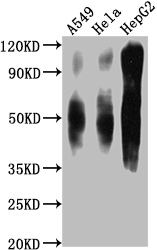
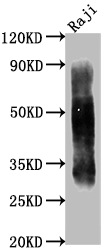
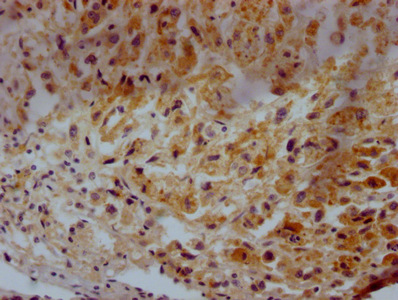
The antibody against CD63 was raised in mouse using the Recombinant Human CD63 antigen protein (103-203AA) as the immunogen. This antibody exists as a non-conjugated isotype IgG2a, purified by protein A with a purity greater than 95%. This antibody has been validated on ELISA, WB, IHC, IF, FC.

ADC-56088A

The antibody against CD63 was raised in mouse using the Recombinant Human CD63 antigen protein (103-203AA) as the immunogen. This antibody exists as a non-conjugated isotype IgG2a, purified by protein A with a purity greater than 95%. This antibody has been validated on ELISA, WB, IHC, IF, FC.

$350.00

Number
Order Exclusive Products Now

Request a Quote
High Purity LevelsPrecision and ReliabilityCustomization Options

Specifications


Cat.No ADC-56088A ClonalityMonoclonal
Host SpeciesMouseTarget NameCD63
FormLiquidSpecies ReactivityHuman
IsotypeIgG2aStorage Buffer0.01M PBS, 0.03% Proclin 300; Constituents: 50% Glycerol, PH 7.4
Purification Method>95%, Protein A purifiedConjugateNon-conjugated
ApplicationELISA, IF, IHC, WB, FCStorageUpon receipt

Immunogen Information


Immunogen DescriptionRecombinant Human CD63 antigen protein (103-203AA)Target SpeciesHuman
Immunogen SequenceComplete sequences for the immunogen, target protein, and peptides are available upon request.Uniprot IDP08962
Background Information
  • Uniprot Id

    P08962

  • Target Species

    Human

  • Target Name

    CD63

  • Target Full Name

    CD63 antigen

  • Target Function

    Functions as cell surface receptor for TIMP1 and plays a role in the activation of cellular signaling cascades. Plays a role in the activation of ITGB1 and integrin signaling, leading to the activation of AKT, FAK/PTK2 and MAP kinases. Promotes cell survival, reorganization of the actin cytoskeleton, cell adhesion, spreading and migration, via its role in the activation of AKT and FAK/PTK2. Plays a role in VEGFA signaling via its role in regulating the internalization of KDR/VEGFR2. Plays a role in intracellular vesicular transport processes, and is required for normal trafficking of the PMEL luminal domain that is essential for the development and maturation of melanocytes. Plays a role in the adhesion of leukocytes onto endothelial cells via its role in the regulation of SELP trafficking. May play a role in mast cell degranulation in response to Ms4a2/FceRI stimulation, but not in mast cell degranulation in response to other stimuli.

  • Target Subcellular Location

    Cell membrane; Multi-pass membrane protein. Lysosome membrane; Multi-pass membrane protein. Late endosome membrane; Multi-pass membrane protein. Endosome, multivesicular body. Melanosome. Secreted, extracellular exosome. Cell surface.

  • Target Protein Families

    Tetraspanin (TM4SF) family

  • Target Tissue Specificity

    Detected in platelets (at protein level). Dysplastic nevi, radial growth phase primary melanomas, hematopoietic cells, tissue macrophages.

  • Target Research Area

    Cancer

  • Target Synonyms

    CD63; MLA1; TSPAN30; CD63 antigen; Granulophysin; Lysosomal-associated membrane protein 3; LAMP-3; Lysosome integral membrane protein 1; Limp1; Melanoma-associated antigen ME491; OMA81H; Ocular melanoma-associated antigen; Tetraspanin-30; Tspan-30; CD antigen CD63

  • Target Background

    The protein encoded by this gene is a member of the transmembrane 4 superfamily, also known as the tetraspanin family. Most of these members are cell-surface proteins that are characterized by the presence of four hydrophobic domains. The proteins mediate signal transduction events that play a role in the regulation of cell development, activation, growth and motility. The encoded protein is a cell surface glycoprotein that is known to complex with integrins. It may function as a blood platelet activation marker. Deficiency of this protein is associated with Hermansky-Pudlak syndrome. Also this gene has been associated with tumor progression. Alternative splicing results in multiple transcript variants encoding different protein isoforms.

Inquire Mouse anti-Human CD63 Monoclonal Antibody antibody Now


AbTriva respects your privacy and protects your personal data in accordance with AbTriva. For more information, please see our data protection statement. *

Notification